
When Houston Storms Turn Trees into Emergencies
Just last month, right after those crazy straight-line winds hit the west side of Houston, I got a call from a homeowner in Memorial. A massive 70-foot pine had split at the base and was leaning across their driveway, blocking both cars in. They told me, “We heard a crack around midnight but didn’t realize how bad it was until sunrise.” By the time I arrived, that pine was resting on a power line waiting for gravity to finish the job. This kind of thing happens all the time during Houston’s storm season.
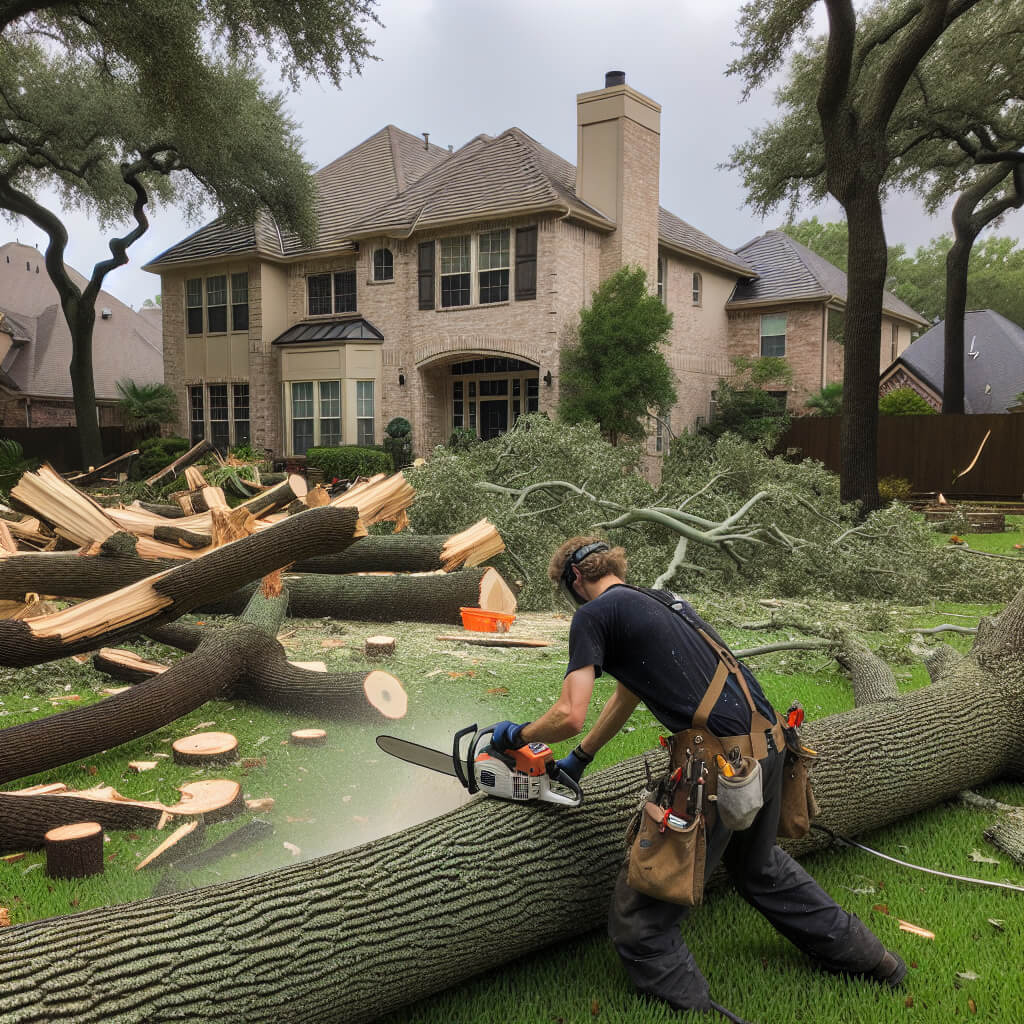
In my 17 years as an ISA Certified Arborist, I’ve responded to over 3,000 emergency tree calls across the city — from Katy to Kingwood. Whether it’s hurricane-force winds, saturated ground, or one of those sudden tornado spin-ups we get, downed or damaged trees can become serious hazards fast. In this article, I’ll walk you through what you should do (and absolutely shouldn’t do) when facing a tree emergency in Houston.
Stay Safe First — Always
The first instinct for most homeowners is to go outside and inspect the damage right away. I totally get it — it’s your property, your trees, your home. But I’ve seen too many close calls during post-storm cleanups. After Hurricane Harvey, I watched a homeowner in Meyerland almost get electrocuted by a hidden live wire tangled in a fallen limb.
If anything looks unsafe — stay inside and call professionals. Trees tangled in power lines, leaning on roofs, or split halfway up can shift or collapse without warning. You should always contact CenterPoint Energy first if electrical lines are involved, then reach out to an emergency tree removal company like ours for assessment and cleanup.
When to Call for Emergency Tree Removal
So how do you know if it’s truly an emergency or something that can wait until morning?
- The tree is leaning or uprooted near your home, fence, or driveway.
- A large branch or trunk piece is cracked and hanging.
- The tree has fallen and is blocking access to your home or road.
- Power lines are involved.
- The tree is threatening people, vehicles, or structures.
After Hurricane Beryl, I spent three straight days doing emergency responses in Katy and Richmond. Some calls were simple — a 30-foot Bradford Pear across a lawn. Others were full-blown rescues, like the oak that crushed a garage in Bellaire. If it’s putting anyone at risk or creating access issues, don’t wait.
What Happens During an Emergency Tree Removal
Every situation is different, but here’s what typically happens when I arrive at a storm scene:
- Safety inspection: I check for power lines, gas lines, structural hazards, and overall tree stability.
- Action plan: I develop a safe removal plan — especially critical if the tree is on a roof or tangled in wires.
- Sectional removal: Using ropes and rigging, we remove branches and trunk sections in controlled steps.
- Cleanup: Once the hazard is gone, we haul away limbs or chip debris.
We often do partial removals at night during major storms just to relieve roof pressure or clear driveways — then return in daylight with a crane or bucket truck for full tree removal.
Average Emergency Tree Removal Costs in Houston
This is the question I get asked the most — and understandably so. Emergency tree removal usually costs more than scheduled work because of timing, risk, and equipment needs. In my experience around Houston:
- Smaller trees (under 20 feet): around $350–$750
- Medium trees (20–50 feet): $800–$2,500
- Large trees near structures: $3,000–$7,000+
Last summer, I removed a 60-foot water oak in Sugar Land that split after a thunderstorm. The removal cost $1,850 because we had easy access and no power line issues. Compare that to a similar oak in the Heights that required a crane and traffic control — that one ran just over $5,000.
The key price factors are access, tree size, hazard level, and cleanup volume. Most reputable companies (ours included) provide immediate quotes on-site for transparency before any work begins.
How Houston’s Soil and Weather Create Storm Hazards
Houston’s clay soil is both a blessing and a curse. When it’s dry, the ground tightens around roots; after heavy rain, it turns to pudding. This constant expansion and contraction weakens root anchorage over time. That’s why we see big live oaks or pecan trees just topple overnight after a wet week followed by strong wind gusts.
I’ve seen it countless times in areas like Sugar Land and Cypress where older subdivisions have mature trees planted in tight spaces. Add in the weight of saturated soil and you’ve got a recipe for root failure.
Preventing the Next Emergency
Honestly, most “tree emergencies” I respond to could’ve been prevented with proper maintenance. A simple tree trimming or tree pruning schedule can make a huge difference, especially before hurricane season. Removing dead limbs, balancing canopy weight, and inspecting root flare stability all reduce your risk dramatically.
After the Memorial Day Flood a few years ago, I started offering pre-storm inspections to homeowners in Spring Branch. We found early signs of root stress in about one-third of the properties I checked. Catching that early saved a lot of roofs later that summer.
DIY vs. Professional Cleanup
I get it — Houston homeowners are tough and resourceful. But storm cleanup isn’t the same as trimming your crepe myrtles. Chainsaws, unstable limbs, and tensioned wood can turn deadly. I once had to finish a removal job in Tomball after a DIY attempt went wrong — the homeowner fractured his wrist when the branch whipped back under load.
Always bring in a licensed, insured tree service with emergency experience. Insurance usually covers wind and storm-related tree damage, so don’t risk your safety trying to save a few hundred dollars.
FAQ: Emergency Tree Removal in Houston
How fast can you respond to an emergency tree removal in Houston?
We typically respond within 1–3 hours, depending on the size of the storm. During Hurricane Harvey and Beryl, we worked 24/7 around Greater Houston to get blocked roads cleared and homes safe again.
Will my homeowners insurance cover tree removal?
Most Houston homeowners insurance policies cover tree removal if the tree damaged your home, driveway, or other structures during a storm. Always check your policy first. I also provide detailed reports for insurance claims when needed.
What should I do while waiting for help?
Stay out of the danger zone, turn off exterior electricity if safe, and keep family or pets away from the area. Take photos for documentation — it helps with insurance claims later.
Can you remove trees at night during emergencies?
Yes, I’ve done plenty of night operations. We prioritize safety lighting and equipment control, but sometimes it’s necessary to remove pressure off a roof or reopen driveways after hours.
Final Thoughts
If there’s one thing Houston’s weather has taught me, it’s that preparation beats panic every time. Have a plan, keep your trees inspected, and don’t wait until the next storm warning to address those leaning or cracked trunks. You don’t want to be making phone calls in the middle of the night while rain’s pouring sideways.
If you ever find yourself facing a dangerous tree situation, call a certified arborist right away. That extra hour of safety can make all the difference.