
<!–meta: Storms hit Houston hard — learn how emergency tree removal keeps your property safe and what to do when trees fall after severe weather.–>
When Storms Strike Houston, Trees Can Become Dangerous Overnight
Last month, right after a nasty thunderstorm rolled through Memorial, I got a call from a homeowner whose massive pine tree had crashed across their driveway. It missed their car by less than a foot. That’s how fast things can go wrong in Houston. Between hurricanes, high winds, and saturated clay soil, even healthy trees can become hazards when Mother Nature gets rough.
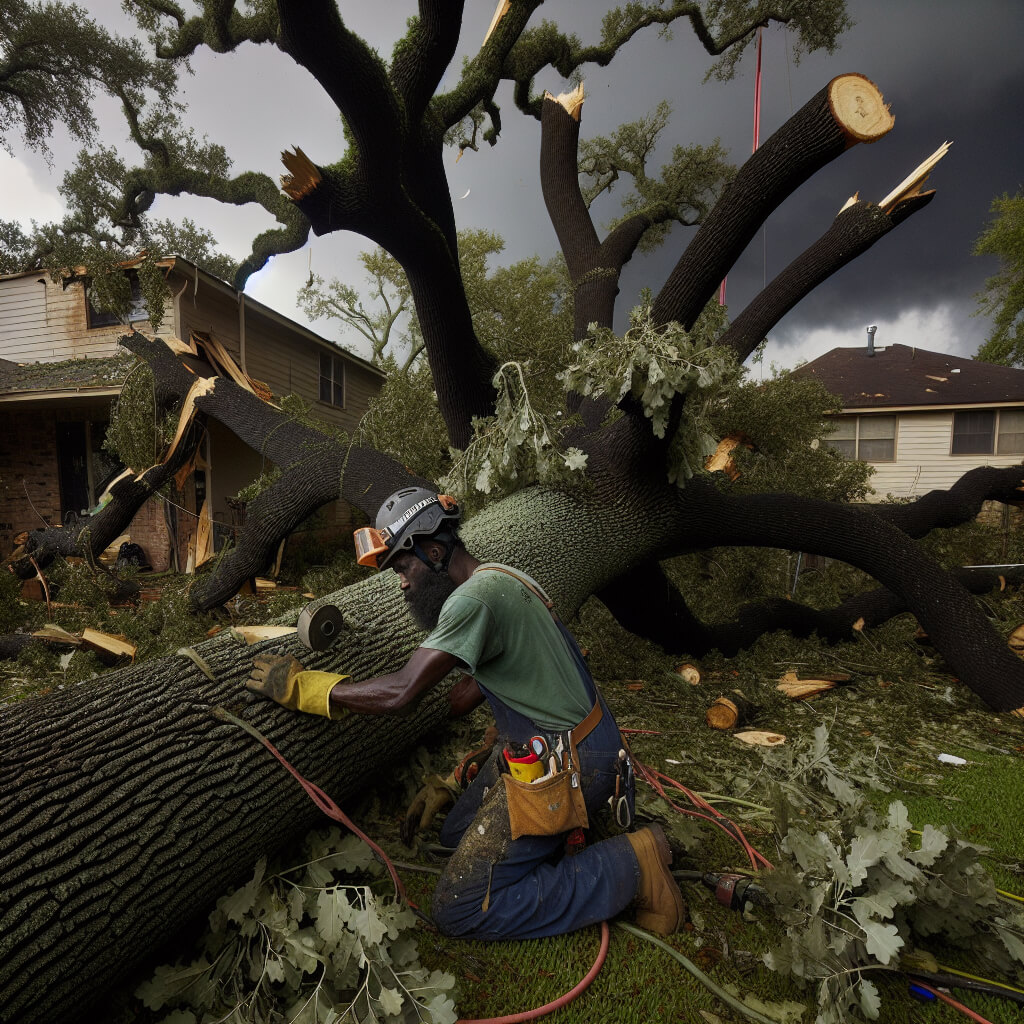
Over the past 17 years, I’ve handled hundreds of emergency tree removal calls—especially after big storms like Harvey and Beryl. I’ve seen everything from leaning oaks in River Oaks to snapped pecans in Katy and uprooted pines in Sugar Land. When a storm hits, speed and safety matter more than anything else.
In this article, I’ll share what really happens during emergency tree removals, how to stay safe, and what you can do before and after a storm to protect your Houston property.
What Counts as an Emergency Tree Situation?
Not every downed branch means you need to call 24/7 help. But in certain cases, waiting can put people and property at risk. Here’s when you should pick up the phone immediately:
- A tree has fallen on a home, vehicle, or power lines. Safety comes first—stay clear and call for professional help.
- A large tree is leaning dangerously after a storm or rain event. Shifting soil in Houston’s heavy clay can cause root failure fast.
- Cracked trunks or hanging limbs over roofs or driveways. Even a strong gust can send them crashing down.
During Hurricane Harvey, I worked on a 60-foot live oak near Westheimer that looked solid until the soil underneath liquified. The whole root ball lifted and nearly took a section of fence with it. That’s why I always tell homeowners—don’t assume a big, “healthy-looking” tree can’t fail.
How Emergency Tree Removal Works in Houston
Every situation is unique, but the process usually follows a few key steps:
- Initial Safety Assessment: I start by checking for hazards like live power lines, electrical wiring, or gas meters. You’d be surprised how often roots tear into those during uprooting.
- Securing the Area: We rope off the site, sometimes with barricades if debris is blocking driveways or streets.
- Controlled Removal: Using climbing gear, bucket trucks, or cranes, we cut and remove limbs in sections. It’s slow work, especially around homes or fences.
- Cleanup and Stump Handling: Once the tree is down, we chip debris and, if safe, start stump grinding to prevent trip hazards and regrowth.
After big storms, homeowners in neighborhoods like Spring Branch or the Heights often face blocked driveways or damaged fences. The key is to get the tree safely cleared first, then work on property repairs. I’ve shown up to some jobs where people started cutting limbs themselves while wires were still hot—please, never do that.
How Much Does Emergency Tree Removal Cost in Houston?
Honestly, it varies a lot. For straightforward jobs—say a small fallen pine in a backyard—you might spend around $600-$900. But tight access, power line involvement, or massive oaks over roofs can easily hit $2,000-$4,000 depending on complexity and debris hauling.
For example, one homeowner in the Heights called me after a large water oak had split their fence and pinned their shed door. The removal took a crane and four crew members—$3,200 total—but waiting any longer could’ve brought the whole canopy down.
It’s not always cheap, but it’s far less expensive than replacing a roof or waiting for the city to issue a fine for unsafe debris. Whenever possible, check if your homeowner’s insurance covers tree-related storm damage (many do if the tree hits a structure).
Preventing Emergencies Before They Happen
One of the biggest mistakes I see around Houston is homeowners ignoring early warning signs. Trees “talk” long before they fall—you just need to know what to look for:
- Root flares lifting or cracking soil after rain
- Branches growing over roofs or touching power lines
- Splits in the main trunk or hollow cavities forming
- Heavy moss or decay around limb attachments
Regular tree trimming and structural tree pruning are some of the simplest ways to reduce storm damage risk. I recommend once-a-year inspections, especially before hurricane season (June–November). During those visits, I’ll check soil conditions, canopy balance, and root exposure—things most folks wouldn’t spot until it’s too late.
My Storm Response Routine (and Why Speed Matters)
During hurricane season, my truck stays packed—chainsaws, rigging gear, helmets, water, and tarps. When a major system hits, we work nonstop for days. After Beryl, my crew and I were in the Heights by 6 a.m. clearing a fallen oak off a neighbor’s garage. Then we headed to Katy to remove a red maple leaning across a driveway. We did 19 calls that week alone.
Time matters. The longer a heavy branch sits on your roof or fence, the more structural damage it causes—especially with Houston’s humidity soaking everything. Quick professional response prevents secondary problems like leaks, pests, and foundation issues from trapped moisture.
What To Do Until Help Arrives
If you’re waiting for emergency crews after a storm, here’s how to stay safe:
- Keep everyone clear of the damaged area.
- Don’t try to cut or move large limbs yourself.
- Turn off power if electrical lines are involved (from the main breaker only if safe to access).
- Take photos for insurance before removal.
- Cover exposed areas (roof openings, fences) with tarps to limit water damage.
And remember—cities like Houston and Sugar Land have ordinances requiring permit clearance for certain protected trees. If you’re unsure, a certified arborist can handle that paperwork as part of the emergency process.
FAQ: Common Emergency Tree Removal Questions
How quickly can a crew respond in Houston?
Most reputable companies (including mine) aim to reach you within hours of a call, especially after storms. During peak hurricane events, response windows may stretch, but we always prioritize trees on homes or blocking access.
Will insurance pay for emergency tree removal?
Often yes—if the tree damaged a covered structure, like your house or fence. If it just fell in the yard without hitting anything, it’s usually out of pocket. Always take photos and contact your insurer early.
How do I tell if a leaning tree is a danger?
If the soil around the base looks cracked or raised, or if the lean appeared suddenly after rain or wind, treat it as a hazard. I’d rather check it now than see it come down in the next thunderstorm.
What tools do professionals use for emergency tree removal?
We use chainsaws, climbing ropes, cranes for larger jobs, and safety rigging to lower heavy branches. Every move is planned to prevent further property damage.
Can I prevent emergency removal with regular tree care?
Absolutely. A well-timed trim or inspection can save thousands later. Many homeowners schedule yearly evaluations—especially those with large oaks, pines, or pecans near roofs or driveways.
Final Thoughts
Storms in Houston aren’t slowing down—and neither should your preparation. A fallen tree can destroy a roof or car in seconds, but most disasters start small: an ignored crack, a neglected root flare, or an overdue prune. Get your trees checked regularly, especially before hurricane season, and don’t wait to call for emergency tree removal if something looks dangerous.
Peace of mind is worth it—trust me, I’ve seen what waiting can cost.