
<!–meta: Learn safe and effective emergency tree removal tips for Houston homeowners from an ISA Certified Arborist experienced with storm damage responses.–>
When a Fallen Tree Becomes an Emergency
Last month, after one of those sudden Gulf Coast thunderstorms, I got a call from a homeowner in the Heights around midnight. A huge pine had snapped halfway up and crashed across their driveway, taking their power line with it. That scene—tree blocking access, electrical hazards, panicked homeowners—is exactly why I always stress the importance of knowing what to do when you need emergency tree removal in Houston.
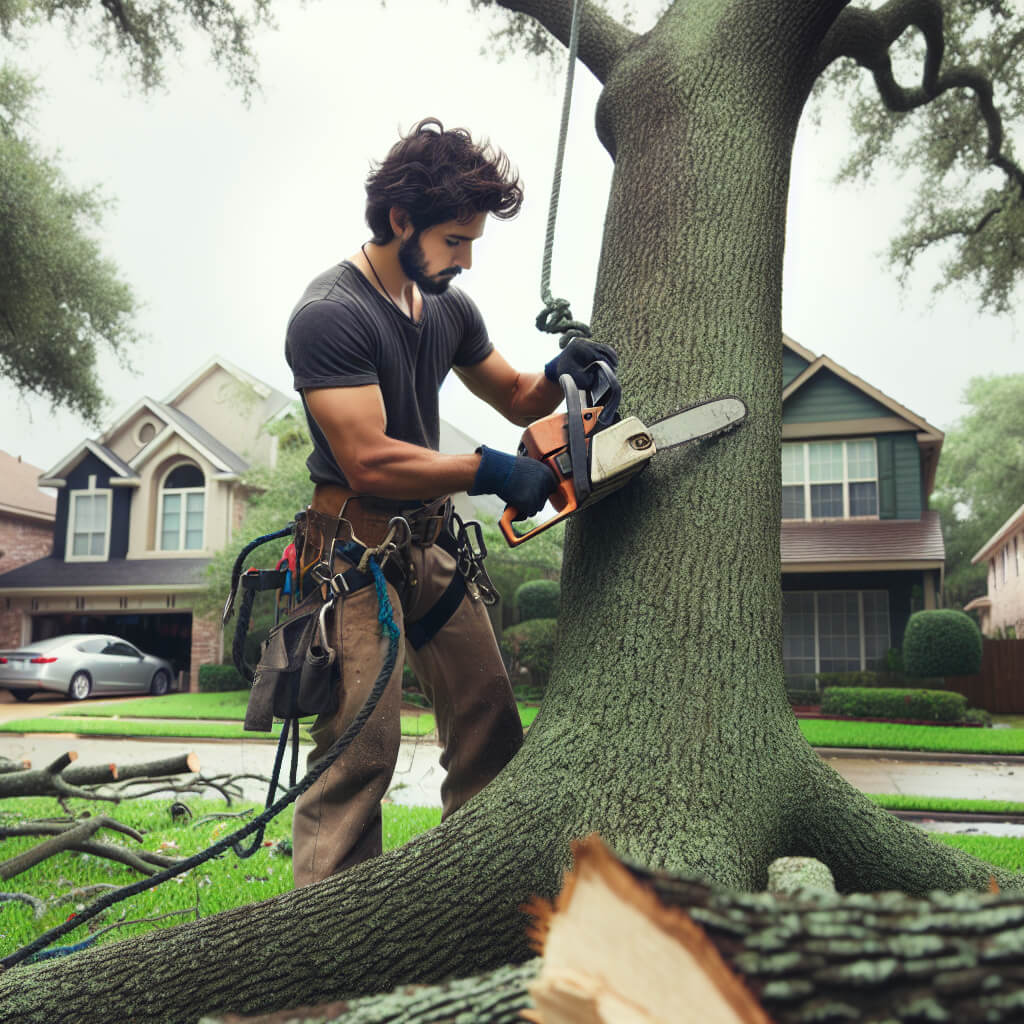
In my 17 years as a certified arborist, I’ve responded to thousands of storm calls across the city—from Harvey to Beryl to the freak ice of Winter Storm Uri. Each storm leaves behind a similar story: trees on roofs, cracked trunks, and homeowners wondering how fast they can get help. Let’s walk through what I’ve learned from those emergencies so you know what to do when nature drops a tree on your property.
Step One: Stay Safe Before Anything Else
After a big storm, adrenaline pushes you to rush outside and inspect the damage. I get it. But safety always starts with patience. If a tree fell near power lines, assume they’re live. Don’t touch metal fences, water puddles, or the tree itself. Call CenterPoint Energy or 911 if there’s a live wire situation before calling any tree service. I’ve seen too many homeowners make close calls because they underestimated electrical hazards.
Another danger people forget about is tree tension. When large limbs are pinned under weight, they can release suddenly like a spring. I’ve had limbs snap and miss workers by inches. That’s why certified crews use ropes, pulleys, and controlled cuts to release pressure safely—not just a chainsaw and guesswork.
Choose a Certified Arborist, Not Just Anyone With a Chainsaw
After every storm, Houston fills up with trucks and flyers from out-of-town crews promising “cheap emergency tree removal.” I’ve followed behind some of those jobs, and the results can be scary—gouged lawns, damage to gutters, or worse, trees cut unsafely, leaving hanging hazards. Always check for ISA certification and liability insurance before hiring anyone. If they can’t show credentials, walk away.
For real emergencies—trees on roofs, blocking driveways, or threatening structures—you want a licensed, insured team that specializes in emergency storm damage clean-up. We work with cranes, rigging gear, and ground crews trained for confined spaces like small backyards in neighborhoods such as West U or Bellaire.
Know When It’s an Emergency vs. Routine Removal
Not every fallen branch means panic mode. I’ve had calls where a small Chinese tallow limb landed in the front yard, but the homeowner was convinced it would collapse their roof. Generally, emergency removals are for:
- Trees or limbs on homes, vehicles, or blocking your only exit
- Cracked or split trunks that could fail any minute
- Uprooted trees leaning dangerously
- Storm damage hanging over power lines or structures
Anything else can usually wait for daylight and a proper assessment. That’s also when the costs drop, since emergency nighttime jobs can easily run 30–50% higher due to labor and equipment surcharges.
What Emergency Tree Removal Actually Costs in Houston
I like being transparent about pricing because storm work surprises a lot of folks. In my experience, most tree removal jobs in Houston range between $800 and $2,500 for medium-sized trees. But emergency or crane removals can jump from $2,500 up to $7,000+ depending on access, debris hauling, and power line proximity.
For example, last summer, a massive live oak in Memorial fell across two fences. The debris removal alone took two dump trucks—total bill: just under $4,100. On the flip side, a simple pine drop in Katy with easy truck access was $650, all-in. The key factors are size, location, and risk level. When you hire a certified crew, those costs reflect not just labor, but specialized training and insurance.
How to Prepare Ahead for Houston’s Storm Season
Here’s the part I wish every homeowner focused on more: prevention. A lot of “emergencies” could’ve been avoided with simple tree trimming or structural pruning during calm weather. I can’t count how many times I’ve looked at a broken limb and thought, “If only we had lightened that crown last spring…”
The best time to assess your trees is late winter or early spring before hurricane season kicks in. Look for early signs like cracked bark, mushroom growth near the base, or big canopy weight on one side. Have a certified arborist inspect for internal decay and root heave—especially in our clay soil, which expands and contracts like crazy after rain and drought cycles.
After the Cleanup: Don’t Ignore What’s Left Behind
Once the emergency is over and the debris is gone, that’s when you should schedule a full property assessment. The remaining trees might have hidden cracks or root stress that aren’t obvious right away. One homeowner in Sugar Land called me two weeks after a big storm saying, “We didn’t lose any trees, but one of our oaks just started leaning.” Sure enough, the soil had shifted slowly and we had to remove it before it toppled onto the garage.
Also, don’t forget the stump. Leaving it can attract pests and cause tripping hazards. A good crew will offer stump grinding as part of the final service, especially important if you plan to replant later.
How long does emergency tree removal take?
Most emergency removals can be completed within a few hours once the crew arrives, but complicated setups—like trees entangled in roofs or near utilities—can stretch into a full day. The biggest delays come from equipment accessibility, city permits, or waiting for utility clearance.
Will my homeowner’s insurance cover it?
Typically yes, if the tree damaged your house or blocked access. If it fell without hitting a structure, you might be on your own for debris costs. Always call your insurance first, then get an estimate from a certified arborist—they’ll often coordinate directly with adjusters.
Can I clear a small fallen tree myself?
If it’s not touching a structure or near power lines, sure, small cleanup is fine. Just watch for internal tension in branches. For anything over 10 inches in diameter or leaning against a fence or roof, it’s safer to have a pro handle it.
When should I schedule post-storm tree trimming?
Wait a few weeks for everything to dry out, then bring in a certified arborist for inspection and pruning. Wet conditions and heavy soil can cause equipment ruts and stress tree roots even more.
Final Thoughts: The Best Time to Prepare Is Before the Storm
As someone who’s pulled trees off countless roofs across Houston, I can tell you this: emergencies are exhausting and expensive. The smartest homeowners I work with get annual inspections and light pruning before hurricane season. It saves time, money, and peace of mind when the next big one rolls through. If you’ve got a leaning oak, a hollow trunk, or branches threatening your roof, don’t wait. Get it looked at by a certified arborist—you’ll thank yourself later when that next Gulf storm hits.