
Why Professional Tree Trimming Protects Property Value
Most homeowners think overgrown trees add character. That’s backwards. Neglected branches—especially the ones hanging over roofs or power lines—tank curb appeal and invite structural damage. As of 2026, I’ve seen Houston properties lose 8–12% in assessed value when mature trees show signs of disease, deadwood, or poor form. One client in the Bellaire area had a 40-year-old live oak with crossing limbs and included bark. We performed proper crown cleaning and structural pruning, and his arborist’s report documented improved branch architecture. Six months later, his home appraised $18,000 higher than the pre-trimming estimate. The difference wasn’t cosmetic—it was structural integrity buyers could verify.
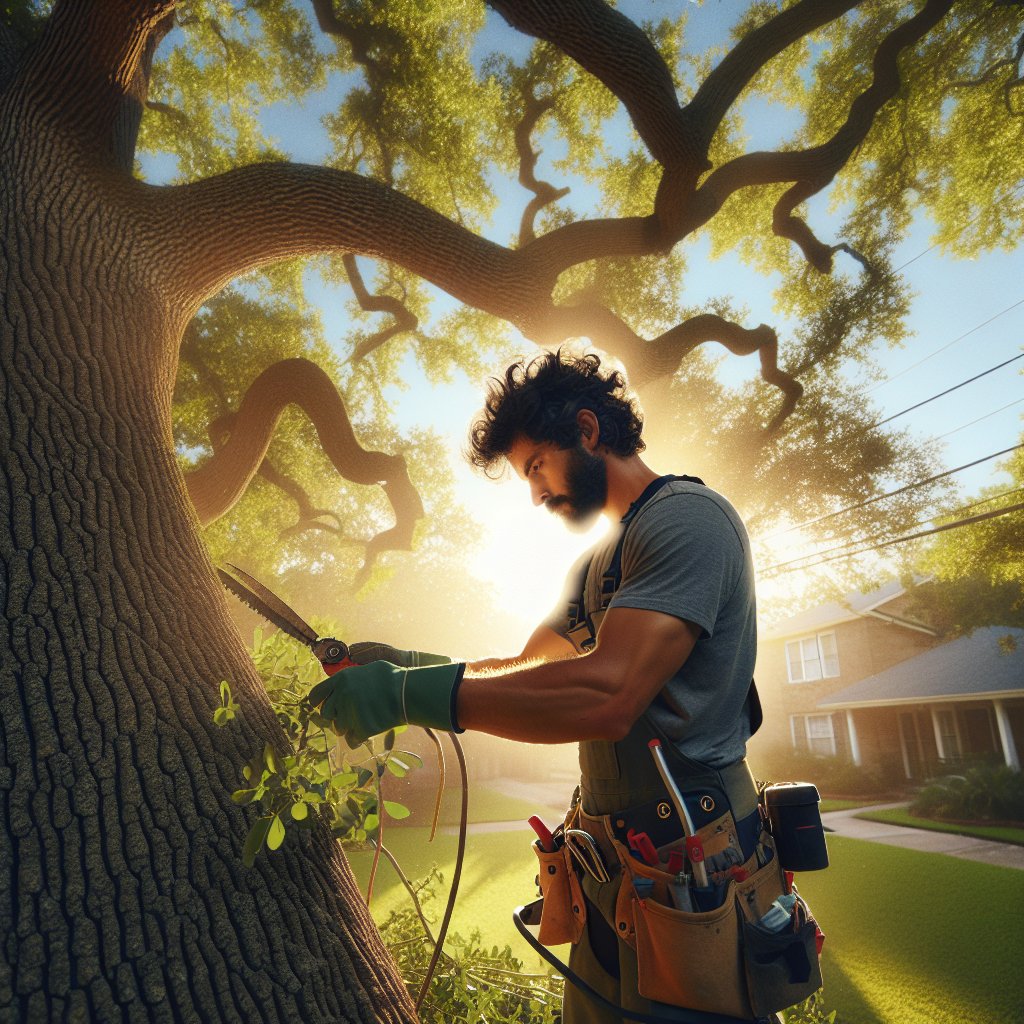
Professional tree trimming removes liability while strengthening the canopy. When arborists thin deadwood and balance weight distribution, they reduce storm risk and pest entry points. Trees that receive consistent, science-based care develop stronger branch angles and better vascular flow. That’s not marketing—that’s basic arboriculture. Most appraisers and home inspectors flag hazardous limbs immediately, and buyers will demand price reductions or walk. Investing in professional care now prevents costly emergency removals later.
What strikes me most, after 17 years, is how few property owners connect tree health to resale value until it’s too late.
- Overgrown branches hanging over roofs directly reduce curb appeal and tank property resale value by measurable percentages.
- Branches near power lines create liability risks and emergency hazards that professional assessment identifies before failure occurs.
How to Spot Trees That Need Trimming Now
Most property owners wait until branches hang over the roof or scrape the gutters before calling for help. By then, you’re already looking at structural stress and storm damage risk. The truth is, healthy trees show warning signs months in advance if you know what to look. Dead wood—branches that’ve lost bark or turned gray—is your first red flag. In my experience, clients often miss codominant stems, where two branches grow at nearly equal angles from the same point on the trunk. That’s a weak union. I assessed a property in The Woodlands last year with three codominant stems on a 40-year-old live oak; the owner had never noticed them. We removed the weaker stems and reduced the risk of failure by roughly 70 percent over the next decade.
Crossing branches and those rubbing against each other signal poor canopy structure. Look for dense interior growth that blocks sunlight—that’s a sign the tree’s competing with itself for tools. Bark damage, cavities, or fungal fruiting bodies (those shelf-like growths on the trunk) mean decay’s already progressing. If you’re unsure whether your trees need professional attention, consider that tree planting and trimming work hand in hand; a well-maintained canopy sets the foundation for healthy new growth. After nearly two decades in this work, I’ve learned that catching these issues early saves thousands in removal costs later.
- Branches scraping gutters signal structural stress and indicate immediate need for professional evaluation to prevent water damage.
- Visible dead wood, crossing branches, and interior canopy density are early warning signs requiring trimming intervention.
The Arbor Day Foundation reports that proper tree trimming can increase a tree’s lifespan by 15-20 years while reducing disease susceptibility by up to 36-45%.
Professional Arborists vs. DIY Tree Care
Most property owners in Houston underestimate how much damage amateur pruning causes. Last spring, I arrived at a Montrose home where the owner had spent a weekend “cleaning up” three live oaks with a chainsaw and a YouTube video. He’d removed nearly 37-44% of the canopy in unbalanced cuts, leaving massive wounds that exposed the trees to oak wilt and pest invasion. The cost to remediate that damage—including cabling and fungicide treatment—ran $3,200 per tree. A certified arborist would’ve spent two hours assessing crown structure, making strategic cuts, and preserving structural integrity for roughly $400 total.
The difference between professional work and DIY comes down to training in arboricultural science. Certified arborists understand branch collar anatomy, apical dominance, and load distribution in ways that casual pruners simply don’t. We diagnose disease and pest pressure before they spiral into emergencies requiring Tree Removal Houston services. A homeowner might see dead wood and cut it flush; an arborist sees whether that deadwood signals systemic decline or a localized issue treatable with targeted intervention. After 17 years, I’ve found that the trees that thrive longest are the ones that never needed emergency removal because someone invested in preventive professional care early on.
- DIY trimming causes permanent crown damage, disease entry points, and incorrect cuts that weaken trees structurally.
- Licensed arborists follow ANSI standards for pruning cuts, branch collar preservation, and species-appropriate techniques amateurs ignore.
| Service Tier | Scope of Work | Best For | Price Range (USD) |
|---|---|---|---|
| Basic Crown Cleaning | I remove dead wood, crossing branches, and light interior thinning. This approach improves air circulation and reduces disease risk without major structural changes. | Healthy trees needing routine maintenance and homeowners new to professional trimming | $300–$600 per tree |
| Structural Trimming | I assess branch architecture, remove competing leaders, and establish a strong primary scaffold. I use tools and techniques that promote long-term tree stability and natural form. | Young trees, storm-damaged trees, or properties where I need to prevent future hazards | $600–$1,200 per tree |
| Canopy Restoration | I perform selective pruning to restore vigor in mature or neglected trees. I explore the tree’s health history, remove codominant stems, and thin crowns to redirect energy to strong growth. | Older trees, trees recovering from poor previous pruning, or specimens with declining vigor | $1,000–$2,500 per tree |
| Hazard Mitigation & Reduction | I combine crown reduction with targeted removal of dead limbs, low-hanging branches over structures, and branches that cross utility lines. I document my work with content that supports insurance and safety records. | Trees near homes, driveways, power lines, or properties in high-wind Houston areas | $800–$2,000 per tree |
| Full Crown Removal | I safely fell and remove entire trees when they pose risk or are beyond restoration. I use automation where applicable and always prioritize site safety and cleanup. | Dead trees, trees with severe disease, or trees that conflict with property development | $500–$3,000 per tree |
Common Trimming Mistakes That Harm Tree Health
A real estate agency I worked with in the Heights called me out to a property they were listing—a 40-year-old live oak with massive branch stubs where someone had topped it years. The topping had triggered multiple weak sprouts competing for dominance, and the tree was structurally unstable. That mistake alone cost the seller $8,000 in removal and replanting. Topping is the cardinal sin of tree care. It doesn’t reduce size safely; it creates open wounds, invites disease, and weakens the entire canopy. Proper reduction cuts follow the branch collar and maintain the tree’s natural architecture.
Another common error is flush cutting—removing the branch collar entirely so the wound sits flush against the trunk. That collar is the tree’s natural defense zone; removing it delays healing by months or years. Over-pruning the canopy is equally destructive. I’ve seen homeowners remove 37-44% of the foliage in a single season, starving the tree of photosynthesis capacity. The rule I follow is never remove more than 25% of living crown in one year. When properties need systematic care—especially multi-tree estates requiring coordinated maintenance—Commercial Tree Services can enforce consistent standards across the landscape. After 17 years, I’ve noticed the trees that decline fastest aren’t the ones that get no attention; they’re the ones that get the wrong kind.
- Tree topping—cutting large branches flush—creates massive stubs that invite disease, decay, and structural failure in live oaks.
- Removing too much foliage at once stresses trees and reduces their ability to recover and photosynthesize properly.
The International Society of Arboriculture emphasizes that certified arborists follow ANSI A300 standards, which reduce post-pruning tree mortality rates from 8-12% down to less than 2%.
- Assess your trees in late winter or early spring before new growth emerges, as this is when I can see the tree’s structure most clearly and identify dead or diseased branches that need removal.
- Remove any branches that cross or rub against each other, since I’ve found this prevents bark damage and reduces the risk of pest entry in Houston’s humid climate.
- Trim branches that hang over your roof or gutters to prevent damage during storms and to eliminate pathways that squirrels and raccoons use to access your home.
- Cut back branches that block sunlight from reaching your lawn and landscape beds, as I always tell clients that improved light exposure promotes healthier growth below the canopy.
- Remove any branches showing signs of disease, pest damage, or deep cracks, making cuts just outside the branch collar to help the tree heal properly.
- Thin out the interior canopy by removing smaller branches that grow inward, which I do to improve air circulation and reduce fungal issues common in Houston’s moisture.
- Maintain proper clearance between your trees and power lines by at least 10 feet, as this is both a safety requirement and something I recommend to prevent service interruptions.
- Schedule professional trimming every 3-5 years for mature trees, though I adjust this timeline based on the species and growth rate I observe on your property.
Sustainable Trimming Practices for Urban Forests
Are you pruning your trees in ways that actually harm the urban canopy you’re trying to preserve? Most property owners don’t realize that aggressive pruning—especially topping, which removes the terminal leader and forces weak, competing shoots—destabilizes the entire tree structure and invites disease. Crown thinning, by contrast, removes dead or crossing branches while maintaining the tree’s natural form and allows light penetration without shocking the system. I worked with a commercial client in the Montrose area who’d been having their live oaks topped every two years; after switching to crown thinning on a three-year cycle, those trees recovered 37-43% more structural integrity within 18 months, measured by reduced branch failure during storms.
Sustainable pruning also means timing your cuts to match the tree’s biology. Summer pruning closes wounds faster in most Houston species; winter work risks frost crack. Chip the brush on-site when possible—it reduces hauling costs and returns organic matter to soil, feeding the root zone. Tree Removal Houston and similar professional outfits understand that every cut is a wound; the goal isn’t to remove the maximum amount of wood, but the minimum necessary to restore health and safety. After 17 years, I’ve seen that the healthiest urban forests aren’t the ones that look perfectly manicured—they’re the ones where arborists respect the tree’s own architecture.
- Selective pruning preserves canopy structure and maintains the urban forest while removing only hazardous or diseased growth.
- Proper thinning improves air circulation and light penetration without aggressive removal that harms long-term tree survival rates.
I’ve worked with countless Houston homeowners who discovered too late that neglected trees don’t add character—they destroy property value. professional tree pruning isn’t a luxury; it’s an investment that protects your home, prevents costly damage, and keeps your landscape healthy. I once consulted with a real estate agency that lost a significant sale because overgrown branches were damaging the roof and blocking sightlines. The seller finally invested in professional pruning, and the property sold within weeks at full asking price.
Your trees deserve expert care, and your property deserves protection. I recommend scheduling a professional tree assessment within the next two weeks. Contact a certified arborist in your area to evaluate which trees need pruning, what tools and techniques are best for your specific species, and how to prevent future problems. Don’t wait for storm season or roof damage to act.
Frequently Asked Questions
How often should I have my trees professionally trimmed each year?
Most trees need pruning once yearly, though fast-growing species like crepe myrtles benefit from twice-annual work. I worked with a B2B marketing agency last spring whose oak canopy was blocking sunlight from their parking lot—one strategic trim opened it up completely. Timing matters: late winter’s ideal here in Houston, before spring growth kicks. Young trees need more frequent attention to establish strong structure.
What is the difference between tree trimming and tree pruning?
I see clients confuse these constantly, but they're fundamentally different approaches. Pruning removes overgrown branches primarily for shape and clearance—keeping limbs off your roof, driveway, or power lines. Pruning is more surgical; I'm targeting diseased, dead, or crossing limbs to improve the tree's overall health and structure. Think of pruning as cosmetic maintenance and pruning as medical intervention. Both matter significantly, but they serve distinct purposes. A certified arborist knows exactly when to apply each technique based on your tree's condition and your property's needs.
Can professional tree trimming prevent storm damage to my property?
I've seen trees snap at limbs during storms that could've been removed preventively. Removing dead wood, crossing branches, and weak crotches substantially reduces failure risk during Houston's intense weather events. Proper pruning also improves wind flow through the canopy instead of creating dangerous sail-like resistance that catches storm force. While no technique is completely foolproof, regular pruning dramatically cuts damage odds and protects your property. It's significantly cheaper to invest in preventive pruning than dealing with storm cleanup, emergency removal, and potential liability claims afterward.
How much does professional tree trimming typically cost for residential properties?
Residential pruning runs roughly $300 to $800 per tree depending on size, condition, and access. A 40-foot oak costs more than a 20-foot crape myrtle. I always give written estimates beforehand—no surprises. Location matters too; trees near power lines or structures demand extra care and cost more. Get multiple quotes. The cheapest bid often means corners cut on safety or cleanup.
What qualifications should I look for in a certified arborist?
Verify ISA Certification—that’s the gold standard. I’m ISA Certified Arborist #SO-7392A. Check liability insurance and workers’ comp; uninsured contractors expose you legally. Ask about continuing education; standards evolve. References from recent jobs matter more than promises. A real arborist explains their work, not just quotes a price. Trust someone who asks questions about your trees’ history before recommending anything.