
<!–meta: Houston arborist Michael Torres shares expert, local advice on tree health care for Houston homeowners, including tips on irrigation, pruning, and storm prevention.–>
Last spring, after one of Houston’s heavy rains followed by a quick dry spell, I got a call from a homeowner in Sugar Land who said their live oak was “bleeding sap.” When I showed up, what I saw was textbook stress from compacted, saturated soil followed by sudden drought. The good news? We saved the tree. The bad news? It could’ve been avoided with a little preventive care. That’s the story for so many Houston trees — they’re survivors, but our weather and soil keep them on the edge.
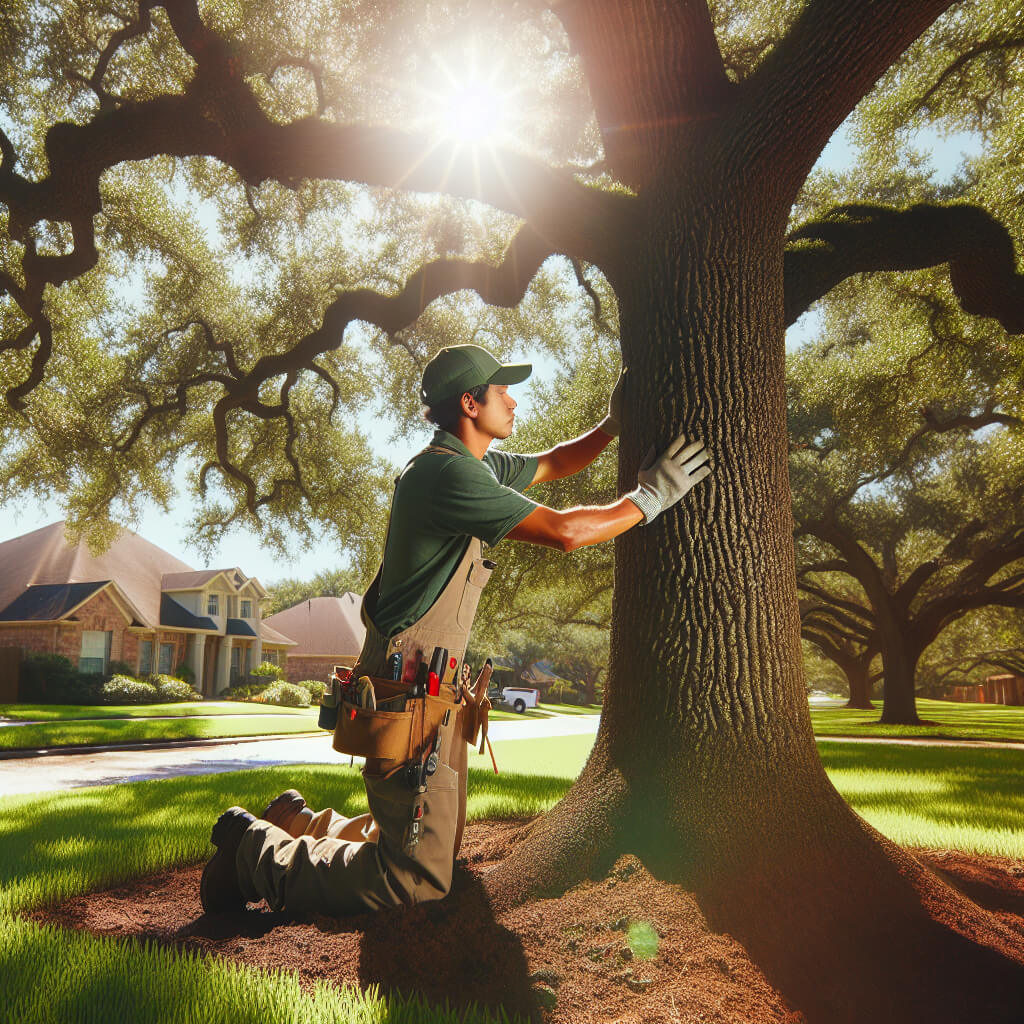
In this article, I’ll share some of the most important lessons I’ve learned in 17 years working as an ISA Certified Arborist around greater Houston — from River Oaks to Katy. These are simple things every homeowner can do to keep their trees healthy, strong, and ready for whatever hurricane season throws at us.
Understanding Houston’s Unique Tree Challenges
Before we talk solutions, it’s important to understand what Houston trees go through. Between our heavy Gulf humidity, hurricane-season winds, and that tricky Gulf Coast clay soil, it’s no wonder so many trees here struggle. That clay soil swells when it’s wet and shrinks during drought, which can suffocate roots or break them clean apart. I’ve seen dozens of stressed live oaks and water oaks topple during storms because of root damage you couldn’t even see from the surface.
Then add in our unpredictable weather — one week of flooding, then blazing sun the next. Houston trees live on a roller coaster, and that means homeowners need to be proactive about tree care year-round.
Smart Watering for Houston Tree Health
I can’t tell you how many times I’ve been called to “diagnose” a sick oak only to find out it’s just thirsty — or overwatered. Houston’s soil doesn’t drain well, so timing is everything. Deep watering once a week during dry spells is usually enough for mature trees. Shallow, daily watering only encourages weak upper roots.
Here’s a trick I learned working in the Heights: place a soaker hose around the tree’s drip line, not up against the trunk. Let it run slowly until the top 6 to 8 inches of soil are moist. That mimics a natural rainfall and supports stronger root growth.
Proper Pruning Keeps Trees Safe and Strong
Regular tree pruning is one of the best things you can do for tree health. In Houston, I recommend pruning late winter through early spring — before the heavy rain season. That’s when trees heal fastest and pests are less active. Avoid over-pruning too. I’ve seen contractors strip half the canopy off a water oak, and within a year, it started declining from stress.
Stick to removing dead or crossing branches, and thin out crowded areas to allow for airflow. Not only does that reduce disease risk, but it also helps your tree handle hurricane-force winds better. I’ve seen dozens of trees in Bellaire that made it through Beryl simply because their canopies were well-managed.
Watch for Signs of Disease and Stress
When I do a tree health assessment, I look for subtle clues — like yellowing leaves, early defoliation, or fungal growth near the root flare. In Houston, I commonly treat trees for oak wilt, hypoxylon canker, and root rot from poor drainage. If you notice mushrooms growing at the base, that’s usually a red flag. Same with cracks or oozing sap along the trunk.
If something looks off, call a professional before it’s too late. I’ve seen homeowners wait months on a small canker that eventually hollowed out half the tree. Early intervention saves a lot of money compared to full tree removal.
Mulching Done Right
Mulch is one of those simple things that can either help or hurt a tree. When done correctly, it maintains moisture, regulates root temperature, and adds nutrients. But I’ve seen more than one oak suffocate from a “mulch volcano” piled up against its trunk.
Spread mulch in a 3- to 4-inch layer around the tree’s base (avoiding direct contact with bark), ideally as far as the branches extend. Cypress or hardwood mulch works well in Houston’s humidity. Don’t forget to refresh it every year — our rains break it down quickly.
Soil Health and Root Care
Houston’s compacted lawns often starve trees of oxygen. aeration helps, especially for older trees. In areas like Memorial and Spring Branch where new construction has compacted soil, I often use vertical mulching — drilling small holes around the base and filling them with compost mix. It’s amazing how much this improves root vigor and drainage.
For younger trees, root flare inspection is key. If the root flare (the area where the trunk meets the roots) is buried, that’s an early indicator of potential decline. I once excavated a magnolia in Pearland where the flare was buried under four inches of mulch — the tree came back strong after a simple correction.
Storm Preparation and Recovery
Every June, my crew gears up for storm season because we know what’s coming. Houston storms don’t mess around, and neither should your trees. A pre-season inspection can identify weak limbs or root issues long before they become hazards. If a storm hits and a tree falls, don’t try to handle it yourself — call for emergency tree removal. I can’t count how many times I’ve seen homeowners hurt trying to cut fallen limbs tangled with live wires.
After hurricanes like Harvey and Ike, we performed thousands of emergency storm damage jobs across Houston. The trees that survived best were the ones that got consistent preventive care — proper pruning, balanced soil, and healthy root systems.
Fertilization and Long-Term Health
I’m not a fan of “miracle fertilizers,” but I do recommend annual soil testing and slow-release nutrient blends, especially for oaks and pines showing nutrient deficiencies. Yellow leaves or thin canopies often signal lack of iron or nitrogen in our alkaline clay soils. With the right treatment plan, I’ve seen trees bounce back within one season.
Work with a Certified Arborist
Tree care isn’t just cutting branches and spreading mulch — it’s long-term stewardship. A certified arborist will evaluate not only the visible parts of a tree but also what’s going on below the surface. I’ve saved homeowners thousands by catching hidden root infections early, before they turned into removals.
Whether you’re in Katy, the Heights, or Sugar Land, regular professional checkups can extend your trees’ lives for decades. Think of it like visiting the doctor — only your patient’s been shading you for years.
FAQ
How often should I have my trees inspected in Houston?
At least once a year, preferably before storm season. Houston’s weather is unpredictable, and full inspections help spot safety and health issues in time.
What kind of fertilizer works best for Houston trees?
A slow-release fertilizer with balanced nitrogen, phosphorus, and potassium works best. Always test your soil first — most Houston yards are high in clay and alkaline in pH.
Can I trim my trees myself?
Small deadwood removal is fine, but large branches or anything near power lines should be handled by a professional. I’ve seen too many DIY jobs end in roof damage or worse.
What are the most common tree diseases in Houston?
I frequently treat oak wilt, root rot, and hypoxylon canker. Fungal and bacterial issues thrive in our humid climate, so good airflow and drainage are key defenses.
Final Thoughts: Healthy trees are a long-term investment in safety, beauty, and property value. If you take anything from my years in this line of work, it’s this — small problems become big emergencies fast if ignored. So walk your yard this weekend, check those trunks and limbs, and don’t wait for the next big storm to give your trees some attention.