
<!–meta: Learn from a Houston ISA Certified Arborist how emergency tree removal protects homes from storm damage and what to do after severe weather.–>
When Houston Storms Hit Hard, Fallen Trees Are No Joke
After almost two decades of working as an arborist here in Houston, I’ve seen what our storms can do to trees. After Hurricane Harvey, I spent nearly three weeks straight removing downed oaks and pines from homes in Meyerland and Bellaire. One job still sticks with me—a massive live oak, probably 80 years old, snapped halfway up and crushed a carport just off Chimney Rock. The homeowner told me, “It looked fine the day before.” That’s how quickly things can turn.
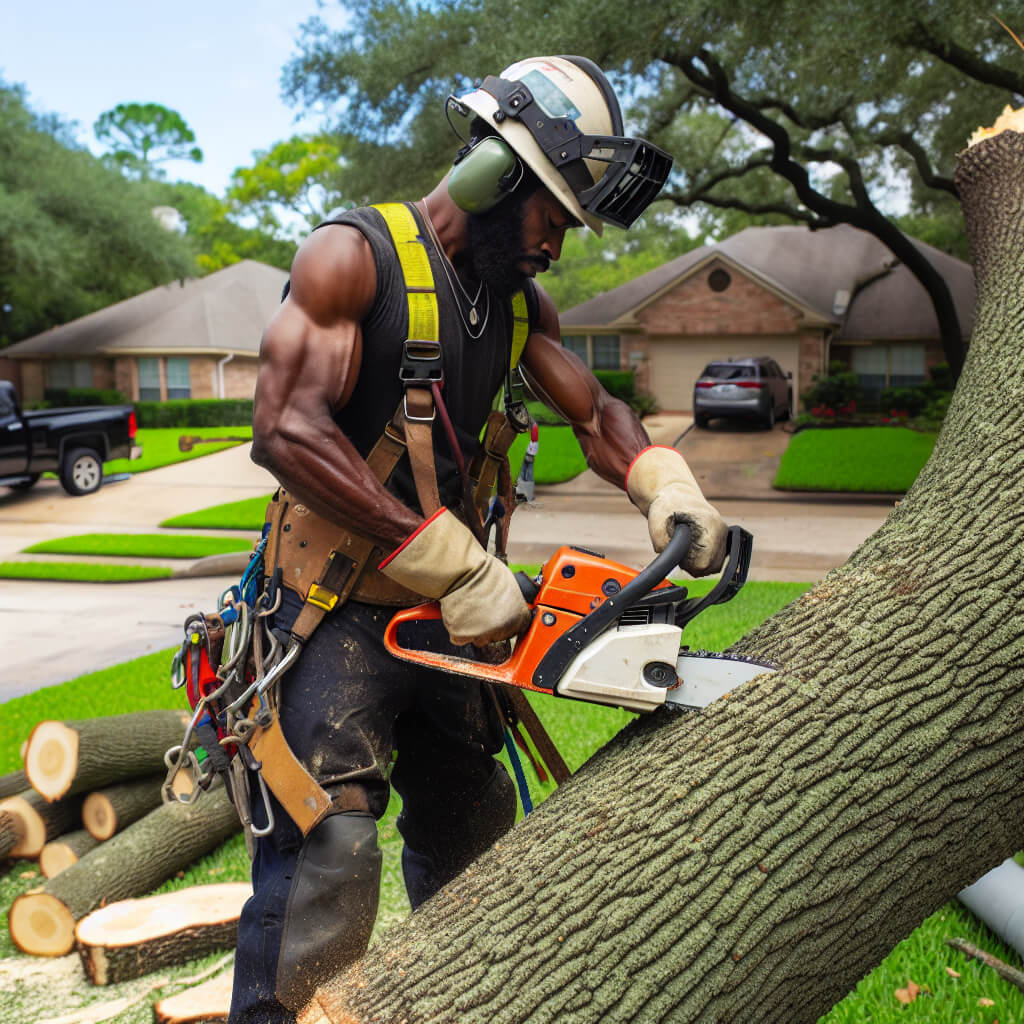
When strong storms roll through—whether it’s a hurricane, tropical storm, or one of those sudden Gulf fronts—large trees can become dangerous fast. And when that happens, getting emergency tree removal done quickly and safely makes all the difference between a close call and major property damage.
Why Trees Fail During Houston Storms
Houston’s combination of clay soil, heavy rain, and high winds is a perfect recipe for trouble. The clay holds water like a sponge, softening the ground. Once the wind starts whipping through, even healthy trees can lose their footing. Pines, in particular, have shallow roots and are prone to toppling in soggy ground—especially the ones you see lining backyards in areas like Kingwood or Cypress.
Live oaks, on the other hand, tend to hold up well—unless their roots have been compacted or covered by concrete driveways or landscape changes. I once worked a job in Katy where a live oak leaned over a roof because the homeowner had added a patio years earlier, smothering half its root zone. It took only one big windstorm to set that tree in motion.
The Right Way to Handle Emergency Tree Removal
When a tree comes down or starts splitting during a storm, safety has to come first. I’ve seen folks grab chainsaws and try to “help” immediately after the rain stops. That’s risky. Power lines, unstable branches, and weak root plates can all be deadly hazards. The first call you make should be to a licensed, insured arborist with emergency experience—not just anyone with a pickup and saw.
As an ISA Certified Arborist, I always assess the full situation before cutting. We secure power lines, stabilize broken limbs, and use rigging or cranes if necessary. During Hurricane Beryl, I handled a pine in Memorial that was wedged between two roofs. We had to use a crane lift at 2 AM with spotlights and a crew of six. It wasn’t cheap—the bill came out to just over $3,800—but every dollar was worth it considering it prevented over $50,000 in structural damage.
Costs and What to Expect in Houston
Emergency tree work in Houston usually runs higher than standard jobs because of timing, equipment, and risk. In my experience, homeowners pay anywhere from $900 for a small downed tree to $4,000 or more when cranes or complex rigging are required. A typical emergency oak removal in the Heights or Spring Branch neighborhood averages around $2,000 to $2,500.
Prices vary depending on factors like:
- Tree size and weight – Larger trees take specialized equipment.
- Access – Backyard trees with fences or pools are trickier.
- Hazards – Nearby power lines or roof contact add risk.
- Debris haul-off – Some clients choose to keep the wood for firewood, others want full cleanup.
For reference, the last tree removal I did in Sugar Land—a 65-foot pine that came down across a driveway—came out to $1,600, including stump grinding. But a similar-size oak wedged between two homes in the Heights doubled that cost.
Preparing Before the Next Storm
You can’t stop storms, but you can minimize damage. Regular tree trimming and preventive inspections go a long way. I recommend having an arborist look at large trees every couple of years, especially before hurricane season (June through November). We check for signs like root lifting, trunk cavities, or internal decay that might not be visible from the ground.
In Memorial and Tanglewood, I often see old live oaks with thick canopies that catch the wind like sails. Light reduction pruning done by a pro keeps them stable and less likely to drop large limbs. I’ve saved homeowners thousands in potential storm damage just by catching structural cracks early.
How Insurance Fits In
Most homeowner policies in Houston cover emergency tree removal if the tree damages your home, fence, or driveway. But they typically don’t cover preventative removal or trees that fall without hitting anything. It’s worth calling your insurer now to understand what’s included. I keep a few insurance-adjuster contacts handy because paperwork in emergencies can get confusing fast.
One tip: always take photos right after the storm for your claim—before cleanup begins. Document the tree impact, and ask your arborist for a detailed invoice specifying “emergency service due to storm damage.” That phrasing helps with smoother reimbursements.
After-Hours and 24/7 Response
When strong weather rolls through Houston at night, waiting until morning usually isn’t an option. My crew and I offer 24-hour response because I’ve seen how fast a cracked branch can shift as the storm clears. If a tree is leaning dangerously, or if you hear cracking sounds coming from a trunk or roots, that’s your cue to call right away for emergency tree removal.
FAQs About Emergency Tree Removal in Houston
How much does emergency tree removal cost in Houston?
Typically between $900 and $4,000, depending on size, access, equipment, and hazards. Complex jobs needing cranes or power-line work cost more.
When should I call an arborist after a storm?
Call right away if you see cracked limbs, leaning trees, or exposed roots. Even small signs can turn into big hazards overnight in soft clay soil.
Does insurance cover emergency tree removal?
If the tree hit your home or driveway, most policies help with costs. Always document everything before cleanup and ask your arborist for a detailed report.
Can trimming prevent storm damage?
Yes. A well-pruned canopy reduces wind resistance and removes weak limbs. I recommend a professional pruning every 2-3 years, especially before hurricane season.
Is emergency tree removal dangerous to attempt myself?
Very. Fallen trees can shift or hide live power lines. Always let licensed professionals handle it with the right gear and insurance coverage.
Final Thoughts
Houston weather isn’t gentle on our trees, and ignoring small warning signs often leads to big repair bills later. If you’re dealing with a storm-damaged tree—or you’re just not sure whether that leaning pine is safe—don’t wait until the next front rolls through. Reach out to a certified arborist for a fast inspection. It could save your home, your fence, or even your life.