
<!–meta: Learn essential emergency tree removal tips for Houston homeowners from local ISA Certified Arborist Michael Torres. Stay safe and protect your property after storms.–>
Introduction
Last month, right after that big windstorm swept through Katy, my phone didn’t stop ringing for two straight days. One call I’ll never forget came from a homeowner in Memorial whose 50-foot pine had crashed across their driveway overnight. They couldn’t back out, couldn’t get groceries, and their insurance company told them, “You’ll need an arborist’s report.” That’s when they found me. Emergency situations like that are a part of life in Houston—especially when hurricane season or even a surprise spring thunderstorm hits.
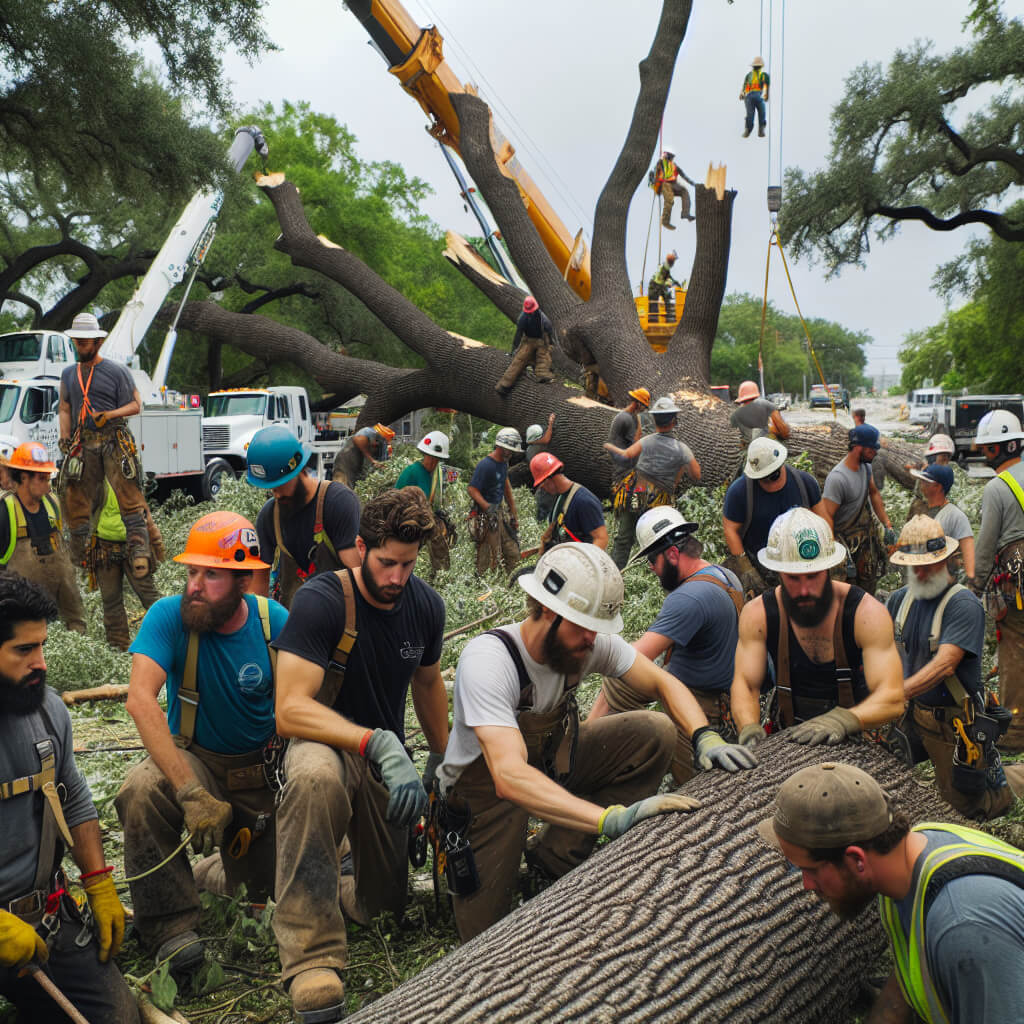
In my 17 years as a certified arborist, I’ve handled over three thousand emergency tree removal calls. From Hurricane Harvey’s flooding to last year’s ice storm, I’ve seen just about everything a Houston tree can throw at a homeowner. So, whether it’s a fallen oak blocking your street in the Heights or a tilting pine in Sugar Land, here’s what every Houston homeowner should know about staying safe and getting help fast when disaster strikes.
1. Safety First—Never Try to Handle a Fallen Tree Alone
I can’t stress this enough: fallen or leaning trees can be unpredictable and dangerous. During Hurricane Beryl, I saw a massive live oak in River Oaks that looked stable, but a hidden root crack gave way as we were inspecting it. Trees under tension can shift suddenly, especially if power lines or fences are tangled in the branches.
If you’re facing a fallen or partially uprooted tree, step back and keep your family—and curious neighbors—away from the area. Call your electric company if any lines are down. Then, contact a certified arborist or a qualified Houston tree removal crew. We use rigging, cranes, and specialized saws to remove trees safely without causing more damage to the property.
2. Call a Certified Arborist, Not Just Any Tree Service
After a big storm, you’ll see trucks pop up overnight offering “cheap tree removal.” I’ve seen these crews come from out of state after hurricanes and disappear just as quickly, often leaving homeowners with more problems—and no insurance coverage if something goes wrong.
A certified arborist is trained in tree biology, structural assessment, and safe cutting practices. We don’t just cut; we plan. That can mean using aerial lifts to dismantle a tree piece by piece or performing root inspections to determine if nearby trees are at risk too. I always tell homeowners in areas like Bellaire or West University to ask for an ISA certification number and current insurance proof before letting anyone start chainsaws on their property.
3. Assess the Extent of the Damage
Every emergency is different. Sometimes it’s as simple as a snapped limb dangling over a roof. Other times, it’s a full collapse across multiple structures. In Houston’s clay soil, it’s common for roots to lose their grip after days of heavy rain. That’s what happened during the Memorial Day Flood a few years back—a series of large water oaks in Meyerland literally tipped over after the ground turned to soup.
When I arrive at a site, I look for three things: structural splits, soil displacement, and crown balance. If a tree just lost one major limb but the rest of the structure is solid, corrective tree pruning may be enough to stabilize it. But if the trunk is cracked more than a few inches deep or the roots are lifted, full removal becomes the safer option.
4. Contact Your Insurance Before Any Major Work
In most homeowner policies, if a tree hits a structure—like your house, fence, or garage—removal of that portion is usually covered. What isn’t always covered is debris cleanup for trees that simply fall in the yard. I helped a family in Cypress who were shocked to learn their fallen pine wasn’t covered because it missed every structure on the property by a few feet. Always check your policy ahead of hurricane season. And take plenty of photos before and during removal. A good arborist should also provide documentation for your insurance adjuster.
5. Expect Pricing to Vary Widely
Emergency removals cost more than standard jobs—it’s not greed, it’s logistics. Hazards, weekend hours, and crane time all factor in. For example, removing a tree that’s fallen cleanly across a lawn might cost $800–$1,200. But a massive oak tangled in power lines over a roof can easily run $3,000 or more. Just last month in the Heights, a removal required two climbers, traffic control, and a 70-ton crane—it took 11 hours total, and the invoice was over $4,000. Always ask for an itemized estimate that shows equipment, labor, and disposal costs separately.
6. Hire Local Crews Who Know Houston’s Terrain
Houston’s soil moves—a lot. Our clay expands during wet months and shrinks in drought. That movement affects not just foundations but root stability. Experienced local crews know how to navigate soggy lawns in Meyerland or tight alleys in the Heights without further damaging your yard. When you hire local, you also get someone who understands the city’s tree ordinances and HOA compliance rules. Certain neighborhoods require notification before large removals, especially for protected species like heritage oaks.
7. Prevent the Next Emergency
Once the immediate crisis is handled, use that opportunity to prevent the next one. A lot of the storm removals I handle could’ve been avoided with regular trimming and inspections. Weak branch unions, fungal decay, and heavy canopy loads are all warning signs that many homeowners miss until it’s too late. Schedule annual tree health assessments, especially before hurricane season. Proper tree trimming to reduce wind sail and remove deadwood can make the difference between cleanup and catastrophe.
FAQ: Houston Emergency Tree Removal
How much does emergency tree removal cost in Houston?
It depends on size, location, and risk factors, but most Houston homeowners pay between $800 and $2,500. Complex jobs near power lines or involving cranes can go higher. I’ve done jobs after hurricanes that ran $4,000–$6,000 due to equipment and safety demands.
Who do I call first if a tree falls on my house?
Start with emergency services if there’s immediate danger. Then call your utility company if lines are involved, followed by your homeowner’s insurance and a certified arborist. We can help stabilize or remove the tree safely without worsening damage.
Does my insurance cover tree removal after a storm?
Usually yes, if the tree hits a covered structure. But if it falls in your yard and causes no damage, coverage is limited. Always document everything and verify your policy details before hurricane season each year.
What kinds of trees are most likely to fall during Houston storms?
Bradford Pears, shallow-rooted Pines, and aging Water Oaks are the top culprits I’ve seen. Houston’s clay soil and high winds can make even healthy trees unstable when the ground is saturated.
Can I remove a fallen tree myself?
I don’t recommend it unless it’s a small limb on open ground. Large trees, especially near homes or lines, require professional gear and training. One wrong cut can send a trunk rolling or drop a limb where you don’t expect it.
Conclusion
Storms in Houston will always keep us on our toes. But being prepared—knowing who to call, what’s safe to do yourself, and how to document damage—can make all the difference. When trees fall, quick thinking and professional help protect not just your home, but your family too. Don’t wait for the next storm warning; schedule a preventive inspection now. Trust me, it’s a lot cheaper and less stressful than a 2 a.m. emergency call after the next big wind gust.