
<!–meta: Learn how Houston homeowners should handle emergency tree removal safely after storms, from an ISA Certified Arborist with 17 years of Houston experience.–>
Introduction
Last summer after a big thunderstorm rolled through Memorial, I got a call from a homeowner who woke up to find a massive live oak laying halfway across their driveway. They were panicking—branches brushing the roof, power lines hanging low, rainwater pooling near the roots. This kind of emergency tree removal situation is something I’ve dealt with thousands of times across Houston, from The Heights to Katy.
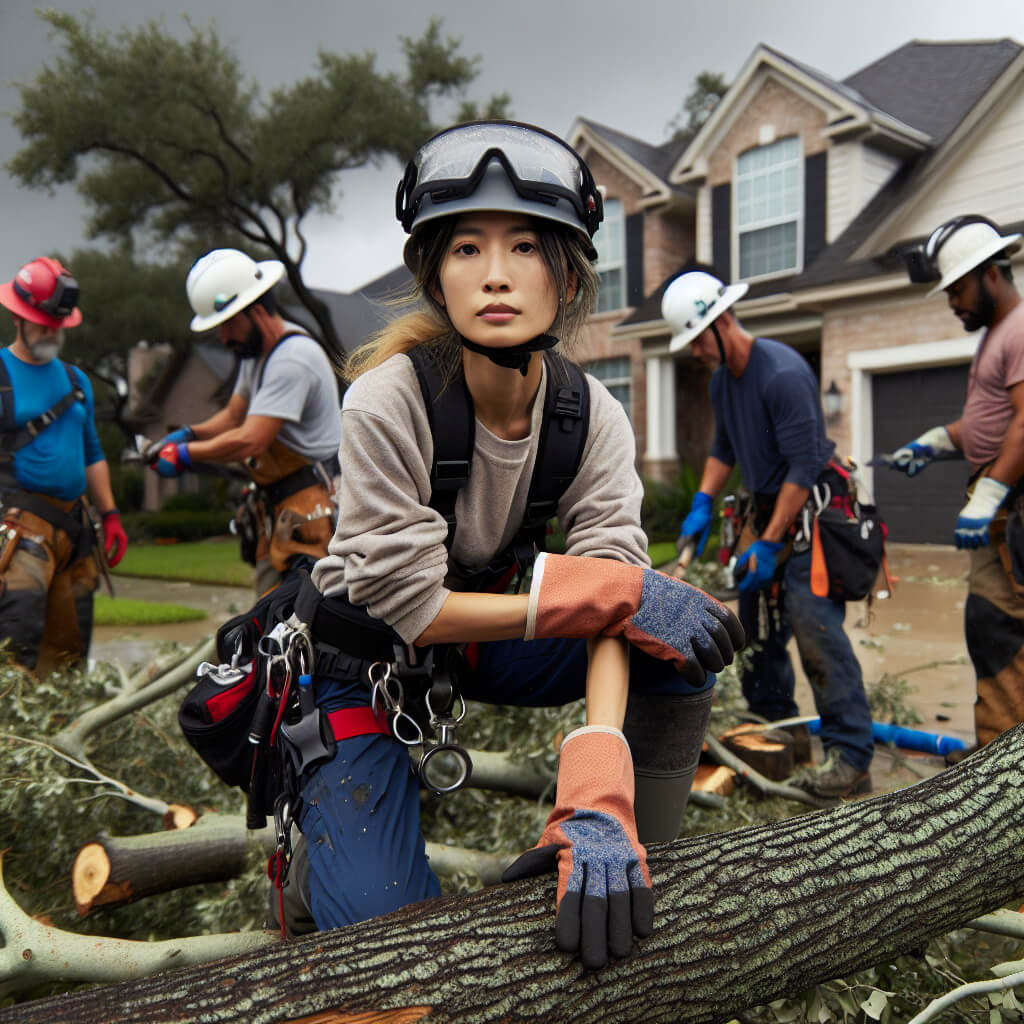
In this city, storms don’t ask for permission. Between hurricane winds, sudden downpours, and our clay soil that shifts under pressure, even well-maintained trees can come down without warning. When they do, knowing what to do—and what *not* to do—can be the difference between a safe cleanup and a really expensive mistake. So let’s go over the essential steps I always share with Houston homeowners facing an emergency tree situation.
Step 1: Stay Calm and Assess from a Distance
The first instinct most people have is to rush out and see the damage up close. Don’t. I’ve seen too many injuries caused by unstable limbs and hidden tension in fallen trees. After Hurricane Beryl, I responded to a call in Sugar Land where a pine had crashed through a patio cover. The homeowner tried to cut off smaller limbs themselves—what they didn’t realize was that another branch was still under pressure. The chainsaw kicked back and nearly caused a serious injury.
Keep your distance and look for immediate hazards: downed power lines, hanging limbs caught in other trees, or trees leaning toward your home. If you see sparks or hear humming from nearby power sources, call CenterPoint before anyone goes near the tree.
Step 2: Contact an Emergency Tree Service Immediately
Once you’ve ensured everyone’s safe, the next step is calling a certified arborist who specializes in emergency tree removal. Response time matters, especially in Houston’s humidity where decay sets in fast. A tree that’s only partly uprooted can become a complete failure overnight if the soil softens from additional rain.
Licensed and insured tree removal companies have the right equipment—cranes, stump grinders, and rigging systems—to remove trees safely. Last year in Katy, my crew used a 75-ton crane to carefully lift a fallen water oak off a garage roof without causing a single shingle to break. That job cost around $3,800 because of the risks and equipment needed, but it saved the homeowner thousands in potential roof damage.
Step 3: Document Everything for Insurance
Before anything’s moved, take clear pictures from different angles. You’ll want shots of the base of the tree, the broken limbs, and any property damage. I always tell clients to photograph the surrounding area too—debris patterns can help insurance adjusters determine if wind, rain, or root rot played the main role.
Most homeowners insurance policies in Houston cover tree removal if the tree damaged a structure, like your home, fence, or carport. They usually don’t cover removal just because a tree “fell in the yard.” If you’re unsure, call your agent before the cleanup begins, but don’t delay emergency action if the tree poses a hazard.
Step 4: Professional Removal and Cleanup
Once I’m on-site, I start with an ISA-based hazard assessment. That means checking load points, stability, and whether a crane assist is needed. Emergency tree removals are rarely a simple “cut and drop” job in Houston. Between tight property lines, large oaks, and overhead power lines, every removal requires a custom plan.
For homeowners’ reference, here’s how pricing typically breaks down here in Houston:
- Smaller trees (under 20 ft): $300–$800
- Medium trees (20–40 ft): $800–$2,500
- Large or dangerous trees: $2,500–$5,000+
Access, debris hauling, and crane setup can all impact the final cost. Just last month in the Heights, we removed a leaning hackberry from a back alley—it was an $1,800 job mostly because of the tricky access for our equipment.
Step 5: Stump Grinding and Root Removal
After emergency tree removal, the stump often remains. Some homeowners think they can deal with it later, but in our Houston climate, that stump can attract termites or start decaying within a few weeks. Grinding it down with a stump grinding service keeps your yard safe and stable again. If the fallen tree lifted the soil around it, we recompact and fill the area with topsoil to prevent sinkholes.
Step 6: Prevent Future Emergencies
I always tell my Houston clients: storms aren’t optional, but damage prevention is. After the removal, schedule a follow-up tree trimming visit for your remaining trees. Proper pruning reduces wind load and helps maintain balance. During Hurricane Harvey, I noticed a pattern—properties where trees were regularly pruned to ISA standards had far less damage overall.
Consider an annual inspection if your yard has mature oaks, pines, or pecans. I’ve seen countless 40-year-old live oaks in Memorial with internal trunk rot that wasn’t visible until it was too late. A quick health assessment once a year can prevent a $5,000 emergency later.
FAQ
How much does emergency tree removal cost in Houston?
It usually ranges from $800 to $3,000 for typical residential removals. Larger trees or dangerous access points can push it closer to $5,000. After storms, demand spikes and prices may temporarily rise because equipment is limited.
Who pays if my neighbor’s tree falls on my property?
Most of the time, your own homeowners insurance covers the damage, even if the tree came from next door. However, if neglect played a role—say the tree was clearly dead for years—your insurer may pursue the neighbor’s policy. Take pictures and document everything before cleanup begins.
Can I remove a tree myself after a storm?
Technically you can, but I wouldn’t recommend it unless it’s a small branch under 8 inches thick on safe ground. Larger trees under tension or near structures can shift suddenly. One slip with a chainsaw and you’re in the ER—or worse. Always call a professional for big removals.
Does the City of Houston require permits for emergency removal?
For immediate hazard trees posing risk to people or property, removal is often allowed right away. But if it’s a large street or protected tree, call 3-1-1 for guidance. In commercial zones or medians, a permit may still be required afterward for documentation.
Conclusion
Emergency tree removal isn’t something any Houston homeowner wants to deal with, but when the storms hit—and they always do—knowing the right steps makes all the difference. Stay calm, call professionals quickly, document the damage, and take preventive action for the future. The truth is, most disasters I’ve seen could’ve been avoided with proper pruning and annual checkups. So whether you’re in Katy, the Heights, or Sugar Land, take a walk around your yard now. If something looks questionable, give your local arborist a call before it becomes an emergency.