
Introduction
After any Houston storm, whether it’s a hurricane like Harvey or one of those late-summer microbursts that drops six inches of rain in an hour, I spend my days driving from Memorial to Clear Lake checking on damaged trees. Just last month, I got a call from a homeowner in Sugar Land who thought his big live oak had survived the storm just fine. It was still upright, after all. But when I inspected it, the root ball had shifted nearly three inches, leaving a hairline crack in the soil that only someone trained would notice. A few more weeks of high winds, and that oak would’ve been over his garage.
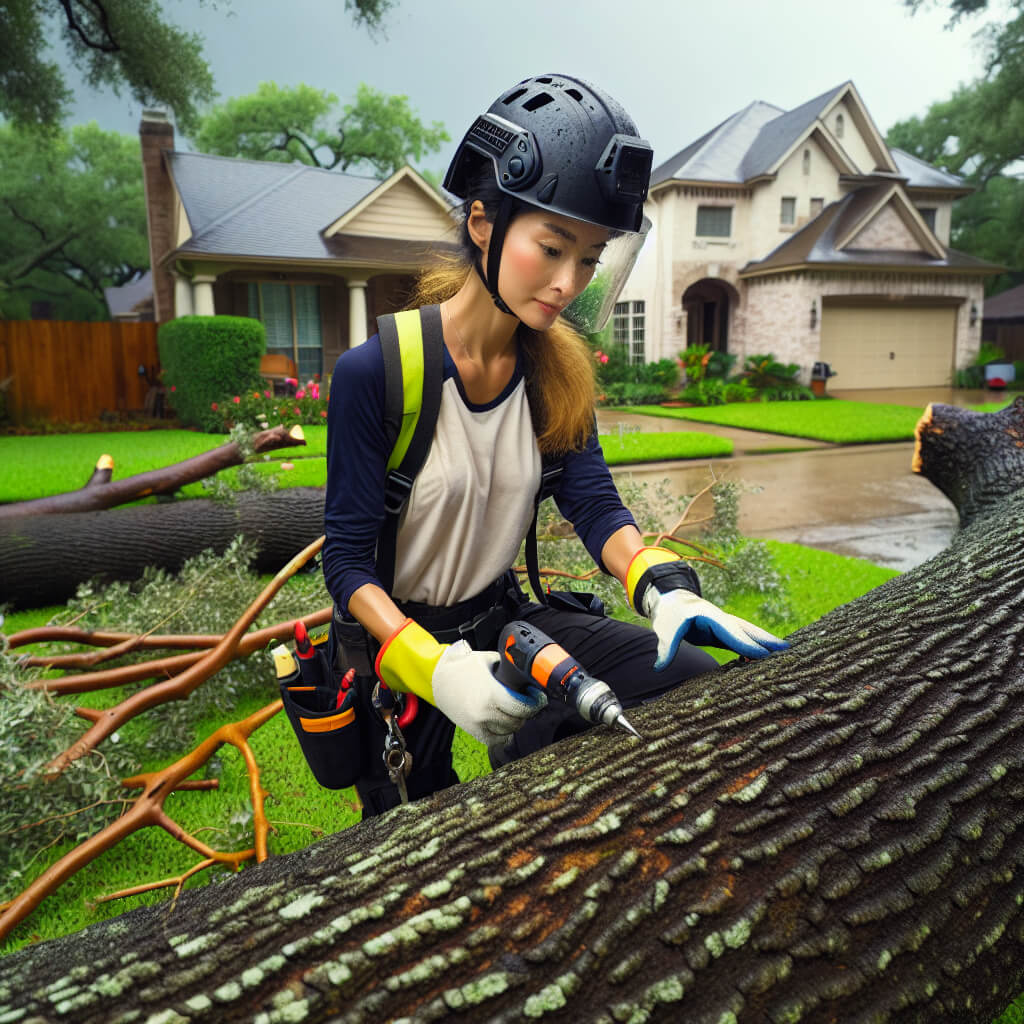
That’s the thing—storm damage isn’t always obvious. A tree might look healthy on the outside but have hidden fractures, root stress, or internal decay that make it dangerous later on. In this article, I’ll walk you through how I assess trees for hidden storm damage across Houston and what you can look for before the next hurricane rolls through.
Why Hidden Tree Damage Matters in Houston
Our Houston climate is a perfect storm for tree issues. Heavy clay soil expands and contracts with moisture, weakening root systems. Add in high humidity and hurricane-force winds, and you’ve got the recipe for slow, sneaky tree decline. I’ve seen beautiful 40-year-old oaks in West University lose major limbs months after Harvey because of internal cracking we couldn’t see at first glance.
Even if your trees survived the last storm standing tall, it doesn’t mean they escaped unscathed. Subtle structural weaknesses might cause delayed failures—what I call “slow-motion collapses.” I’ve returned to properties weeks after storms like Beryl to find trees with cracked trunks or split crotches that gave way overnight.
How I Assess Trees for Storm Damage
When I show up at a property after a big storm, I start with a simple visual scan, then move closer for a more detailed inspection. You can do a version of this yourself, though a licensed arborist’s trained eye (and tools) can spot hidden dangers you can’t.
1. The Root Zone
Start at the base of the tree. Houston’s clay soil often hides root movement, but look for raised soil, gaps, or cracks near the trunk. If the ground seems uneven or the tree looks slightly tilted compared to before the storm, that’s a red flag. I once worked in Katy on a pine that leaned just a few degrees after a storm—it fell three days later across a driveway.
2. The Trunk
Cracks, oozing sap, or bark separation usually mean internal damage. Tap lightly around the trunk with a rubber mallet—if it sounds hollow, decay might be spreading inside. I’ve seen water-soaked, rotted cores that made solid-looking trees fail without warning.
3. Major Limbs and Unions
The junctions where big limbs meet the trunk are stress points. Look for tight V-shaped crotches (common in Bradford Pears) or visible splits. Weak unions are one of the biggest culprits of limb failures in storms. If you see a limb sagging or cracked, call in a pro before it becomes a projectile.
4. The Canopy
Step back and check for uneven canopy shape or dead patches. After a storm, a thinned-out canopy could mean internal stress. This is also a good time to consider corrective tree trimming—by selectively reducing diseased or heavy limbs, you reduce the risk of future storm damage.
5. Soil Moisture and Drainage
Houston’s clay-heavy yards can hold water for days, which suffocates roots. Roots need oxygen, not standing water. After a big storm, check whether puddles remain near your tree’s base for more than a day. That’s when root rot can start setting in.
When to Call an Arborist
In my experience, about half of the post-storm jobs I handle are preventable. Homeowners wait until a small issue—like a slight lean or cracked limb—becomes a major hazard. The right move? Get an arborist inspection right after any major weather event.
For example, during the Memorial Day Flood a few years back, I helped a homeowner in the Heights who had ignored an old wound on his oak. The storm saturated the soil, and that wound turned into a full trunk split overnight. We had to bring in cranes for emergency removal, which cost roughly $3,800—triple what a preventive prune and cable service would’ve been.
An inspection after a major storm usually runs between $100 and $250 in Houston, depending on your property size and tree count. That’s small money compared to thousands in potential tree removal or repair costs.
How to Mitigate Future Storm Damage
If your trees weathered the storm mostly intact, good news—you’ve got a chance to make them stronger. Here are a few steps I often recommend to my clients in Houston suburbs like Cypress or Pearland:
- Schedule regular pruning: Every 2–3 years for mature trees to reduce weight and improve branch structure.
- Mulch properly: A 2-3” layer of mulch helps maintain moisture without suffocating roots. Just don’t pile it against the trunk.
- Monitor soil conditions: Avoid overwatering post-storm; let clay soil dry before irrigating again.
- Install support cables: In trees with weak crotches or co-dominant stems, cabling can add years of safety.
And one last thing—storm prep doesn’t start when the radar shows a hurricane in the Gulf. It starts now. Trees that are properly pruned, watered, and inspected before storm season have a much better chance of staying upright when the next one hits.
FAQ: Assessing Houston Trees for Storm Damage
How can I tell if my tree is dangerous after a storm?
Look for leaning, cracked limbs, exposed roots, or soil disturbances around the base. If you see any of these signs—or hear creaking—stay clear and call a certified arborist. Houston’s soaked clay soil can hide instability.
How soon should I get my trees checked after a storm?
As soon as possible. Many failures happen days after the winds die down. A quick professional assessment can spot issues you can’t, even with binoculars.
What if my tree looks fine now but had water around it for days?
That’s a sign of poor drainage. Prolonged standing water can stress the root system, especially for oaks and elms. You’ll want to monitor leaf color and branch dieback over the next few weeks.
Can tree pruning really prevent future storm damage?
Absolutely. Strategic tree pruning balances the canopy, reduces wind resistance, and eliminates weak limbs that could snap under stress. I’ve seen this simple step save trees during major storms.
How much does tree removal cost after storm damage?
In Houston, emergency removals can range from $800 to over $3,500 depending on size, access, and debris disposal. The cost goes up if power lines or structures are involved—another good reason for early inspections.
Conclusion
I’ve worked storms long enough to know you can’t predict which trees will fail—but you can dramatically lower the odds. Take a walk through your yard after every major storm, look for the warning signs we talked about, and don’t wait to call someone like me if something feels off.
A quick inspection today could save you thousands tomorrow, and more importantly, it can keep your family safe when Houston’s weather turns wild again.