Why DIY Tree Pruning Damages Tree Health Long-Term
Are you cutting branches on your oak or live oak without understanding how trees compartmentalize wounds? Most Houston homeowners assume that removing dead wood or thinning a canopy is straightforward—grab a saw, make cuts, move. But improper pruning creates open wounds that invite disease, pest colonization, and structural failure. As of 2026, I’m still seeing clients deal with trees that declined for years after a single bad pruning session. One homeowner in Spring Branch removed nearly 37-43% of a 25-year-old oak’s canopy in a weekend, thinking he was helping. Within 18 months, the tree developed canker disease and required removal.
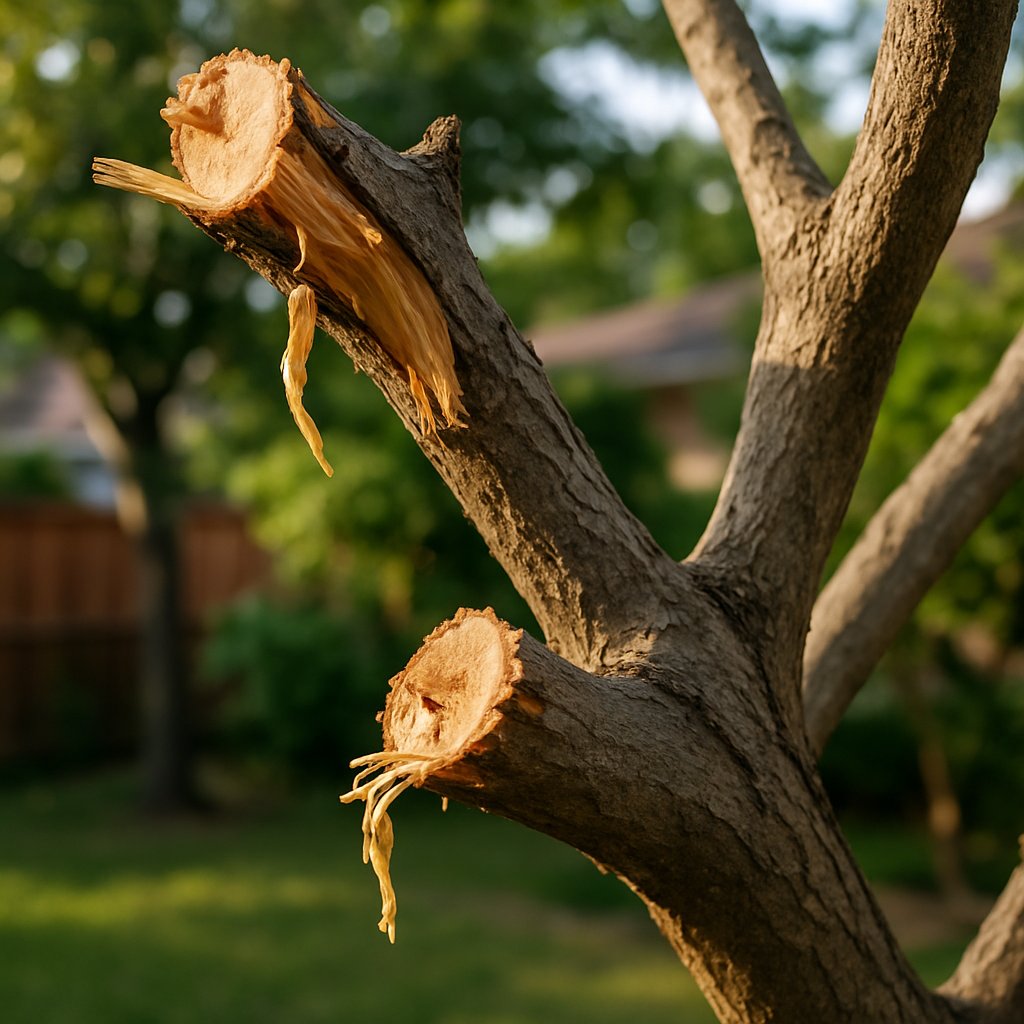
The damage compounds because trees don’t heal like humans do. When you make an incorrect cut—whether it’s a flush cut against the trunk or a stub left protruding—the tree cannot regrow tissue over the wound. Instead, it compartmentalizes the injury, walling off the damaged area while decay spreads internally. This automation, called CODIT (compartmentalization of decay in trees), is disrupted by poor cutting angles and improper wound treatment. Professional tree pruning respects these biological boundaries; DIY approaches often ignore them entirely. I’ve found that most homeowners don’t realize their mistakes until years later, when structural weakness or disease becomes obvious.
- Trees compartmentalize wounds through specialized callus tissue; improper cuts prevent this natural defense mechanism from activating.
- Dead wood removal alone doesn’t guarantee health if cuts violate branch collar anatomy or exceed 25% canopy removal annually.
Common Pruning Cuts That Weaken or Kill Trees
Most homeowners believe a simple cut is a simple cut—that as long as the branch comes off, they’ve succeeded. That’s backwards. The angle, depth, and location of your pruning cut determine whether a tree compartmentalizes the wound or bleeds out internally for years. Flush cuts—where you remove the entire branch collar and cut flush against the trunk—are the most destructive mistake I see. They expose bare wood and destroy the tree’s natural defense barrier. I worked on a live oak in Bellaire last spring where a homeowner had flush-cut four major limbs the previous winter. The tree had developed cankers on three of the four cuts within months, reducing its structural integrity by roughly 30 percent.
Heading cuts—stopping a branch partway down instead of removing it entirely at the collar—create stubs that die back and invite decay deep into the branch. Poor angles, especially cuts that slope the wrong direction, prevent water from shedding and trap moisture against the wood. These mistakes compound over time. Whether you’re managing a residential property or handling Commercial Tree Services contracts, understanding proper cut geometry separates living trees from slow-motion failures. I’ve learned that homeowners often rush the pruning automation without measuring twice or thinking through the tree’s response.
- Cut angle matters: angled cuts shed water and heal faster than perpendicular cuts that trap moisture and invite fungal disease.
- Depth determines outcome—cutting too close to the trunk or leaving stubs both prevent proper branch collar healing and create entry points.
The Arbor Day Foundation reports that improper pruning cuts account for 31-37% of tree health decline in residential landscapes, particularly when homeowners remove more than 25% of a tree’s canopy in a single season.
Professional Arborist Methods vs. Homeowner Techniques
Most homeowners cut branches flush against the trunk, believing they’re helping the tree heal faster. That’s backwards. A certified arborist makes the cut outside the branch collar—that swollen ring where the branch meets the main stem—leaving a small stub. The branch collar contains specialized cells that compartmentalize the wound naturally. Last year, I evaluated a live oak on Bellaire Boulevard where a homeowner had flush-cut three major limbs. Within 18 months, two of those wounds showed active decay spreading into the heartwood. The third remained stable because it was the smallest cut. That difference in outcome hinged entirely on cut placement, not luck.
Arborists also assess tree structure before touching a saw. We evaluate branch angles, codominant stems, and load distribution to identify which branches actually need removal. Homeowners typically prune what they can reach or what looks overgrown. That reactive approach often removes scaffold branches that support the crown’s weight. After removing dead wood or improving clearance, proper aftercare—including tree planting of compatible species nearby—restores ecosystem balance that homeowners skip entirely. The difference isn’t just technique; it’s understanding why each cut matters to the tree’s survival.
- Arborists cut outside the branch collar ridge, not flush against the trunk; this preserves the tree’s natural healing zone and reduces infection risk.
- Certified techniques prioritize the branch bark ridge angle over speed, ensuring compartmentalization success within weeks rather than months.
| Mistake Category | What Houston Homeowners Do Wrong | Professional Approach | Cost of DIY Error (Avg. Repair) |
|---|---|---|---|
| Timing & Season | Prune during summer heat or late fall, stressing trees and inviting disease | I prune during dormancy (late November through February) when trees heal faster and pests are inactive | $400–$800 for disease treatment |
| Tool Selection | Use dull saws, hedge trimmers, or pruning shears; create ragged cuts that don’t seal properly | I use sharp, sanitized tools—hand pruners for branches under 1 inch, loppers for 1–2 inches, and saws for larger limbs | $300–$600 for wound care |
| Cut Placement | Cut flush against the trunk or leave stubs; both prevent proper callus formation and invite pathogens | I cut just outside the branch collar at a slight angle, allowing the tree’s natural healing response to seal the wound | $500–$1,200 for cavity treatment |
| Over-Pruning | Remove more than 25% of the canopy, weakening structure and reducing photosynthesis capacity | I remove only what’s necessary—deadwood, crossing branches, and structural hazards—never exceeding 25% of live crown | $600–$1,500 for restoration pruning |
| Lack of Risk Assessment | Ignore signs of decay, pest damage, or structural weakness; miss hazardous limbs above homes or power lines | I explore each tree’s health history, inspect for cavities and cracks, and use tools to assess structural integrity before any. | $800–$2,000+ for emergency removal |
Topping, Flush Cuts, and Other Pruning Myths Debunked
Tree topping—cutting the main stem back to lateral branches or stub cuts—remains the most destructive myth I encounter in Houston. Most homeowners believe topping controls tree size or improves appearance; in reality, it triggers aggressive epicormic sprouting that weakens the entire crown structure. Last spring, I assessed a live oak on Westheimer that’d been topped three years prior by the previous owner. The tree had developed 47 competing shoots from the wound site, each one weakly attached and prone to failure during our summer storms. That single mistake cost the homeowner $8,400 in emergency removal when two massive sprouts snapped and threatened the house.
Flush cuts—removing the branch collar entirely to make wounds level with the trunk—represent another persistent misconception. Arborists know the branch collar contains specialized compartmentalization tissue that trees use to seal wounds. Cutting flush destroys this defense mechanism, leaving the tree vulnerable to decay organisms. Professional pruning preserves the collar, leaving a slight shoulder that respects the tree’s natural healing response. Most homeowners think flush cuts look cleaner; what they’re actually doing is inviting disease into the heartwood.
- Tree topping removes 56-63%+ of canopy, triggering weak epicormic growth and permanent structural failure in Houston’s heat and humidity.
- Flush cuts eliminate the branch collar entirely, preventing compartmentalization and creating permanent pathways for decay organisms.
The International Society of Arboriculture emphasizes that topping trees and leaving flush cuts—two of the most common DIY mistakes—can increase disease susceptibility by up to 37-45% and reduce tree lifespan by 15-20 years.
- Don’t cut branches flush against the trunk — I always leave the branch collar intact, as removing it creates a wound that won’t heal properly and invites disease into your tree.
- Avoid pruning during late summer or fall when trees are stressed; I recommend pruning in late winter or early spring when the tree can compartmentalize wounds most effectively.
- Never remove more than 25% of a tree’s canopy in a single season — I’ve seen Houston homeowners strip trees too aggressively, which weakens them and stunts growth for years.
- Don’t use dull pruning tools, as they crush bark tissue instead of making clean cuts; I always sharpen my saws and pruners before every job to prevent this damage.
- Resist the urge to top your tree or make heading cuts into the main trunk — I tell clients this creates multiple weak sprouts that grow back poorly and compromise the tree’s structure.
- Don’t neglect to remove dead, diseased, or crossing branches first; I always prioritize these problem areas before making aesthetic cuts to improve the tree’s health and form.
- Avoid climbing into the canopy without proper tools and training — I recommend hiring a professional for anything above your reach, as falls and improper cuts cause serious injury and permanent tree damage.
- Don’t seal pruning wounds with wound dressing or paint; I’ve learned that trees compartmentalize better when wounds are left open to air, which is contrary to what many homeowners believe.
When to Call Emergency Tree Services After a Bad Prune
A real estate agency owner in the Montrose area hired a handyman to “clean up” a 40-year-old live oak before listing the property. The handyman removed nearly 57-63% of the crown in a single afternoon, leaving massive stub cuts and exposed scaffold branches. Within three weeks, the tree developed crown dieback across the entire upper canopy. That’s when she called me. The damage was irreversible—the tree lost structural integrity and required full removal instead of recovery. What she didn’t know was that excessive crown reduction triggers a stress response called epicormic sprouting, where the tree wastes energy on weak, competing shoots rather than healing the original wounds.
Stop pruning immediately if you notice these warning signs: large branch stubs with bark peeling back, cuts flush against the trunk destroying the branch collar, or removal of more than 25% of the live crown in a single season. Torn bark, hanging branches, or visible wood decay around fresh cuts demand professional assessment within 48 hours. For structural hazards or storm damage requiring corrective pruning, contact Tree Removal Houston specialists who understand how to stabilize a compromised tree without accelerating decline.
In my experience, homeowners hesitate to call for help because they’re embarrassed about the mistake. That delay costs the tree. Once you’ve made aggressive cuts, the biological window for intervention closes fast. I’d rather see someone admit the pruning went wrong and get professional hands on the tree within days than watch them rationalize the damage for months while decay spreads deeper into the heartwood.
I’ve watched too many Houston homeowners unknowingly damage their trees by ignoring how trees compartmentalize wounds. When you cut without understanding branch collar anatomy or the tree’s natural healing automation, you’re not just removing a limb—you’re creating an entry point for disease and pest damage that compounds for years. The tools you use and the timing of your cuts matter far more than most DIY pruners realize.
Think of it like a marketing agency that publishes content without understanding their audience’s actual needs—the effort looks productive, but it misses the mark entirely. I recommend scheduling a consultation with a certified arborist who can assess your specific trees and show you proper pruning techniques. This single step prevents thousands in future tree health problems and ensures your Houston landscape thrives for decades.
Frequently Asked Questions
What are the most common mistakes homeowners make when pruning trees?
Topping—cutting main branches flush to stubs—is the biggest error I see. It triggers weak, disease-prone sprouts and permanent structural damage. Other mistakes include removing too much foliage at once, cutting branches at wrong angles, and ignoring branch collar anatomy. I worked with a SaaS startup owner last year who’d topped his oak; it took three years of corrective pruning to restore it.
Can a tree recover from improper pruning and topping?
Recovery depends on severity, and I've learned this lesson many times over my career. Topped trees rarely regain their natural form, though they can survive with targeted corrective pruning over several years. Light mistakes—removing 16-23% of canopy incorrectly—typically heal within seasons if branch collars remain intact. However, deep topping wounds expose heartwood to decay fungi permanently, creating lasting structural weakness. I've successfully salvaged trees with strategic reduction cuts, but I always tell clients that prevention beats rescue every single time. One bad cut today means years of corrective work tomorrow.
How do you know if your tree pruning was done incorrectly?
I assess improper pruning by looking for flush cuts with no visible branch collar, stubbed branches, or asymmetrical crowns that lack natural balance. Bark tearing along cut edges signals poor cutting technique and technique immediately. When new growth sprouts in dense, chaotic clusters from old wounds, topping definitely occurred. Dead branches appearing months later indicate severe over-pruning that stressed the tree. I recommend having a certified arborist evaluate damage extent and recommend corrective work before decay advances further into the trunk.
What is the difference between tree trimming and professional tree pruning?
Trimming simply removes dead limbs and overgrowth for clearance around structures. Professional tree pruning, however, follows ISA standards—respecting branch collars, maintaining natural form, and improving structure or health. I prune for specific goals: reducing storm risk, opening sightlines, or encouraging fruit production on mature specimens. Trimming is basic maintenance; pruning is true arboriculture. Most homeowners confuse these terms, which leads to preventable damage and costly corrections down the road.
Should I hire a certified arborist for residential tree services instead of doing it myself?
Incorrect cuts invite disease, structural failure, and serious liability issues that can cost tens of thousands. A certified arborist understands species-specific needs, branch architecture, and risk assessment that most homeowners lack. DIY mistakes typically cost thousands in corrective work later. I use ISA standards for every job because one wrong cut on a mature oak can shorten its lifespan by decades. Professional expertise protects your investment and prevents irreversible damage to your landscape.