
<!–meta: Learn expert tips from a certified arborist for safe and fast emergency tree removal and storm cleanup in Houston neighborhoods.–>
One of the toughest calls I ever got came right after Hurricane Beryl rolled through Houston. A homeowner in the Heights had a massive live oak that came down across their driveway, blocking both cars inside—and part of it was resting on the neighbor’s fence. It was about 10 p.m., and the rain hadn’t even stopped. That’s an emergency tree removal job if there ever was one.
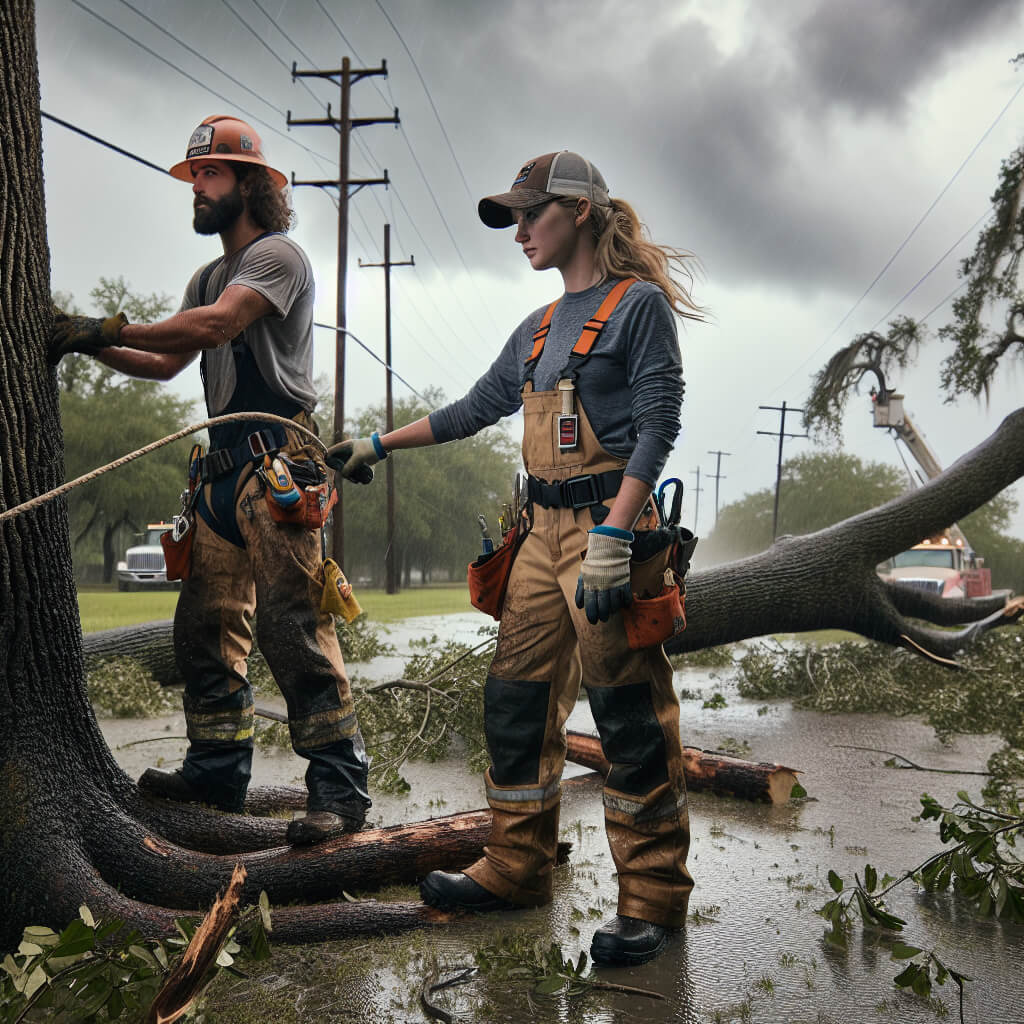
After 17 years responding to this kind of call, I’ve learned that what homeowners do in the first few hours after a storm can make all the difference. Whether a tree’s blocking your street, sitting on your roof, or tangled in utility lines, there’s a right—and definitely a wrong—way to handle it. So, let me walk you through what I’ve seen, what works, and how you can get through tree emergencies safely and smartly.
What Counts as a Tree Emergency in Houston?
In Houston, not every fallen branch is an “emergency.” But when a tree threatens life, property, or access, time matters. I usually call something an emergency when:
- The tree or large limb is blocking your driveway or trapping a vehicle.
- The tree has fallen on your roof or fence.
- Branches are tangled with power lines.
- There’s visible splitting or a heavy lean after a storm.
I remember a call in Katy after a big windstorm—an 80-foot pine had split halfway down and was resting against a two-story home. From the ground, it didn’t look too bad. But when we climbed up for a closer look, that trunk was cracked clean through. Another hour of wind and it would’ve fallen right into the kitchen.
First Steps After Storm Damage
When a storm passes, it’s tempting to grab a chainsaw and start cutting branches away. Please don’t. Here’s what to do first instead:
- Stay clear of hazards. Downed power lines are deadly. Always assume they’re live, and call CenterPoint or 911 if you see any nearby.
- Document the damage. Take photos of everything before moving anything—that helps with insurance claims later.
- Call a certified arborist. A professional can assess if a tree is recoverable or needs full tree removal.
During Harvey, I saw dozens of homeowners try to cut their way out of storm damage. Many underestimated how heavy saturated wood can get. Even a small branch can weigh 200 pounds when soaked. I’ve seen chainsaws kick back and ropes snap without proper rigging. That’s why emergency tree work should always be handled by pros with the right equipment—climbing gear, heavy-duty saws, and cranes when needed.
How Professionals Handle Emergency Tree Removal
When we show up for an emergency tree removal, the first step isn’t to start cutting—it’s to assess. We look at where the tree’s hung up, how much weight is involved, wind direction, and any pressure points. If we’re dealing with a storm-soaked yard in clay soil (which is pretty much all of Houston), footing is tricky. It’s not uncommon to set up plywood boards or use small cranes to safely access the area.
In Memorial, I once removed a 70-foot water oak that had tipped across a pool enclosure without tearing the screen frame. It took six hours, three climbers, one crane, and a lot of patience. But the homeowner was back in their backyard the next day, and that’s always worth the effort.
The Cleanup Process
Emergency removal is just half the battle. The cleanup is where most homeowners start to realize how much debris a mature tree creates. You can easily fill two 30-yard dumpsters with debris from a single large oak.
We typically chip branches on site, haul large wood sections for recycling, and perform stump grinding once the soil’s dried out enough. If your yard’s still saturated, it’s better to wait a couple of days before finishing stump work, or you risk rutting the soil with heavy equipment.
Typical Houston Emergency Tree Removal Costs
Every storm job is unique, but for residential work, most homeowners pay between $1,200 and $4,500 for emergency removals. The main cost drivers are tree size, access, and how hazardous the conditions are. For example, a pine that fell clean in a backyard (no structures involved) might run around $1,000–$1,500. But a massive live oak leaning over a roof during an active storm cleanup could easily exceed $4,000, especially if crane work’s required.
After the freeze a few years ago, a homeowner in Sugar Land paid about $2,800 for a large post oak removal that had snapped mid-trunk. The kicker? We discovered root rot that’d been developing for years—it just took one icy night to finish the job.
Preventing Future Emergency Calls
The best emergency is the one that never happens. Houston’s weather is wild, but preventive care really helps. Regular tree trimming reduces storm damage risk by removing dead wood, lightening heavy branches, and improving airflow through the canopy.
Also, keep an eye on soil conditions. Our expansive clay causes a lot of root problems—especially when we go from drought to soaking rains. Roots can lose their grip on one side of the tree, and that’s when leaning begins. If you notice a tree starting to tilt, call for a tree health assessment before hurricane season ramps up.
When to Call for Emergency Storm Help
Don’t wait until another limb breaks. If a tree shifted during wind and your soil looks raised on one side, it’s already unsafe. You can reach a licensed crew 24/7 for emergency storm damage assistance, even during ongoing rains. We have the equipment and experience to stabilize trees or remove hazards safely, day or night.
FAQs About Emergency Tree Removal in Houston
How long does emergency tree removal take?
It depends on the size and situation. Smaller jobs might take two hours. A large oak on a roof can take most of the day. Safety planning and debris handling often take longer than cutting itself.
Can insurance cover storm-related tree removal?
Usually, yes—if the tree caused property damage or blocked access. Every insurance company handles it differently, but photos and certified arborist reports help a lot with claims.
Do I need a permit to remove a tree after a storm?
In Houston city limits, fallen or hazardous trees typically don’t require permits for removal. But trees on commercial properties or in some HOAs might still need documentation. Always check before cutting.
What if my neighbor’s tree falls into my yard?
That’s a common one. Usually, you’re responsible for cleanup on your side unless you can prove the neighbor neglected a known hazard. But a good arborist can help document the cause if needed.
Is it safe to do emergency tree work myself?
Honestly? No. I’ve seen too many close calls after storms. Unstable trunks, tangled branches, slippery ground—it’s the worst time for DIY work. Leave emergencies to trained crews with rigging gear and insurance.
Final Thoughts
Every Houston homeowner should have a plan for storm season. Know your trees, trim them regularly, and have the number of a trusted arborist you can call fast. Emergencies don’t wait for business hours, and when heavy wind meets heavy wood, things can go bad in seconds. I’ve seen it too many times.
Stay safe, stay prepared, and if you ever find yourself staring at a fallen tree wondering what to do—call someone who’s done this a thousand times before. That’s what I’m here for.