
<!–meta: Expert tips on Houston tree removal cost, safety, and timing from a certified arborist with 17 years’ experience responding to local storm and tree emergencies.–>
Introduction
Just last week, I got a call from a homeowner in the Heights who’d been watching a huge pine lean a little more every time it rained. They’d been putting off getting it checked, hoping it would “straighten itself out.” Well, by the time I arrived, the soil around the roots had shifted nearly six inches, and that pine was only one gust of wind away from crashing into their garage. Sadly, that’s a common call for me here in Houston. Our clay soil, high winds, and unpredictable storms create a perfect storm for tree failures if they aren’t handled promptly.
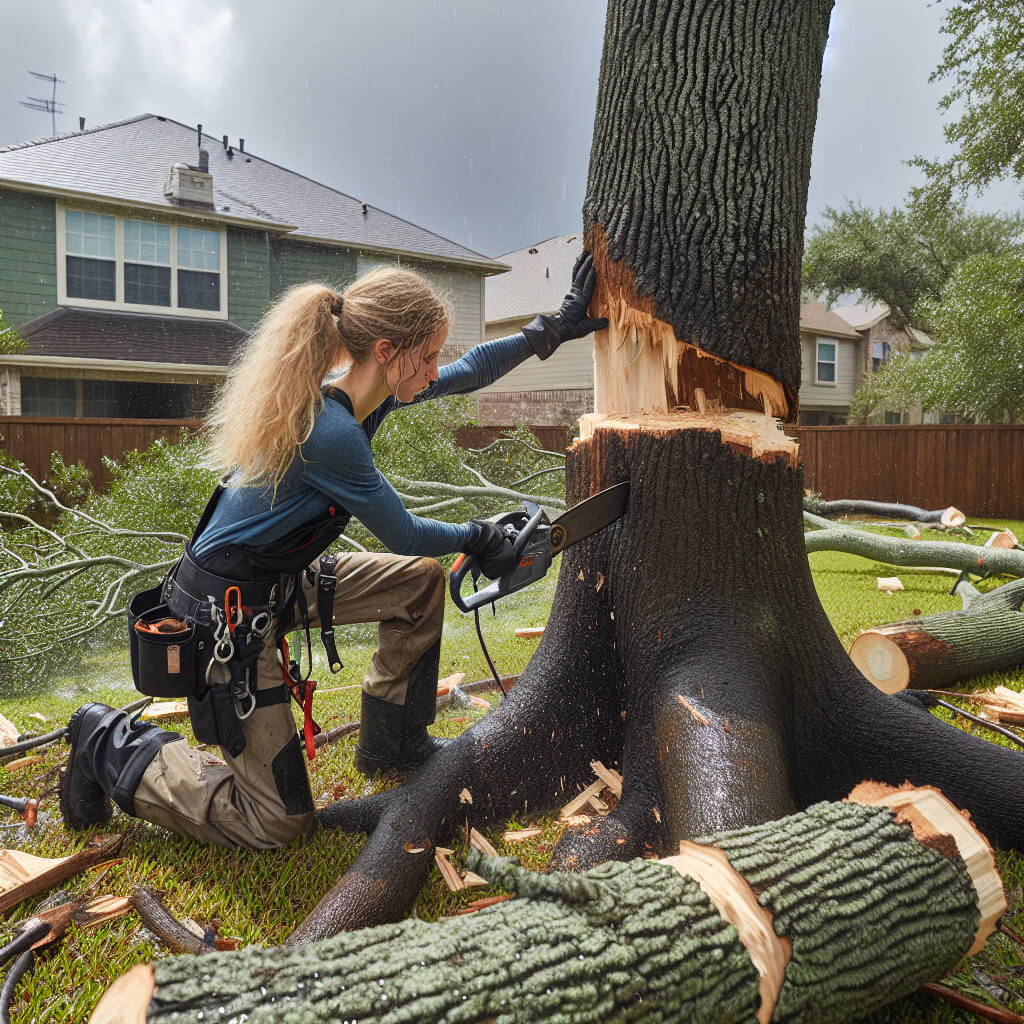
In my 17 years working as a certified arborist across the Greater Houston area, I’ve learned that timing, safety, and preparation are three things homeowners rarely think about until a dangerous situation develops. So today, I’m breaking down what you really need to know about tree removal in Houston: how much it costs, when you should do it, and how to make sure it’s done safely and legally.
Understanding When Tree Removal Is Necessary
I always tell homeowners: not every problematic tree needs to come down. Sometimes, strategic pruning or cabling can save it. But once a tree becomes structurally unsound or poses a threat to people or property, removal is unavoidable.
Some of the sure signs I look for include:
- Leaning trunks: Especially after heavy rains or flooding when the ground gets saturated and root systems loosen.
- Cracked or split stems: I’ve seen trees with 2-inch-wide trunk cracks hang on for months—but that’s a ticking time bomb.
- Dead canopies: If more than 50% of a tree’s canopy is dead or missing leaves, it’s usually beyond saving.
- Root damage from construction: I once removed a gorgeous live oak in Memorial that had simply been suffocated by excessive soil compaction during a driveway renovation.
Houston’s combination of clay soil expansion, strong winds, and tropical humidity accelerates these issues. Trees that might last decades longer in other parts of Texas sometimes fail here much sooner.
Best Timing for Tree Removal in Houston
Timing can drastically affect safety and cost. The ideal time for tree removal in Houston is during our cooler, drier months—roughly November through February. Fewer storms, less soil saturation, and dormant trees make removal safer and more efficient for crews.
That said, our weather doesn’t always cooperate. After major events like Hurricane Harvey or Hurricane Beryl, I’ve seen homeowners wait weeks for emergency crews to become available. If a tree is threatening your home, don’t wait for the “right season.” You can’t schedule Mother Nature.
Here’s my rule of thumb: if you notice visible leaning, large cracks, or soil upheaval around a tree base—act immediately. The longer you delay, the riskier (and more expensive) the job becomes.
Safety Considerations Before Removing a Tree
Tree removal is one of the most hazardous jobs in the green industry. In my career, I’ve seen well-intentioned homeowners rent a chainsaw on a Saturday and end up damaging their fence—or worse, hurting themselves. Houston’s dense neighborhoods and tight lot lines make it especially tricky.
Professionally, we follow strict ISA and ANSI safety standards, which cover everything from rigging to aerial lift use. We often need coordinating with CenterPoint Energy when branches are near power lines. And some properties, especially inside city limits or HOA-regulated neighborhoods like River Oaks or Tanglewood, require permits before removing large or protected trees.
So if you’re even questioning whether a tree is safe to remove on your own, call a certified arborist first. One of my clients in Katy recently called me after his neighbor tried to drop a 40-foot hackberry and ended up taking out a section of both their fences. A $200 professional assessment could’ve saved him a $3,000 repair bill.
How Much Does Tree Removal Cost in Houston?
Tree removal pricing in Houston depends on a mix of factors—tree size, accessibility, debris removal, and proximity to structures or power lines. Based on my years in the field, here’s a general breakdown:
- Small trees (under 25 feet): $300–$700
- Medium trees (25–50 feet): $800–$2,000
- Large trees (50+ feet): $2,200–$5,000+
For example, last month I removed a 65-foot water oak in the Heights for $3,800—it had multiple hangers over a garage and required climbing and sectional cutting. Meanwhile, a straightforward pine removal in Katy cost the homeowner just $750. Access and complexity make the difference.
Also, remember that stump removal is usually extra. Most companies (including mine) offer stump grinding starting around $150–$400, depending on the diameter and location.
Dealing with Emergency Tree Removal After a Storm
If there’s one thing we Houston folks know, it’s how wild our storms can get. After Hurricane Harvey, my crew worked 18-hour days clearing driveways and rooftops. Same thing after the 2021 freeze when waterlogged and frostbitten trees cracked overnight. When an emergency happens, it’s not just about removing the tree—it’s about doing it safely and preventing further damage.
In emergencies, always make sure you or your contractor contacts your insurance provider first. Most homeowner policies cover removal if the tree damages insured structures. I also recommend using a company that offers true 24/7 emergency storm damage response, not just “next-day service.” Speed matters when your roof is exposed to Houston rain.
Why Hire a Certified Arborist?
There’s a big difference between a guy with a chainsaw and a certified arborist. When you hire an ISA Certified Arborist, you’re getting someone who understands tree biology, risk assessment, and safe removal techniques. We consider canopy balance, root structure, soil health, and post-removal options like replanting or soil remediation.
I once helped a homeowner in Sugar Land remove a dying sycamore, then replaced it with a smaller, more hurricane-resistant magnolia suited to that property’s clay content. That’s the long-term value you get with professional guidance.
FAQ
How much does tree removal cost in Houston?
Most homeowners around Houston pay between $800 and $2,500 for tree removal. Big live oaks or difficult removals near structures can run up to $5,000 or more. Size, access, and safety risks drive the cost.
When’s the best time of year to remove a tree?
Cooler months (November through February) are ideal because trees are dormant and weather is milder. But if a tree is dangerously leaning or cracked, don’t wait for winter—get it addressed right away.
Do I need a permit to remove a tree in Houston?
Inside Houston city limits or under certain HOAs, you may need a permit for trees above a specific diameter, especially near streets or public areas. A certified arborist can help navigate that paperwork.
Is it covered by insurance if a storm knocks down my tree?
Usually yes—if the fallen tree damages a covered structure like your home or fence. But if it falls harmlessly in your yard, removal is often your responsibility. Always check your policy details.
What happens to the wood and debris after removal?
Most professional crews haul it off and include that in the quote. Some homeowners ask to keep wood for firewood or mulch—we’re always happy to accommodate that.
Conclusion
If you take one thing away from this, it’s that timing and professional help matter. Tree removal in Houston isn’t just about cutting down wood—it’s about understanding the soil, safety risks, and long-term health of your property. Whether you’re in Katy, the Heights, or Sugar Land, don’t wait until a storm puts your family at risk. Call a certified arborist, get an honest assessment, and stay ahead of Houston’s unpredictable weather.