
<!–meta: Learn how professional tree health assessments keep Houston’s oak trees healthy and prevent costly damage from disease, pests, and weather stress.–>
Introduction
Last month, I got a call from a homeowner in the Heights who was worried about their big live oak. The leaves were yellowing, there was some odd black spotting, and the canopy just didn’t look as full as it used to. When I arrived, I found more than just cosmetic problems — the soil was compacted, irrigation was inconsistent, and fungal disease had already started around the root zone. The good news? We caught it early. A proper tree health assessment saved that oak from decline, and today it’s pushing new growth again.
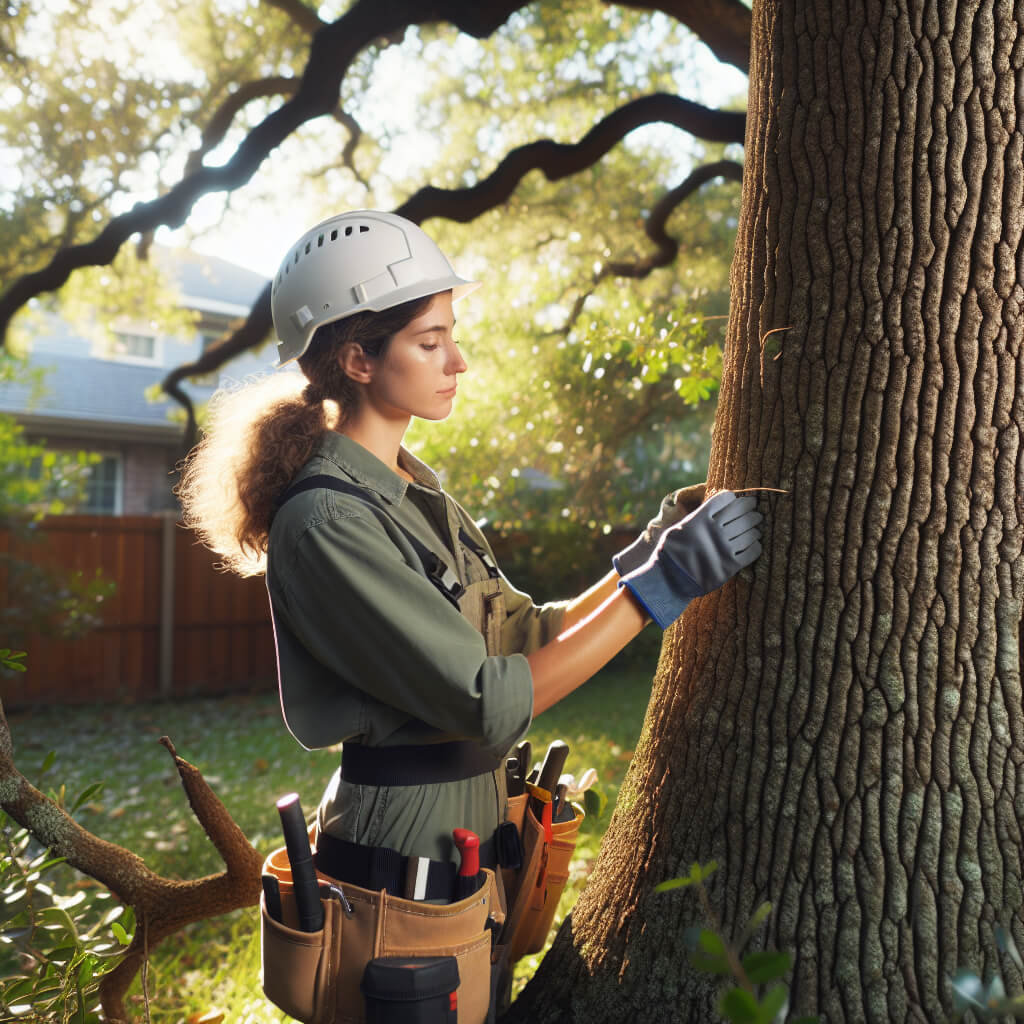
I’ve been caring for Houston’s oaks for 17 years, and I can tell you — these trees are part of our identity. From the grand live oaks lining Rice University to the massive water oaks in Memorial and Meyerland, they give us shade, beauty, and value. But our humid Gulf Coast climate is tough on them. Between hurricanes, droughts, and clay soil that swells and contracts, even healthy trees can run into trouble fast. That’s why I want to talk about how professional tree health assessments can keep your oaks thriving year after year.
Why Houston Oaks Need Regular Health Assessments
Let’s start with what an assessment actually is. A tree health assessment is a detailed inspection of your tree’s structure, soil, and overall vitality. When I walk a property, I’m looking for early warning signs: thinning canopies, fungal growth near the roots, cracks in the trunk, or bark that’s sloughing off. Many of these symptoms show up months before a tree becomes a real hazard.
Our local environment makes it essential. Houston’s clay soil expands in wet months and contracts in dry spells. That puts stress on oak root systems, especially if the tree was improperly planted or if irrigation isn’t regulated. Add hurricane winds or a week of freezing temperatures like we saw during Winter Storm Uri, and even a mature oak can start to fail quietly.
During Hurricane Harvey, I saw dozens of healthy-looking oaks topple because root zones had deteriorated unnoticed. Annual or bi-annual assessments can prevent that by catching decay or root rot early. It’s like a physical check-up for your tree — you wouldn’t ignore strange symptoms in your own health, right?
Common Issues Found in Houston Oak Trees
Oak Wilt and Fungal Infections
Oak wilt is one of the deadliest problems here. It spreads fast through root grafts and beetle activity. I’ve had cases in Sugar Land and Memorial where entire rows of oaks had to come down because homeowners didn’t know one infected tree could transmit the disease underground. During a proper tree health assessment, we look for telltale streaking in the wood, leaf discoloration, and bark cracks.
Soil Compaction and Root Stress
Houston’s heavy clay soil is notorious. When it gets compacted — from vehicles, foot traffic, or construction — the roots can’t get enough oxygen. You’ll see slow leaf growth, branch dieback, or fungal infections. Aeration and proper mulch layering can reverse this, but only if it’s caught early.
Insect Infestations
From scale insects to borers, I’ve seen pests cause serious stress in neighborhoods like Kingwood and Cypress. Often, infestations happen after drought or flood events when a tree’s defenses are weakened. Evaluations help pinpoint when chemical or organic controls are actually needed versus when the problem is just seasonal.
What Happens During a Professional Tree Health Assessment
When I conduct an assessment, I don’t just eyeball the leaves. I start with the soil — moisture, compaction, and nutrient balance. Then I check the roots, trunk, and canopy for structural integrity. I might use a resistograph or a mallet to test internal density if decay is suspected. For bigger trees with cavities, we sometimes bring in ultrasound equipment to look inside without cutting anything.
Next is evaluating environmental factors — are there irrigation issues, root conflicts with sidewalks or driveways, or new grading around the base? I’ve had cases where homeowners installed landscaping that buried part of the root flare, and six months later the tree started to decline. That kind of stuff stands out quickly to a trained eye.
Finally, we discuss a care plan. That might include corrective tree pruning, soil amendment, targeted fertilization, or disease treatment. I like giving homeowners practical steps so they understand the “why” behind each recommendation. After all, this is your living investment.
Preventive Care and Seasonal Timing
Spring and early fall are perfect times for assessments here in Houston. Trees are actively growing and showing signs of stress if something’s off. Summer is tricky — with heat and drought, superficial leaf wilt might hide deeper problems. During hurricane season, I recommend combining health evaluations with a canopy safety inspection. You can catch both structural weaknesses and disease in one visit.
A healthy oak should have balanced growth, firm bark, responsive leaves, and good root flare visibility. If you notice mushrooms at the base, heavy leaning, or hollow sounds when you tap the trunk, call an arborist. I’ve had homeowners wait until emergency storm damage forced their hand, and those calls are always tougher — emotionally and financially. It’s cheaper to maintain than to remove and replace.
Houston Oak Tree Assessment Cost and Value
Most professional assessments in Houston run between $125 and $350 depending on the tree’s size, the number of trees, and if diagnostic lab testing is needed. If multiple trees need evaluation, companies usually discount per-tree rates. In one case in River Oaks, a client had 20 mature live oaks checked; the total came to just under $1,500, which included a soil test and a written report for their HOA.
Compare that to replacing a single large oak — which can cost $3,000 to $5,000 for tree removal plus stump grinding and replanting. Regular assessments are a simple investment that prevents disasters later. They also satisfy many HOA and city requirements for preservation during construction projects.
FAQ: Tree Health Assessments in Houston
How often should I have my oak trees assessed in Houston?
I recommend at least once every 12-18 months, or after major weather events. If your property is near construction or dense canopy areas, annual checks help catch root stress and pests early.
What’s the difference between a health assessment and a trimming service?
Tree trimming focuses on shaping and safety clearance, while a health assessment digs deeper — soil health, disease detection, and structural integrity. Both go hand in hand for long-term oak care.
Can I perform my own tree health check?
You can spot obvious signs like leaf discoloration or fungi, but oak diseases often develop below ground or inside the trunk. That’s why professional tools and lab testing make a big difference in diagnosis.
Are assessments covered by homeowners insurance?
Insurance rarely pays for routine inspections, but if the assessment follows storm damage or supports a claim, some providers may reimburse part of it. Always check with your insurer.
Conclusion
Your oak trees are more than landscaping — they’re legacy trees that define your home and neighborhood. In our unpredictable Houston weather, preventive health assessments are the number one way to protect them. Whether it’s checking for oak wilt, soil compaction, or hidden decay, catching issues early saves time, money, and heartbreak later. Schedule an assessment before the next storm season — your oaks will thank you with decades of shade and beauty.