
Introduction
Every spring in Houston, I start getting those same calls—homeowners in the Heights or Memorial noticing their oak trees leaning just a little more than last year, or pine branches stretching dangerously close to power lines. It’s always right before hurricane season hits, and folks suddenly realize their trees might not hold up in 80-mph winds.
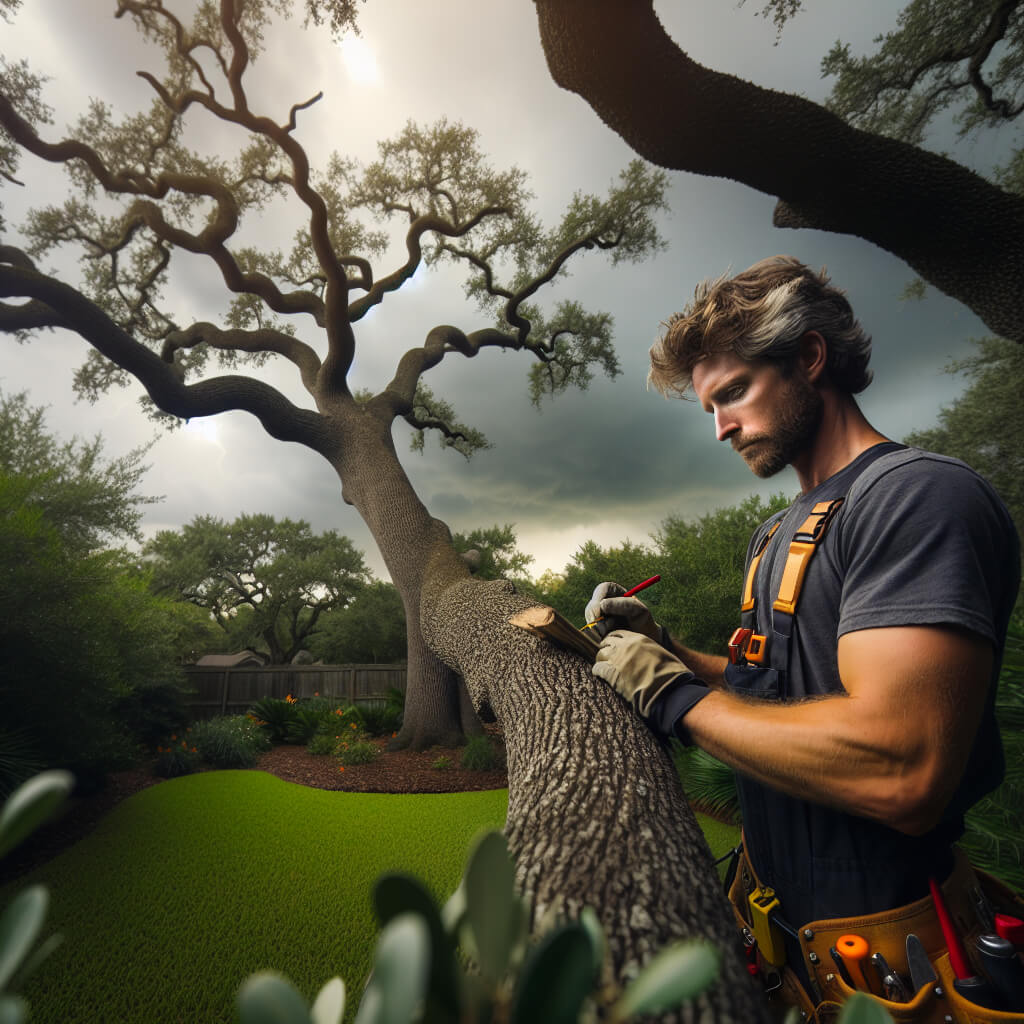
One call that stuck with me was from a family in Bellaire who had a massive live oak that had been “just fine” for decades. But during Hurricane Beryl, that tree split down the middle and crashed into their driveway. I couldn’t help thinking—if we’d done some preventive pruning six months earlier, that same tree could’ve easily survived the storm.
As a certified ISA arborist with 17 years working in Houston’s unpredictable weather, I’ve seen how proper preparation can make the difference between a few fallen branches and thousands in property damage. So let’s talk about what you can do right now to get your trees ready for our next storm season.
Check for Weak or Compromised Trees
First thing I always look for are signs of structural weakness. Trees rarely fail “suddenly”—they usually show warning signs months, even years, in advance. Cracks along the trunk, hollow sections, or major limbs with decay on the inside are red flags.
During Hurricane Harvey, I responded to dozens of emergency jobs where homeowners admitted they’d noticed cracks for a year or more. One large pecan in Meyerland had a visible 3-inch trunk split that the owner ignored. It ended up toppling across the street, taking down a power line in the process.
If you see any of these issues, call a professional right away. A proper tree removal or structural cabling job might save you a bigger headache later.
Prune for Wind Resistance
Wind is a tree’s worst enemy during hurricanes. Overly dense canopies act like giant sails, catching gusts and transferring that force down through the trunk to the root system. Strategic tree trimming can make a world of difference.
We usually reduce end weight by removing small interior branches and thinning out crowded areas. This helps air flow through the canopy instead of pushing against it. On older live oaks and water oaks, reducing just 15–20% of the canopy can make them significantly more wind-resistant.
The goal isn’t to “top” or over-prune your tree—that actually makes them weaker. I still see this mistake all over Katy and Cypress: homeowners trying to “hurricane-proof” trees by cutting off the top half. That never ends well. Always prune conservatively and with an arborist’s guidance.
Inspect the Root Zone
Houston’s clay soil is notorious for expanding and contracting with moisture changes. This movement stresses root systems, and when storms bring prolonged rain, loose roots quickly lead to leaning or uprooted trees.
I’ve worked on cases in Sugar Land where 50-foot pines just tipped over after a week of heavy rain, roots completely exposed. If your tree is near a drainage ditch or shows raised soil on one side, that’s a warning sign. You might need soil aeration or root pruning to stabilize it.
Also, never pile mulch too high around a trunk—what we call a “mulch volcano.” That traps moisture and causes rot at the root flare, compromising tree stability.
Watch for Disease and Decay
Humidity is part of daily life in Houston, but it also means fungi thrive. Oak wilt, root rot, and canker diseases are big culprits that weaken trees from within. I’ve seen live oaks on Kirby Drive that looked healthy on the outside until we discovered internal decay eating through the heartwood.
The earlier you catch these problems, the better. Regular tree health assessments can identify infections long before they become dangerous. When I inspect, I use a mallet to check for hollow sounds in the trunk—an old-school but reliable arborist trick.
Clear Away Potential Hazards
Sometimes it’s not the tree itself but what’s around it that causes the most damage. I always recommend clearing any deadwood, hanging branches, or weak limbs over driveways, roofs, and power lines.
Last year, after a strong thunderstorm in Katy, I got a call from a homeowner whose magnolia branch snapped onto their garage. It wasn’t a huge tree—but it landed just right to cause $8,000 in roof damage. That’s the kind of preventable accident a quick check can avoid.
Plan for After the Storm
No matter how careful we are, some trees will suffer damage during big storms. The key is knowing what to do next. Never approach downed power lines tangled with branches—leave that to trained crews. And don’t start cutting limbs under tension; I’ve seen more DIY injuries from those than I can count.
Instead, call your certified arborist for a post-storm inspection. We can determine whether your tree can recover with corrective pruning or if it’s become too hazardous to save. In cases of emergency storm damage, quick response matters for both safety and insurance claims.
Cost of Preventive Care in Houston
I get this question all the time: “What’s this going to cost me?” For most homeowners, seasonal pruning or preventive trimming typically runs between $350–$1,200, depending on size and access. A large live oak overhanging a roof might cost more, while smaller pines or crape myrtles will be on the lower end.
In my experience, investing a few hundred now is far cheaper than paying $2,500–$5,000 for cleanup and removal after a storm. I’ve seen it too many times—a $500 trim could’ve saved a $3,000 emergency job.
FAQ: Houston Tree Care Before Storm Season
When should I prune my trees before hurricane season?
Ideally, have trees pruned in late winter or early spring—before the windy months begin. That gives them time to recover and establish stronger growth before summer storms roll in.
Which trees are most likely to fall during a Houston storm?
Shallow-rooted species like pines and water oaks are more prone to uprooting in saturated soil. Bradford pears also split easily. Meanwhile, live oaks tend to be sturdier if properly maintained.
Should I remove a tree that’s leaning?
Not always—but if it’s recently started leaning or if soil cracks have formed on one side, it might be dangerous. Get a professional assessment before deciding. I’ve saved many leaning trees in West U with bracing and selective trimming.
Can I handle storm cleanup myself?
Light debris is fine to clean up, but never use a chainsaw near a pinned branch or power line unless you’re trained. Many of my emergency calls come from well-meaning DIY attempts gone wrong.
Conclusion
Storm season in Houston isn’t something we can avoid—but we can prepare for it. If you take one thing away from this, it’s that healthy, well-maintained trees survive storms better, protect your roof, and save you money. Don’t wait until the weather channel starts naming storms—schedule your inspection early and give your yard the best chance to ride out whatever nature throws our way.