
<!–meta: Learn essential emergency tree removal tips from a certified Houston arborist. Stay safe before, during, and after storm damage.–>
After big storms roll through Houston—like Harvey did years back or that rough one that just came through—I usually have a full schedule before sunrise. The calls start with the same tone: panic, fear, and that heavy sound of wind damage on the other end. Last month, for example, I got a late-night call from a homeowner in Memorial. A 45-foot pine had snapped halfway up and was leaning across their driveway. Power lines were nearby, and the rain hadn’t stopped. It was one of those moments where timing and safety really make the difference between a close call and a real disaster.
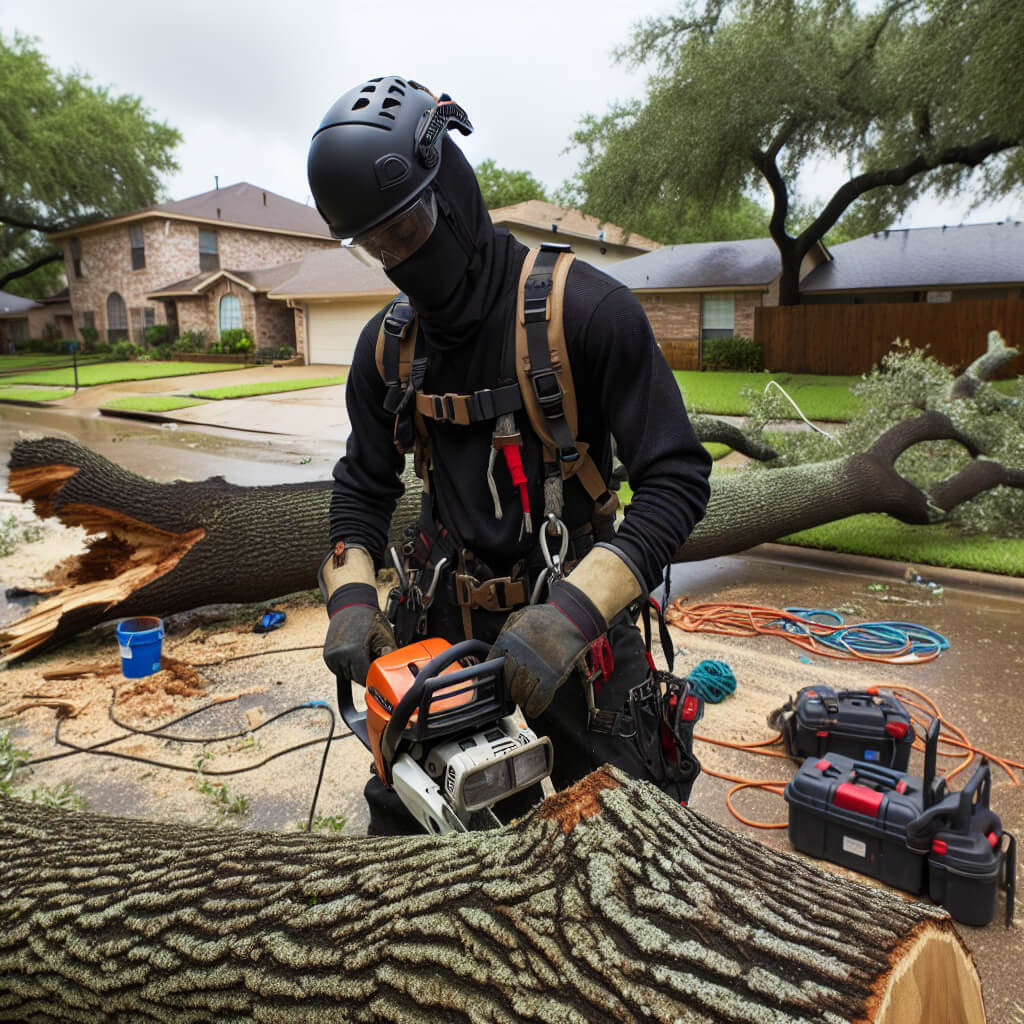
After 17 years doing emergency tree removal across Houston, I’ve learned that preparation and clear steps during the chaos are everything. This article breaks down how to handle tree emergencies safely—before the storm, when damage hits, and in the hours after.
Understanding When It’s Truly an Emergency
Not every fallen branch calls for a middle-of-the-night emergency service. So, how do you know when you can wait until morning versus when you need immediate help? Here’s my rule of thumb: if the tree or large branches threaten life, property, or power supply, it’s an emergency. Period.
I once handled a job in Katy after a quick thunderstorm—nothing like a hurricane, but strong enough to drop a big live oak branch straight across the homeowner’s roof. The tree hadn’t fully pierced the shingles yet, but water was pooling fast. That was absolutely an urgent case because Houston rain doesn’t give you time to think. These things escalate within minutes.
On the other hand, if you just have some heavy limbs down in the yard, or a partially broken branch that’s not over a building, it can usually wait until daylight. You’ll save money too—emergency rates are always higher at night.
Steps to Take Immediately After Tree Damage
1. Stay Back and Turn Off Power if Needed
I can’t stress this enough: downed lines or leaning trees near electricity are nothing to mess with. Call CenterPoint Energy or 911 before even stepping close. One homeowner in Sugar Land made the mistake of trying to cut away a leaning pecan with a chainsaw still dripping wet from the rain—and nearly got knocked off his feet when the trunk rolled. Don’t risk it.
2. Document Everything Before Calling
If it’s safe, snap photos from a distance. Insurance companies in Houston typically reimburse emergency tree work if it directly affected the structure, but they’ll need evidence. Take pictures of where it fell, the damage it caused, and any blocked driveways or entryways.
3. Call a Certified Arborist, Not a Random Handyman
During big storms, you’ll see all kinds of trucks pop up with “tree service” magnets stuck on the doors. Many are uninsured or untrained, and they make their money when desperation is high. Always make sure whoever you call for tree removal is insured, experienced, and preferably an ISA Certified Arborist. I’ve seen too many folks pay twice—once for a poor cleanup, and again when we have to fix it safely afterward.
What Professionals Do Differently
When I roll up to a property for emergency work, my first job isn’t to start cutting—it’s to assess. I’m looking at tree tension, root stability in Houston’s soft clay soil, and surrounding hazards. Sometimes the entire tree has shifted underground due to soil movement after heavy rain. That’s why we use rigging equipment, cranes, and ground mats to avoid further damage.
Back during Winter Storm Uri, I worked a case in the Heights where a large water oak had leaned but didn’t fall. We used a controlled lowering technique—cutting it section by section using ropes and a bucket truck. The homeowner originally thought it would be a simple job until they saw how much weight distribution mattered when the trunk was cracked under pressure.
Why Houston’s Soil Adds Complexity
Our clay-based soil is notorious for what I call the “Houston Heave”—it expands during wet periods and contracts during long dry spells. After intense rainfall or flooding, root systems can loosen or shift. That’s part of why trees that “look healthy” one day suddenly uproot during a moderate wind gust. Oaks, pines, and even sweet gums are especially vulnerable when the ground gets saturated.
How to Prepare Before the Next Storm Hits
It’s always cheaper—and safer—to prevent emergencies in the first place. Regular tree trimming makes a huge difference in storm resistance. When branches are too dense or unevenly weighted, high winds can act like a sail, dragging your tree down. I usually suggest Houstonians schedule structural pruning every 2-3 years, especially for live oaks and pines near homes.
Another common mistake I see in River Oaks and the Galleria area is planting trees too close to driveways or slabs. Roots chew through that clay-packed soil, lifting concrete and destabilizing the whole tree during storms. Think about long-term growth—not just initial curb appeal.
Costs: What to Expect for Emergency Tree Removal in Houston
People always ask, “How much is this going to cost me?” The truth is, it depends on the situation. A standard daytime removal might run anywhere from $800 to $2,500 for medium-size trees. But an emergency call at 2 a.m. with power lines, roof damage, or complex rigging can easily jump to $3,000 or more. Last month, we took down a leaning oak in West University for $1,850; two nights later, a similar tree in Katy cost closer to $3,600 because it had to be cleared around active lines and required crane support.
Always clarify debris removal too—some services charge extra for hauling. Get a written breakdown before work starts. In storm situations, you don’t want surprises on your invoice later.
When Insurance Covers Tree Removal
Most Houston homeowners’ insurance policies cover emergency storm damage removal if the tree fell on a structure like your house, fence, or carport. But if it simply fell in the yard and didn’t hit anything, you’re usually paying out of pocket. It’s worth calling your insurer before anyone starts cutting. A quick phone photo session and a professional estimate can help streamline your claim.
FAQs
How fast can a tree service respond after a Houston storm?
In big storm events like hurricanes or tropical systems, most certified crews can respond within 4-24 hours. During Harvey, my team worked nonstop for 12 days straight. We prioritize calls where structures or driveways are blocked first.
Is it safe to cut small fallen branches myself?
If they’re small and not under tension, sure—but be careful. Hidden tension in a bent limb can whip back when released. I always tell people: if you have to ask if it’s safe, it’s probably not. Call for advice first.
Do I need a permit for emergency tree removal in Houston?
Normally yes, the City requires permits for protected trees, but not during emergencies. If the tree poses an immediate safety threat, removal can proceed right away, and documentation can follow later.
What should I do if my neighbor’s tree falls on my property?
Texas law generally holds the property owner responsible where the tree falls, not where it stood. That means you handle cleanup on your side and vice versa. Call your insurance company immediately either way.
Final Thoughts
Tree emergencies can be stressful, costly, and dangerous, but with the right preparation and quick thinking, you can minimize the damage. Don’t wait until the next storm is on radar—schedule a professional inspection before hurricane season kicks into gear. I’ve seen houses saved simply because a homeowner invested in a proactive pruning plan. And if the worst happens, stay calm, call someone qualified, and let trained hands handle the danger safely.