
<!–meta: Learn essential emergency tree removal tips for Houston homeowners from an ISA Certified Arborist with 17 years of on-the-ground storm response experience.–>
Introduction
Just a few weeks after Hurricane Beryl blew through, I was in Katy helping a homeowner whose massive pine snapped right through their front fence. It wasn’t even the wind that finally took it down—it was the saturated clay soil that lost its grip on the roots. The tree leaned for hours before letting go around midnight. They were lucky it missed the house. I’ve seen similar things happen all over Houston—in the Heights, Memorial, and Sugar Land—especially after big storms. That’s why knowing what to do during a tree emergency can make all the difference between quick recovery and major property damage.
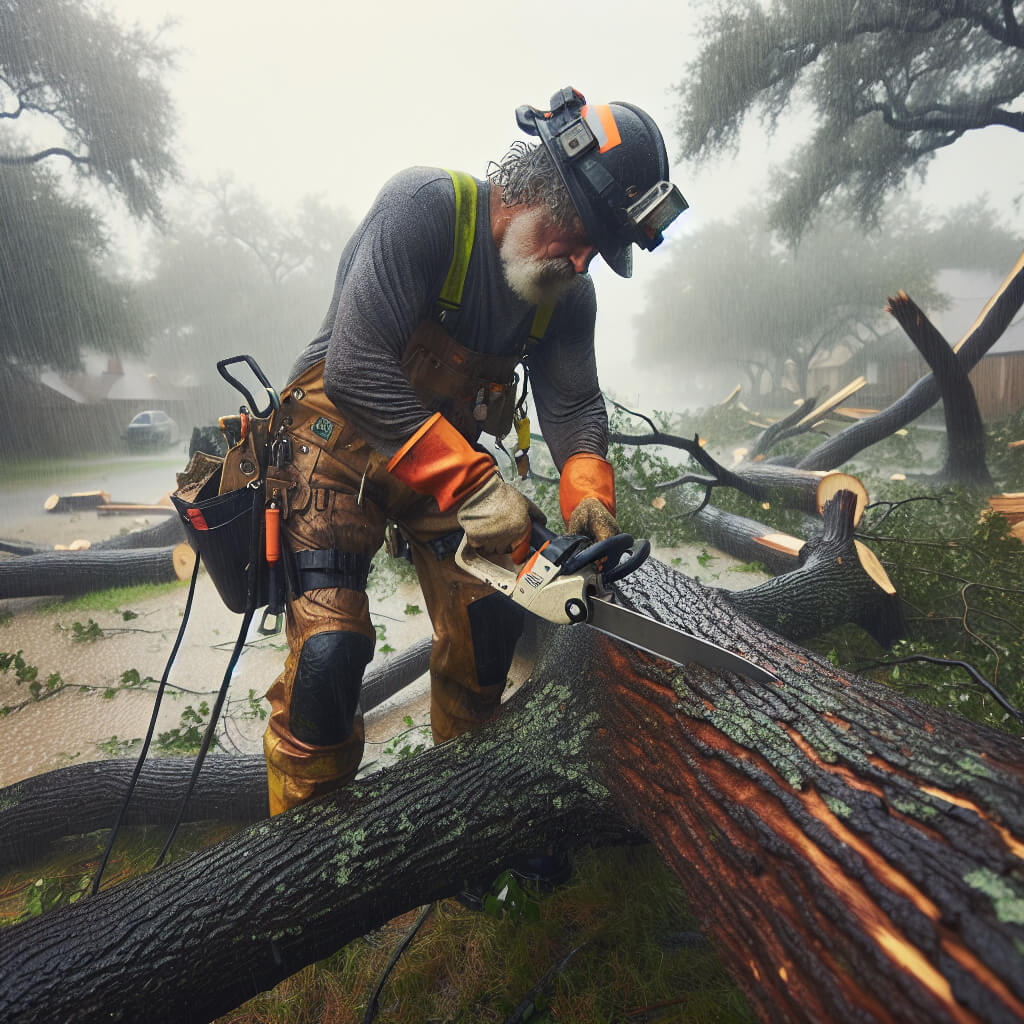
In this article, I’ll share the same emergency tree removal tips I’ve given homeowners across Houston for years. We’ll cover what to do right after a tree falls, how to stay safe before professionals arrive, and how to choose a reliable removal crew without getting overcharged in a crisis.
What to Do Immediately After a Tree Falls
When a tree falls during a storm, your first instinct might be to run outside and start assessing the damage. Don’t. That’s the most common mistake I see homeowners make. I’ve responded to hundreds of emergency storm damage calls, and it’s amazing how often power lines are hanging low or hidden under branches. Always assume every wire is live.
Here’s what you should do right away:
- Stay inside until the storm passes. Houston storms often come in waves. Wait for the all-clear before stepping out.
- Check for hazards first. Look for downed power lines, gas leaks, or structural damage before getting close to the tree.
- Take photos from a safe distance. You’ll need these for insurance purposes.
- Call an emergency arborist. A professional can assess the condition safely and start clearing debris.
When I handled emergency calls after Hurricane Harvey, I saw so many folks trying to use chainsaws without helmets or rope rigging. One man in Spring nearly got hit when his partially fallen oak twisted off a tensioned branch. It happens fast—you just can’t predict which part of the tree is under load.
Knowing When You Need Emergency Removal
Not every fallen branch requires a 2 a.m. response. Over the years, I’ve learned to spot which situations really call for emergency tree removal and which can wait a day or two.
- If the tree is resting on your roof or blocking exits, call immediately. I’ve seen structural roofs cave under slow pressure from large live oaks.
- If roots lifted sidewalks, driveways, or gas lines, that’s an urgent safety risk.
- If a large tree is leaning after heavy rain, act fast. Houston’s clay soil doesn’t hold once it’s waterlogged—it can shift inches in hours.
- If the tree is cracked or split, it could fail at any time. I’ve inspected oaks with three-inch trunk splits that looked stable until a stiff gust rolled through.
Choosing the Right Emergency Tree Service
Here’s something I tell people all the time: storms bring out the best and worst in this business. During the Memorial Day floods, I saw “tree crews” with out-of-state plates promising $200 removals. No insurance. No gear. No permits. When the job went wrong—like dropping limbs on fences or vehicles—the homeowner was left holding the bag.
Before hiring anyone for tree removal, check that they:
- Are fully insured and can show proof of coverage
- Have ISA Certified Arborists on staff (ask for credentials—mine’s SO-7392A)
- Provide a written estimate before starting work
- Follow ANSI Z133 safety standards
True emergency work isn’t cheap, but it’s done safely. Most of the jobs I handle in Houston range from $900 to $3,500, depending on access, size, and risk. For example, a pine removal in a front yard off Louetta might cost around $800. But that same tree wedged between two houses near River Oaks? That could easily top $3,000 with crane work.
Preventing Tree Emergencies Before They Happen
A little care goes a long way. Most emergency calls I get could’ve been avoided with proper tree trimming or pruning during the year. Weak branch unions, overextended limbs, or decaying trunks don’t always show obvious symptoms until it’s too late.
For Houston’s trees, I recommend having an arborist do a safety inspection every 12 to 18 months. In particular:
- Live Oaks – Check for root lifting and canopy weight balance. Houston’s clay soils can cause heaving over time.
- Pines – Inspect for leaning or exposed roots. These are notorious for uprooting in storms once soil gets saturated.
- Bradford Pears – I’ve lost count of how many I’ve seen split in half by wind gusts. Periodic pruning and thinning really help reduce that risk.
Think of early maintenance as insurance. I often remind homeowners about that massive oak that fell on Westheimer during Harvey—it had internal decay that could’ve been caught years earlier with a quick resistograph test.
What Happens During a Professional Emergency Removal
A lot of homeowners are surprised at how technical the process really is. In Houston, it’s rarely just cutting and hauling. Here’s what my crew typically does:
- Site Assessment: We determine tree stability, load points, and any nearby hazards like power lines or fences.
- Stabilization: We’ll use ropes or cranes to secure the tree if it’s on a structure.
- Controlled Sectioning: We cut the tree down in small, safe pieces—never free-fall cuts.
- Debris Cleanup: All waste is loaded and hauled off, and yard damage is minimized as much as possible.
- Stump Handling: If needed, we provide stump grinding afterward to level the site for replanting.
FAQ Section
How much does emergency tree removal cost in Houston?
In most cases, expect anywhere between $900 and $3,500. Large trees or those near power lines can cost more, especially after major storms when crews are in high demand. Always ask for an on-site estimate from a licensed arborist first.
Can I remove a fallen tree myself?
Only if it’s small (under 10 inches in diameter) and safely accessible. Anything larger or near power lines should be handled by professionals. Houston clay soil and unpredictable limb tension make DIY risky.
Will insurance cover emergency tree removal?
Usually, yes—if the tree damaged your home, fence, or car. Many Houston homeowners find removal costs partly reimbursed under storm coverage, though debris hauling may not be fully covered.
How soon should I call for help after a storm?
As soon as it’s safe. The earlier you schedule emergency tree removal, the faster crews can assess and prevent additional damage, especially during hurricane season.
Conclusion
Every storm season, I see how quickly things can go wrong when a heavy branch or leaning tree fails. But I also see how prepared homeowners—those who inspect routinely and call for help early—avoid those 2 a.m. emergencies. Houston weather will always throw us curveballs, but staying proactive makes all the difference. If you’ve got a suspect tree after the last storm, don’t wait until next hurricane season—get a professional eye on it now. You’ll save yourself a lot of worry and probably a few thousand dollars down the line.