
Introduction
Just a couple weeks after Hurricane Beryl, I got a call from a homeowner in the Heights. A massive live oak had toppled halfway onto their roof, roots ripped right out of the soggy clay soil. They’d stayed up all night listening to it creak. By the time I got there, you could see daylight through the split rafters. That’s the kind of call I’ve answered hundreds of times in Houston—trees failing right after storms when the ground can’t hold them anymore.
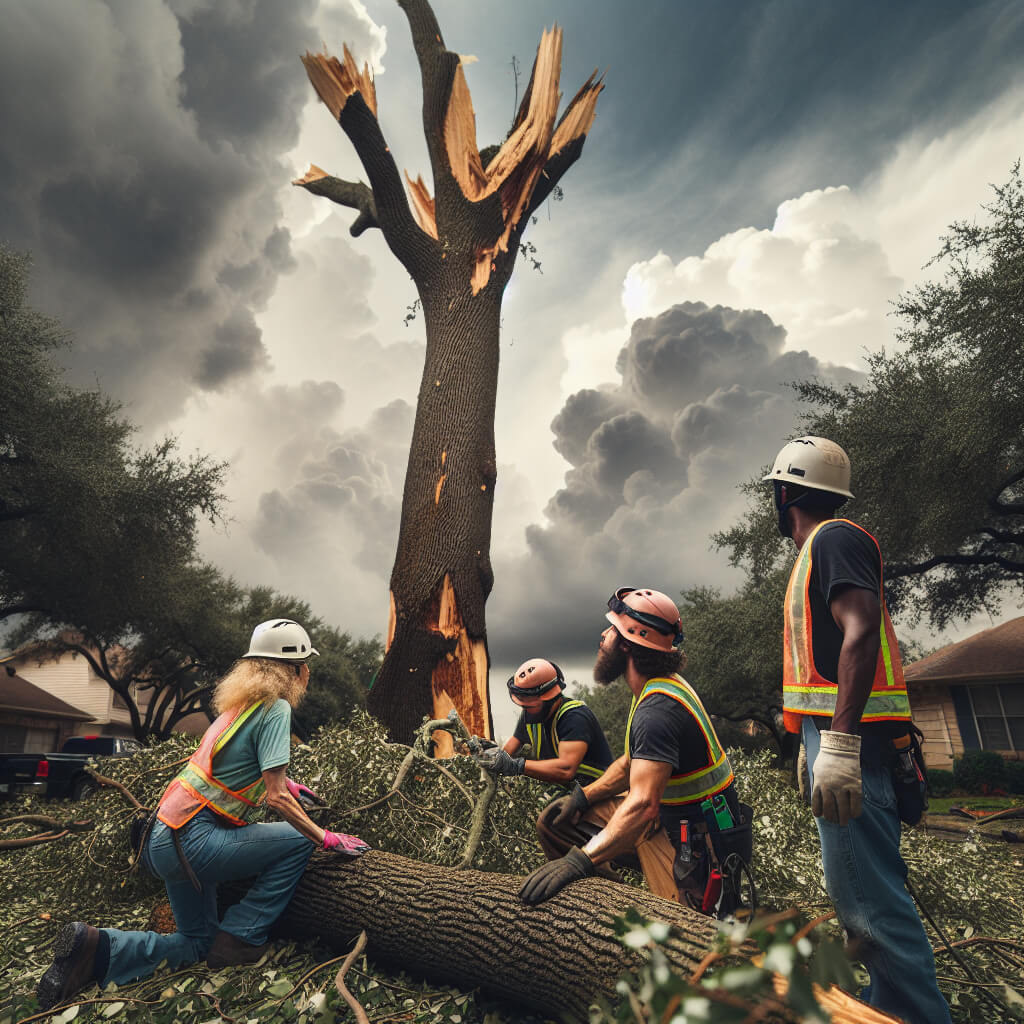
In my 17 years as a certified ISA arborist, I’ve handled thousands of emergency tree removal calls after hurricanes, tropical storms, and even ice snaps. From West University to Katy, fallen trees don’t just make a mess—they’re real safety risks. In this article, I’ll share what I’ve learned about handling emergency tree removals in Houston. We’ll go over what to do right after a storm, when to call a pro, how pricing really works, and how to prevent a repeat next season.
What to Do Right After a Storm
First thing: don’t rush out under damaged trees. After a storm, I’ve seen too many people try to move debris themselves and end up hurt. Trees under pressure can shift or snap without warning. If power lines are involved, back away immediately and call CenterPoint before anyone touches that area.
Take photos of the damage from a safe distance. You’ll need this for insurance and, in some neighborhoods, for HOA compliance. Once it’s safe, I tell homeowners to look for these warning signs:
- Large hanging branches or cracks in major limbs
- Roots lifting out of the soil or cracking sidewalks
- Trees leaning more than 15 degrees after a storm
- Broken trunks or bark splits wider than 2 inches
If you notice any of these, it’s time to call an ISA-certified professional. I’ve seen small delays turn a simple fix into a serious risk overnight. One homeowner in Memorial waited two days before calling—by then, the weakened pine gave way and crushed their fence.
How Emergency Tree Removal Works in Houston
Emergency removal is different from a routine tree removal. When storms hit Houston, we’re often dealing with wet ground, blocked streets, and power hazards. Our crews work fast, but safely—most removals start with a full site assessment. We’ll determine the best way to dismantle the tree piece by piece without causing further damage.
We use heavy rigs or cranes when trees are lying on structures. During Hurricane Harvey, I remember removing a 70-foot pine that pierced the second floor of a house in Cypress. The family was still inside because every street around them had flooded. It took us six hours and a 45-ton crane to safely remove that pine without collapsing the roof further. That’s the kind of precision emergency removals require.
Average Cost for Emergency Tree Removal in Houston
Prices vary depending on access, size, and danger level. Most homeowners in Houston pay between $1,200 and $3,800 for emergency removals. For oversized oaks or pines near power lines, it can climb to $4,000 or more. Here’s what affects the price:
- Access: Can our equipment reach it, or do we hand-cut everything?
- Risk: Are there overhead lines or structural threats?
- Size: A small crepe myrtle is cheap; a 70-foot oak is not.
- Disposal: Hauling, chipping, and debris removal can add several hundred dollars.
Last month, I removed a 50-foot pine in Katy that broke near the base. Straightforward job, back-wide access—$900 total. But that same week, a water oak leaning into a power line over in Sugar Land cost $3,200 because we had to coordinate with utilities, use bucket trucks, and haul out half a ton of wood.
When to Call a Professional (And When You Can DIY)
If we’re talking about small limbs you can reach safely with both feet on the ground—fine. But if the tree is leaning, near power, or shows structural failure, leave it alone. I’ve seen homeowners in Westbury try DIY cuts with chainsaws and ladders, and it never ends well. You’re dealing with unpredictable forces and thousands of pounds of wood under load.
Only licensed and insured tree crews should handle large removals. In Houston, insurance companies usually only cover professional emergency tree removal if it’s done by a certified arborist. That certification isn’t just a title—it means we follow strict ANSI safety standards. If someone gets hurt or property gets damaged, uninsured contractors can leave you fully liable. I’ve seen it happen too many times to count.
Preventing the Next Emergency Before It Happens
Most homeowners don’t realize that 70% of storm-related tree failures start with existing weaknesses—decay, bad pruning, weak branch unions, or compacted roots. That’s why inspection is everything. I usually recommend a full tree assessment before hurricane season, ideally May or early June.
Here’s what I look for during pre-storm inspections:
- Deadwood or overly long limbs that need tree trimming
- Signs of decay at the trunk base (especially with oaks and pecans)
- Root flare damage from lawn equipment or poor grading
- Poorly structured crown that needs selective reduction
In one case over in Bellaire, we caught early decay on a water oak that looked solid from the outside. Internal resistograph testing showed hollowing near the core. The homeowner picked preventive removal instead of risking it—and a month later, a thunderstorm rolled through that would’ve likely brought it down. That decision saved them a roof replacement.
After the Storm: Cleanup and Restoration
After the main removal, don’t forget about the stump. Damaged roots can still harbor disease or re-sprout awkwardly. I usually recommend stump grinding if the tree’s fully gone. It’s also a good time to grade the area, check irrigation lines, and plan replacement trees with better wind tolerance—something like a cedar elm or live oak instead of a shallow-rooted Chinese tallow.
And if your neighborhood has HOA tree regulations (like Cinco Ranch or Bridgeland), double-check before replanting. Some communities require approved species or spacing. Your arborist can help you provide all necessary documentation for compliance.
Conclusion
Storms are part of life in Houston, but the damage doesn’t have to be. If you act quickly and call a certified pro, a dangerous situation can be made safe again without added damage or cost. I’ve seen every type of post-storm scenario out there—from trees embedded in rooftops to rootplates lifted like rugs—but every situation gets better with the right plan and care.
If you suspect tree damage or leaning after a recent storm, don’t wait until it’s too late. Get a professional assessment, document everything, and protect your home before the next front rolls in.
Frequently Asked Questions
How much does emergency tree removal cost in Houston?
It typically runs between $1,200 and $3,800, depending on the tree’s size, location, and hazard. Large oaks near power lines can push costs up to $4,000 or more. Every job is unique, so on-site assessment is essential.
Can I remove a storm-damaged tree myself?
If it’s a small limb on the ground, sure. But if the tree’s large, leaning, or near your house or wires, don’t risk it. I’ve seen DIY attempts cause way more damage—and some serious injuries too.
Will my insurance cover emergency tree removal?
Most Houston homeowners’ policies cover tree removal if the fall caused property damage. Coverage usually requires using a licensed, insured contractor. Check your policy before work begins.
What should I do if a tree falls on my house?
Stay out of the damaged area, call 911 if there are safety concerns, and then contact a certified arborist. We can stabilize the tree, prevent further damage, and coordinate with your insurer for safe removal.
When’s the best time to inspect my trees for storm readiness?
I recommend every spring—right before hurricane season. A preventive inspection can identify weak branches, disease, and structural issues before they become emergencies.