
<!–meta: Learn how emergency tree removal in Houston protects your home after hurricanes or storms, with real examples and expert advice from an ISA Certified Arborist.–>
Introduction
Just a few weeks after a big storm rolled through Memorial, I got a 2 a.m. call from a homeowner who woke up to a loud crash — a massive live oak had split right down the middle and was resting on her garage roof. The wind that night wasn’t even hurricane-level, but Houston’s rain-soaked clay soil had already softened enough for roots to lose grip. I’ve seen it hundreds of times over the years. When storms hit here, they don’t just knock down trees — they turn half-secure roots into ticking time bombs.
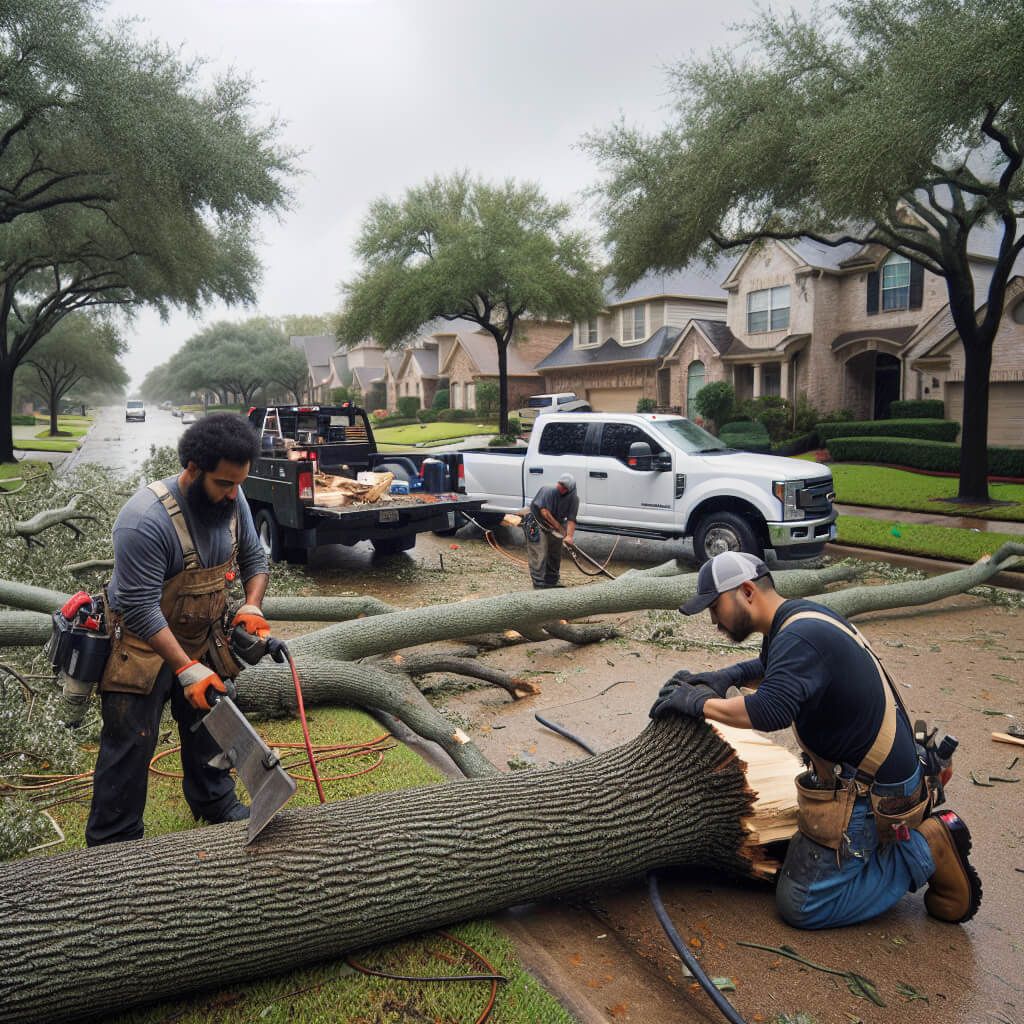
In my 17 years as an ISA Certified Arborist (#SO-7392A), I’ve handled over 3,000 emergency tree removal calls across Houston — from The Heights to Sugar Land. After major storms like Harvey and Beryl, the calls pour in non-stop for days. People panic, and I get it. Fallen trees can rip through roofs, crush fences, or take out power lines in seconds. This article walks you through what to do after a storm hits, how emergency tree removal really works, and what to expect from a professional crew like mine.
Why Storm-Damaged Trees Are So Dangerous
After a big wind or thunderstorm, trees can look fine at first glance — but be dangerous hours later. Houston’s heavy clay soil tends to expand and contract, especially after long dry spells followed by heavy rain. That movement weakens even healthy trees. I’ve seen 80-foot pines in Katy that leaned more after every gust, until they simply gave up and toppled.
What makes it worse? Houston’s mix of tree species. Live oaks are strong but heavy, so when they fail, they fail big. Pines tend to break high up the trunk. And those popular Bradford pears? They have brittle branching and love to split right at the crotch when storm winds hit. Each type of failure brings its own risks. That’s why a quick inspection by a licensed arborist after a storm is worth every penny — even if things “look okay.”
Steps to Take Right After a Storm
1. Check for Immediate Dangers
First things first — safety. Don’t rush outside if there are downed power lines or hanging limbs overhead. I’ve seen homeowners in The Woodlands nearly injured walking under cracked limbs still attached by a strip of bark. Wait until daylight if possible. Turn off power or gas lines if branches have struck the service mast or meter.
2. Document and Notify
Take photos from a safe distance for insurance. If a tree hits your house, car, or neighbor’s property, call your insurance company before anything gets moved. Most carriers will cover the removal if the tree caused structural damage or blocked access. As soon as it’s safe, contact an emergency crew — the faster we get there, the less secondary damage you’ll face.
3. Call Certified Help — Not the Cheapest “Guy with a Chainsaw”
After every storm, hundreds of unlicensed “tree cutters” start showing up. They go door-to-door and offer cheap rates — cash only. I can’t stress this enough: please don’t take that risk. They’re rarely insured, and if they drop a limb through your roof, you’re on the hook. Stick with certified and insured tree removal professionals who can show credentials on the spot. My policy covers full property and worker protection, and any reputable service should do the same.
How Emergency Tree Removal Works in Houston
When my crew arrives, the first step is assessing the tree’s stability and how it’s resting. Sometimes it’s tangled in power lines; other times, it’s pinned against a roof. We plan every cut so the tree doesn’t shift dangerously during removal. Depending on the size and access, we might bring out a climber with ropes, or if the yard allows, a crane truck to lift sections safely. I remember one house near Rice Village where a 70-foot pine had fallen across two backyards — we had to lift it over a pool without a single drop of water splashing out!
Once the dangerous limbs and trunk sections are removed, we handle debris hauling, then stump grinding if needed. Most homeowners opt for full cleanup, especially if the storm left lots of smaller debris. My goal is to leave your property safe, stable, and as clean as possible.
Costs: What Houston Homeowners Can Expect
Pricing depends on how bad things are, but I’ll give you some honest ballpark numbers. In Houston, basic fallen tree removal usually runs $600 to $1,200 for smaller trees that are already on the ground. If a large tree is still hanging on a roof or structure, it can be anywhere from $2,000 to $5,000+ depending on equipment needed and hazard level. A job in Katy two weeks ago cost $2,400 because the oak was wedged between two homes, requiring both crane and rigging crews.
Keep in mind — storm response pricing reflects urgency and risk. During major events like Hurricane Harvey, my team worked 36-hour shifts just clearing roads so emergency vehicles could pass. We always prioritize downed trees threatening homes, driveways, or safety hazards first.
Preventive Care Before the Next Storm Season
Emergency calls will always happen — storms are part of life in Houston. But I’ve seen homeowners save thousands by keeping their trees trimmed and structurally sound. A strong tree trimming and pruning schedule every 2-3 years can reduce wind drag and help trees withstand storms better.
A few key things help a lot:
- Thinning overcrowded canopies to improve airflow
- Removing weak, dead, or crossing branches before hurricane season
- Checking root flares for decay or girdling roots
- Early removal of leaning or poorly structured trees
During the drought a few summers back, I inspected dozens of stressed pines whose root systems never recovered fully. The next storm that came through wiped out half of them. Preventive care isn’t about keeping trees short — it’s about keeping them strong and balanced. And Houston’s heavy rains and shifting soil make balance critical.
FAQ: Emergency Tree Removal in Houston
How fast can you respond to a tree emergency in Houston?
In storm season, my team usually responds within a few hours. During major events, we triage — meaning we focus on trees that hit homes, block roads, or threaten safety first. The faster you call, the higher up you’ll be on the list.
What if a tree falls on my neighbor’s property?
I see this a lot in older areas like Oak Forest. If your healthy tree fell due to a natural event (like a storm), your neighbor’s insurance usually covers their damage. If the tree was dead or you ignored warnings, it might fall on your policy. Always get an arborist’s report to clarify cause — it protects both sides.
Does the City of Houston require permits for emergency tree removal?
Generally, emergency removals due to storm damage don’t need prior permits, but certain areas like inside city medians or protected species lists might require post-notification. I always check City of Houston regulations before starting, especially inside 610 or near right-of-ways.
Should I try to cut any part of the fallen tree myself?
I strongly recommend waiting for professionals. I’ve seen homeowners injured when chainsaws kicked back or when hidden tension caused logs to roll. Even small limbs can shift unexpectedly. Call a certified arborist — it’s worth your safety.
Conclusion
When storms hit Houston, quick, safe action makes all the difference. If you’ve got a fallen or leaning tree, don’t wait until it causes more damage. Call an emergency tree removal crew that’s licensed, insured, and experienced with Houston’s tricky conditions. I’ve worked through hurricanes, freezes, and everything in between — and I can tell you this: good preparation and the right team can turn a stressful storm disaster into a quick recovery.