
<!–meta: Learn how emergency tree removal keeps Houston homes safe from fallen trees during hurricane season, with real stories and professional insight.–>
Introduction
Last July, right after a big summer system tore through west Houston, I got a 2 a.m. phone call from a homeowner in the Memorial area. A 70-foot pine had crashed across their driveway, blocking their only exit. I’ve answered hundreds of those calls over the years, but that one stuck with me — heavy rain, high winds, and complete darkness. We got out there within an hour, cleared the driveway, and secured the rest of the tree before sunrise. That’s what emergency tree removal is really about — protecting people and property when nature decides to flex her muscles.
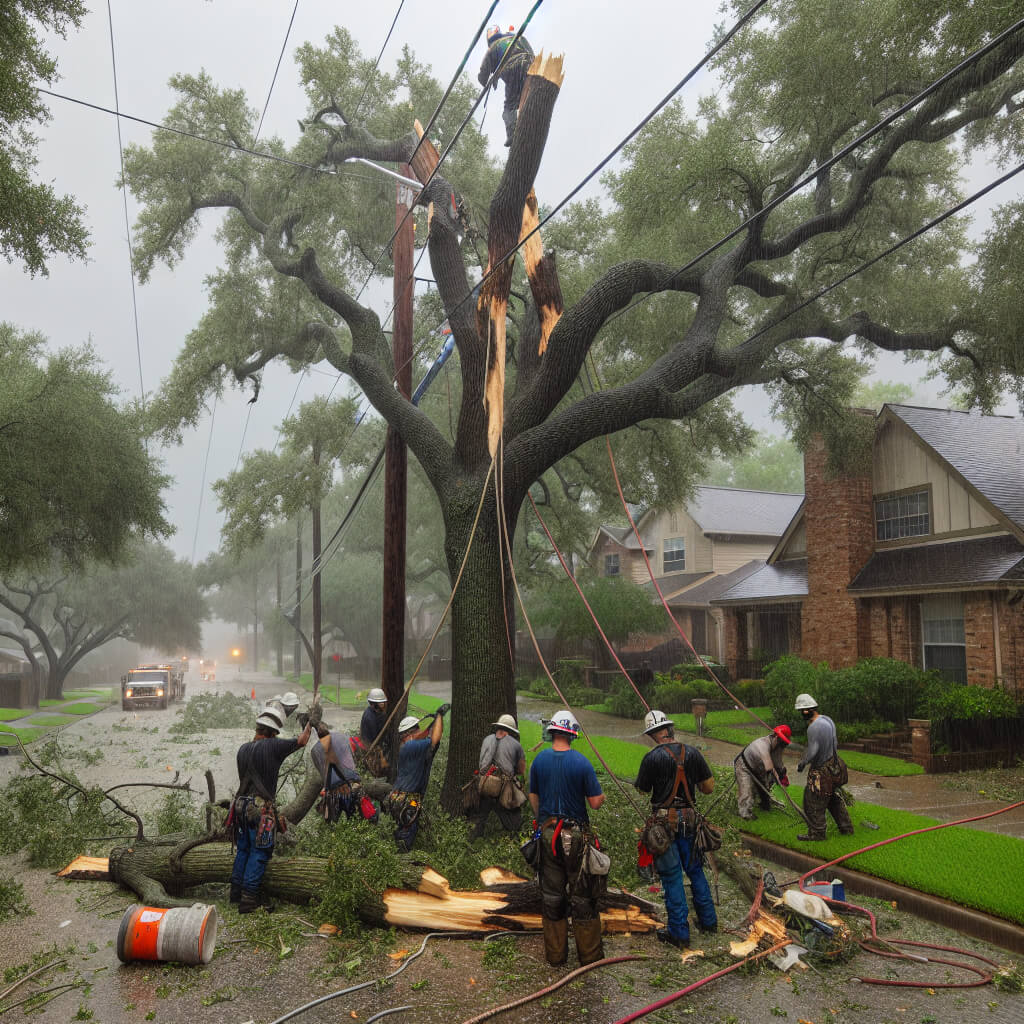
Every year, from June through November, Houston braces for hurricane season. And if you’ve lived here long enough, you know that even a “tropical storm” can feel like a hurricane when trees start toppling across yards, fences, and power lines. In this article, I’ll walk you through what I’ve learned over 17 years of storm response in Houston — from recognizing dangerous trees before the storm to what really happens when you call for emergency removal in the middle of the night.
Understanding the Need for Emergency Tree Removal
When winds hit 60+ mph, like we saw during Hurricane Beryl, trees weaken, twist, and sometimes uproot completely in our clay-heavy soil. Live Oaks, especially the ones in older neighborhoods like the Heights, tend to hold up pretty well — but their massive limbs can still snap under pressure. Pines and Bradford Pears? They’re usually the first to go.
Just last season, I was called out to a property in Sugar Land where a pine had broken halfway down its trunk, hung suspended in another tree, and was swaying right over the homeowner’s roof. That’s not something you can wait on. We brought in a crane and cleared it safely within a few hours. Waiting until daylight would’ve risked a collapsed roof and thousands of dollars in damage.
What Happens During Emergency Tree Removal
When you call for emergency tree removal, here’s how it typically plays out. My crew arrives with lights, rigging gear, and saws ready. First thing we do is assess for power line hazards and structural damage. If utilities are involved, we coordinate with CenterPoint before we start cutting — safety first, always.
Next, we stabilizing the area. That might mean anchoring a leaning tree with ropes or removing smaller branches to relieve weight before tackling the main trunk. Once the scene’s secure, we use controlled cuts to remove the hazard piece by piece. After the major threat is gone, we usually recommend a stump grinding or full root removal if the tree was uprooted — helps prevent trip hazards and pest buildup later on.
Why Houston Trees Fail During Storms
Houston’s clay soil expands in wet season and contracts in dry spells. Over time, that movement can loosen root systems — especially when trees are planted too shallow or overwatered. Add in years of improper pruning, and you’ve got a recipe for disaster when the next big wind rolls through.
Here are the most common failure causes I’ve seen in the field:
- Shallow rooting: Common with pines and ornamental pears.
- Overextended limbs: Often happens with live oaks in front yards.
- Decay or fungus: Hidden rot at the base goes unnoticed until the tree breaks.
- Compacted soil: Especially in newer subdivisions where construction squeezed roots tight.
I remember one job in Katy where a massive water oak looked healthy from a distance — full canopy, no visible cracks. But once it fell, we found the entire trunk was hollowed by fungus, likely spreading for years. That’s why regular tree health inspections matter, especially before storm season.
How to Prepare Before the Storm
I tell my Houston clients the same thing every May: spend a little now, save a lot later. Preventive trimming goes a long way. Reducing canopy density helps wind pass through instead of pushing the tree over. Plus, thinning out weak or dead limbs prevents breakage during high winds.
Most homeowners in Houston pay between $250–$600 for preventive tree trimming. It’s an investment that can easily save a $3,000 removal later. In contrast, after a hurricane or microburst, tree removal can run anywhere from $800 to $5,000 depending on height, location, and urgency. Emergency work always costs more because it happens during unsafe conditions and needs specialized equipment.
If you live in HOA-regulated communities like Cinco Ranch or The Woodlands, check your association’s HOA tree services guidelines. Some require permits to remove trees even after storm damage. A certified arborist can handle those details for you.
What to Do After a Storm Hits
Once the skies clear, take a careful walk around your property. Look for leaning trees, hanging branches, or cracks forming in trunks. Don’t approach any tree tangled in wires — call a professional. During Harvey, I saw too many folks trying to cut down partially fallen trees themselves. One misstep with a tensioned limb can send it whipping — I’ve seen it shatter car windows and worse.
If you’re unsure, snap a few photos and send them to a certified arborist for a quick assessment. I often do free visual inspections, especially after major systems roll through. It’s always easier (and safer) to handle weakened trees before they turn into emergencies.
When Time Matters Most
There’s no feeling quite like watching a 50-year-old oak falling toward your home during a thunderstorm. I’ve stood beside homeowners shaking as we worked through wind and lightning to stop a second trunk from collapsing. And I get it — your trees are part of your life here. But at the end of the day, your safety comes first. That’s what emergency removal is all about — minimizing danger fast, protecting what you’ve built, and bringing peace back after chaos.
How much does emergency tree removal cost in Houston?
In my experience, small emergency jobs (like a limb on a fence) usually run $300–$600. Full removals of large trees blocking access or resting on a structure can cost $1,500–$4,000. Factors like size, location, nighttime work, and crane use all play a role.
Do I need a permit for emergency tree removal?
In most Houston neighborhoods, no permit is required for immediate safety hazards. However, in the City of Houston or within HOA communities, you may need to document the removal after the fact. When in doubt, get written confirmation from a licensed arborist.
How fast can an emergency crew respond?
We typically respond within one to two hours of a call, depending on storm conditions and road closures. During Harvey, crews were out for 72 straight hours clearing roads and driveways across Memorial, Meyerland, and Katy.
Can insurance cover tree removal costs?
Usually yes, if the tree damaged a structure, vehicle, or blocked access. I always tell clients to photograph the scene before cleanup — it helps with claim documentation later.
What’s the best way to prevent tree emergencies?
Regular inspections and trimming before storm season. Have an ISA Certified Arborist check your major shade trees every couple of years. Catching root rot or stress cracks early can save you thousands down the road.
Conclusion
Every storm reminds me just how fast things can change here in Houston. One moment, your yard’s calm; the next, a tree’s leaning on your roof. The best move you can make? Prepare early, act fast, and trust qualified professionals during chaos. Whether you’re dealing with a downed pine in Memorial or a cracked oak in Sugar Land, emergency tree removal is your safest path to getting life back to normal. And trust me, I’ve seen enough storms to know — it’s better to call once too early than once too late.