
<!–meta: Learn how emergency tree removal in Houston protects homes from storm hazards, what affects cost, and how certified arborists respond fast.–>
Introduction
Last summer, right after a tropical system rolled through the Heights, I got a panicked call around 2 a.m. A huge live oak had fallen across a client’s driveway, completely blocking their car in — and the roots had lifted half the sidewalk. They told me, “We didn’t think it would ever fall; it’s been here since we bought the house.” Unfortunately, that’s the kind of call I get far too often during hurricane season in Houston.
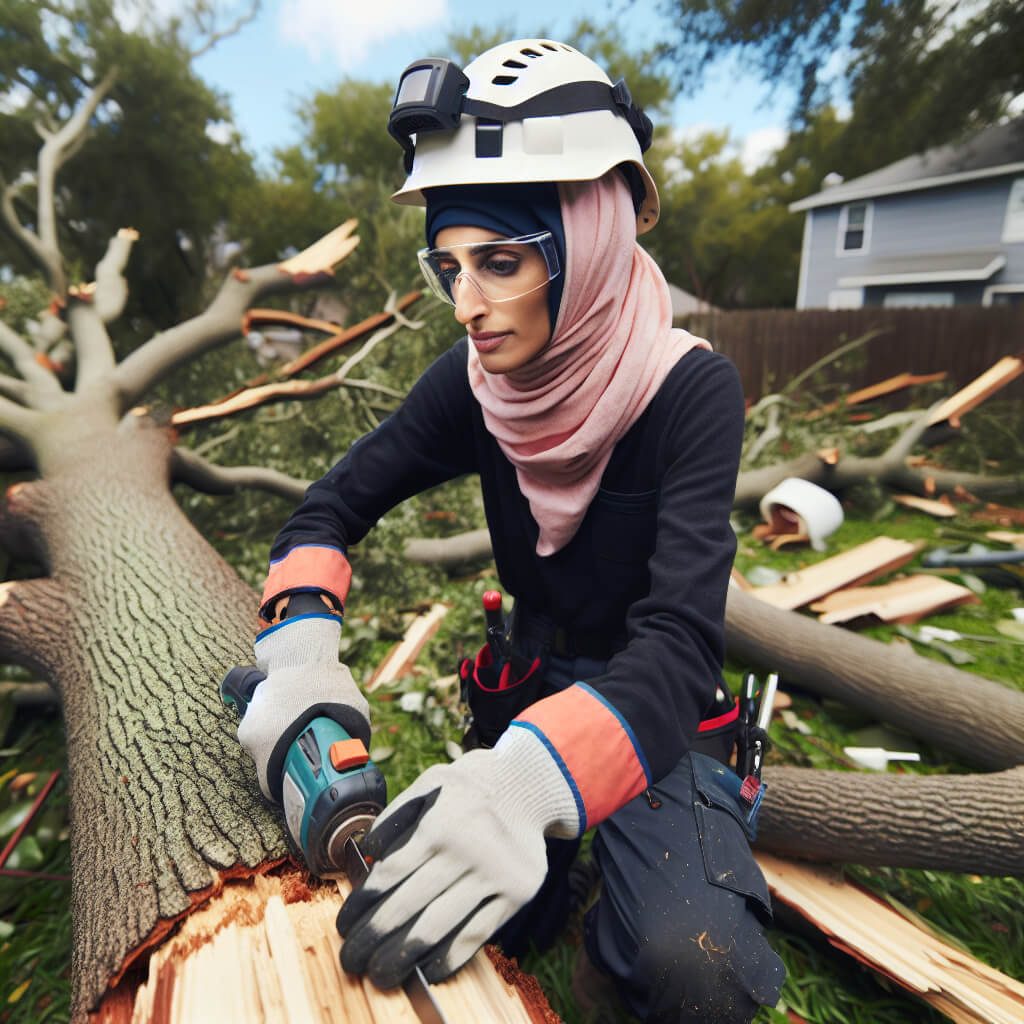
As someone who’s handled more than 3,000 emergency tree calls across the city — from Katy to Kingwood — I’ve seen how fast a healthy-looking tree can become dangerous after strong winds or heavy rain. Whether it’s a cracked pine leaning after a thunderstorm or a waterlogged oak threatening your roof, emergency tree removal can mean the difference between minor damage and a total disaster.
In this article, I’ll walk you through when you should call for emergency removal, what to expect during the process, and a few real-life examples from past Houston storms where quick action saved homeowners a whole lot of trouble (and money).
When a Tree Becomes a True Emergency
Here in Houston, trees grow fast and large thanks to our humid climate and clay-heavy soil. But that same soil expands and contracts with every drought and downpour, which can cause roots to loosen over time. Combine that with hurricane winds or heavy lightning storms, and you’ve got a recipe for disaster.
I usually classify a tree as an emergency when it presents an immediate hazard — meaning it’s cracked, uprooted, leaning toward a structure, or resting on power or utility lines. During emergency storm damage responses, I’ve seen live oaks with massive root plates shift six inches out of the ground overnight after saturated rains. In Memorial and Meyerland, that’s almost always where we see the worst root heave problems.
Not every leaning tree needs to be removed, but if you notice fresh cracks around the trunk or soil lifting on one side, that’s your warning sign to call an arborist fast.
How Emergency Tree Removal Works
When you call us for an emergency tree removal, our first step is always a safety assessment. We evaluate whether the tree can be stabilized or if it must be removed immediately. Sometimes we can perform a limited removal — taking off key limbs to relieve the weight — before fully dismantling the trunk later.
Access is everything. In tighter Houston neighborhoods like the Heights or Montrose, getting large equipment in can be tricky. We often have to climb and rig trees piece by piece using ropes and pulleys. Compare that to open lots in Katy or Sugar Land, where a bucket truck and skid steer make the job go a lot faster and cheaper.
We follow ISA (International Society of Arboriculture) safety standards on every emergency job. That means ropes rated for thousands of pounds, certified climbers, and the right cutting sequence to prevent sudden collapses. A rushed or unplanned cut can easily turn a $2,000 job into a $10,000 insurance claim.
Real Stories from Houston Storms
I’ll never forget one job after Hurricane Harvey. A 60-foot water oak in Bellaire had split at the base and was leaning over the homeowner’s roof. Floodwater had soaked the soil so bad the tree’s root plate had partially floated up. We rigged the tree using two cranes over six hours and avoided it crashing through the master bedroom. That removal cost roughly $5,800 — not cheap, but way better than a new roof and foundation repair.
Another time, after a bad windstorm in Kingwood, a pine tree literally speared through a garage roof. Those tall pines are beautiful but notorious for falling during prolonged rains. In that case, our crew stabilized the trunk with a steel cable while we cut sections off from top-down. The homeowner told me afterward, “I didn’t realize how fast you guys could make it safe.” We were done before the power company even arrived.
What Emergency Tree Removal Costs in Houston
Costs here vary a lot, depending on access, size, and urgency. In my 17 years working these jobs, I’ve seen emergency removals range between $800 and $5,000+ per tree. A small leaning ornamental or a storm-damaged palm might be on the lower end. But large hardwoods near structures or power lines almost always cost more.
Here are a few recent examples from actual Houston jobs:
- Pine tree on a fence in Katy – $950
- Uprooted live oak near a house in Memorial – $2,800
- Multiple oak removals blocking a driveway in Sugar Land – $4,200
Most insurance policies will cover emergency removal if the tree has already caused damage (for example, on your roof or blocking your driveway). But if it’s about to fall and hasn’t hit anything yet, that’s usually on the homeowner. It’s worth calling your carrier before authorizing the work if it’s a gray area.
Prevention: Avoiding the Next Emergency
I always tell clients: the best emergency removal is the one that never happens. Regular tree trimming and inspection can catch most risks early. When my crew inspects a property, we look for cracks, cavities, weak branch unions, and soil movement. A $300 pruning job can prevent a $3,000 emergency call later.
If you live in an area prone to wind gusts — like the West University or Galleria corridor — schedule an annual assessment, especially before hurricane season. Trees don’t need to be “topped” (please don’t do that!) but they do benefit from proper crown balancing and deadwood removal.
What to Do Before Help Arrives
If a tree does fall, stay calm and follow these steps:
- Keep everyone — and pets — away from the area.
- If power lines are involved, call 911 and CenterPoint Energy right away.
- Avoid walking under leaning trunks or branches under tension.
- Take photos for insurance documentation but don’t try to move debris yourself.
Then call a certified professional with emergency experience. Speed matters, but safety matters even more.
FAQ: Common Questions About Emergency Tree Removal in Houston
How fast can you respond to emergency tree calls in Houston?
Usually within a few hours, depending on storm volume and access. During major events like hurricanes, we work around the clock prioritizing trees threatening homes or blocking driveways. I always keep extra climbers and loaders on standby during peak storm season.
Can I remove a fallen tree myself?
I’d never recommend it unless it’s a small limb safely on the ground. Once a trunk is under tension, one bad cut can cause serious injury. I’ve seen homeowners try to use chainsaws on pressure-loaded trees — it can snap like a spring. Call a certified arborist.
Does insurance pay for emergency tree removal?
Usually yes, if the tree caused property damage or blocked access. But if it’s just a tree leaning dangerously with no contact yet, it’s less likely to be covered. Always check with your adjuster first.
What if the tree is on the neighbor’s property?
That’s a common issue in Houston’s older neighborhoods. In most cases, if it falls onto your property, your insurance covers your side of the cleanup. But preventive inspection and documented warnings to your neighbor can save a lot of headaches later.
Conclusion
Every storm season, I’m reminded how powerful Houston’s weather can be. But with the right preparation — and fast action when something goes wrong — you can protect your family and your property. Don’t wait until the next storm warning to check your trees. Schedule a health assessment or pruning today and make sure you’ve got an arborist you trust on speed dial. When the next big wind hits, you’ll be glad you did.