
Introduction
Last summer, right after Hurricane Beryl rolled through, I got a call from a homeowner in the Heights. A massive live oak had snapped halfway up and was leaning over their neighbor’s garage. The roots had shifted in Houston’s soggy clay soil, and the whole tree was ready to give way. They were panicked—and I don’t blame them. When a tree’s coming down near your home or power lines, every minute matters.
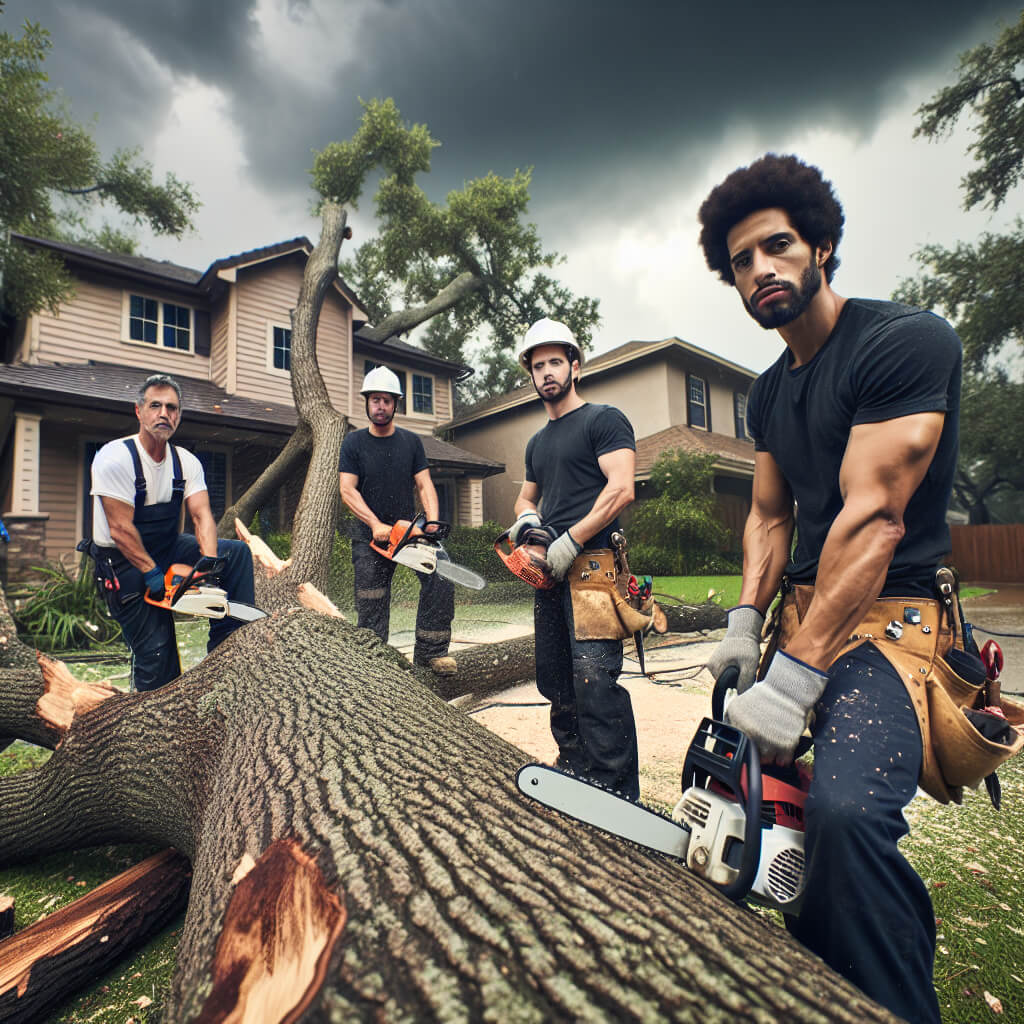
I’ve been doing emergency tree removal work in this city for 17 years, and I’ve seen every kind of post-storm chaos—oak limbs through roofs in Memorial, uprooted pines blocking driveways in Katy, and even trees tangled in live power lines in Sugar Land. In this article, I’ll give you clear guidance on what to do when a tree becomes a danger, how to stay safe, and when to call in certified help.
How Houston’s Weather Creates Tree Emergencies
Houston’s trees take a beating year-round. Between hurricane-force winds, clay soil expansion, and summer droughts, even healthy trees can fail suddenly. During Harvey, I saw 60-foot pines topple overnight because the ground had turned to soup. And after the 2021 freeze, countless oaks developed concealed cracks that didn’t show until the next storm season.
The combination of high winds and saturated soil is the perfect recipe for a tree to uproot or split. Live oaks, water oaks, and Bradford pears are particularly vulnerable. The pears, especially, love to split right down the center once they hit maturity. I’ve lost count of how many of those I’ve removed from driveways in West University and Spring Branch after storms.
What Counts as an Emergency?
Not every leaning limb means you need emergency service. But if a tree is threatening people, property, or power lines, it’s time to act fast. Here’s what I tell my clients:
- The tree is leaning suddenly—especially after heavy rain or storms.
- Roots are lifting out of the ground or you see cracks at the base.
- Limbs are resting on roofs, fences, or vehicles.
- Tree or branches are tangled in power lines.
- You hear cracking or shifting sounds near the trunk after high winds.
If any of these sound familiar, don’t wait. Call a certified arborist. Trying to remove a tree yourself during or right after a storm can be incredibly dangerous. One wrong cut and you can send thousands of pounds of wood in the wrong direction.
First Steps After Storm Damage
I always tell homeowners to follow a simple plan:
- Stay clear of the tree. Even “stable”-looking trees can shift again without warning.
- Turn off power to damaged areas. If branches are near electrical lines, call CenterPoint first—it’s not worth the risk.
- Take plenty of photos. For insurance and HOA documentation.
- Call for professional help. Look for licensed, insured companies with real tree removal experience. An ISA Certified Arborist (like me) can assess whether removal or stabilization is possible.
During hurricane events, my team works 24/7 prioritizing life and property threats first. When Beryl hit, we cleared a 70-foot water oak in River Oaks that had crushed half a roof. The homeowner’s quick call probably saved the other half from collapsing.
How Emergency Tree Removal Works
Every job is unique, but most emergency removals break down into a few steps:
- Assessment: We evaluate the tree’s structural stability, weight distribution, and hazards nearby (like fences or electrical lines).
- Rigging and Safety Setup: Ropes, pulleys, and cranes come into play. For tight neighborhoods like Montrose or the Heights, cranes are often the safest option.
- Cutting and Lowering: We remove the tree piece by piece to avoid collateral damage.
- Cleanup and Stump Grinding: The process often ends with full debris removal and optional stump grinding to prevent regrowth or tripping hazards.
I remember one night last spring, working on a dead pine that fell across a driveway in Cypress around 2 a.m. The homeowner told me they were just glad someone picked up the phone. These events never happen at “convenient” times—but that’s exactly why we keep crews ready.
What Does Emergency Tree Removal Cost in Houston?
emergency removals do run more expensive than standard work, and that’s because of the risk and logistics involved. Based on my experience:
- Small removals (like one or two limbs) usually run $300-$600.
- Full medium trees (under 40 feet) are typically $800-$1,800.
- Massive or high-risk removals, especially near power lines, can hit $2,500-$5,000+.
Location matters too. A simple pine in Katy with open yard access might cost $650, but a large oak wedged between two houses in the Heights can push four grand. Emergency night or weekend calls may have a surcharge, but your safety comes first.
How to Prevent Emergency Tree Situations
It might sound cliché, but prevention is always cheaper—and safer—than cleanup. Most emergency calls I get could’ve been avoided with proper tree trimming and inspections. I recommend homeowners have their trees inspected once a year, especially before hurricane season starts in June.
Look for warning signs like fungus near roots, heavy canopy imbalance, or large dead limbs. Removing weak or overextended branches can reduce storm stress by 30% or more. And when you have heavy clay soil (like in most of Houston), regular deep watering during dry months can keep roots stable and healthy.
FAQs About Emergency Tree Removal in Houston
How quickly can emergency crews respond after a storm?
In major weather events, we prioritize high-risk cases first—trees on structures or blocking roads. Usually, crews can reach most Houston neighborhoods within a few hours once conditions are safe enough to operate.
Will my homeowner’s insurance cover the cost?
Most of the time, yes—if the tree caused damage to a covered structure or posed an immediate hazard. I always tell clients to document everything with photos and submit both arborist and insurance reports.
Do I need a city permit for emergency removal?
In the City of Houston, emergency removals to prevent imminent danger typically don’t need prior approval, but documentation from a certified arborist helps if you’re questioned later, especially for large oaks or protected tree zones.
Can I safely handle small fallen branches myself?
Small debris cleanup is fine if it’s not under tension or near wires. But if you’re unsure or the wood looks twisted, leave it be. I’ve seen people injured badly by spring-back limbs that looked harmless.
What should I ask when hiring a tree company?
Make sure they’re insured, experienced with emergency work, and can show proof of certification or licensing. Ask about equipment, cleanup, and whether they include disposal in their estimate. Don’t settle for handshake deals during a crisis—get everything in writing.
Conclusion
If you’re staring at a fallen or leaning tree after a storm, take a deep breath, back away, and call a pro. Houston’s weather isn’t kind to neglected trees, and fast action can be the difference between an inconvenience and a disaster. Schedule an annual inspection, trim wisely, and keep a trusted arborist’s number handy. When that next big storm rolls through, you’ll be glad you did.