
<!–meta: Learn the essential steps for safe emergency tree removal in Houston after storms. Expert advice from a certified ISA arborist with 17 years experience.–>
Last month, right after one of those heavy Gulf thunderstorms that roll through Houston overnight, I got a call from a homeowner in Memorial. A massive water oak had uprooted and was leaning onto their garage. The roots tore right through their driveway, clay and all. I showed up just after sunrise, chainsaw in hand and sawdust already floating in the air from a neighbor dealing with his own fallen pecan. That’s the reality of living in Houston—storms hit hard, and trees can fall fast.
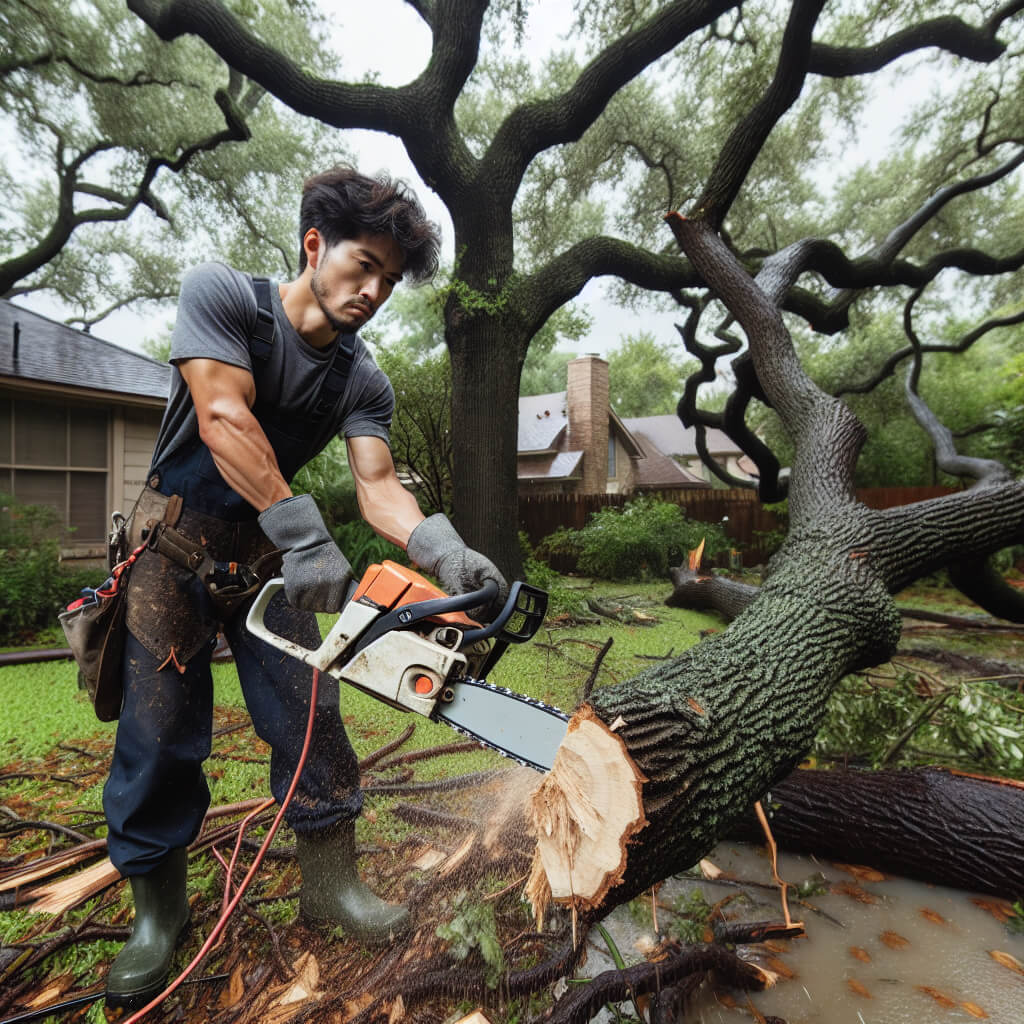
In my 17 years as an arborist, I’ve responded to thousands of emergencies like that—across The Heights, Katy, Sugar Land, even up in The Woodlands. When the ground turns soft and winds push 60+ miles per hour, even healthy trees can fail. And when they do, it’s not just about property damage. Downed trees can block driveways, take out power lines, or even trap people inside their homes.
So what should you actually do when a storm takes out your tree? Here’s the process I walk my customers through every time there’s an emergency tree removal in Houston.
Step 1: Stay Safe and Assess from a Distance
The first instinct most homeowners have is to run outside and check damage right after hearing that “crack” or “whoosh.” I get it—your heart starts racing when you hear limbs crashing in the yard. But take it from someone who’s seen too many close calls: wait until the weather passes and assess from a safe distance.
Look for downed power lines, hanging limbs, or leaning trunks. I once helped a family in the Briargrove area after a live oak limb had pierced their roof—but what scared me more was the resting tension in the branches overhead. Even small movements can send hundreds of pounds of wood shifting unexpectedly.
Step 2: Call a Certified Arborist—Not Just a Tree Cutter
In Houston, after a storm, crews pop up on every corner offering quick “cleanups.” But here’s the problem: many aren’t insured, certified, or trained to handle high-stress removals around homes and power lines.
A true professional will inspect whether the tree can be saved before deciding to cut. certified arborists like me follow ISA (International Society of Arboriculture) safety standards, use proper rigging techniques, and coordinate with utility companies when needed.
I remember during Hurricane Harvey cleanup, a homeowner in Cypress called after someone tried to remove a fallen pine with a pickup truck and tow strap. It went badly—the strap snapped, broke a window, and nearly hit a neighbor. That call turned into a complex job with cranes and safety lines, costing double what it would’ve been if handled correctly from the start.
Step 3: Document Everything for Insurance
I tell homeowners all the time—before touching anything, take pictures from multiple angles. Your insurance company needs proof of where the tree landed, the damage it caused, and if it posed a safety risk.
When I worked a large removal near River Oaks after the 2021 freeze, the homeowner’s adjuster even asked for “work in progress” photos. Luckily, our crew had taken shots through every stage of the job. That documentation helped them get full reimbursement for the tree removal and roof repair.
Step 4: Clear only Immediate Hazards
If branches are blocking a doorway or your driveway, those can be carefully removed as long as you’re staying away from tensioned limbs or power lines. Don’t try to handle the big sections yourself—Houston hardwoods like oak and pecan can weigh hundreds of pounds even once they’re cut free.
This is where emergency crews come in. We start by stabilizing the area, cutting smaller limbs to create access, then rig down larger sections using ropes and pulleys. It’s slow, controlled, and designed to prevent secondary falls or property damage.
Step 5: Handle Stumps and Root Systems
Once the hazardous portions are removed, the stump and root ball usually need attention. In our heavy clay soils, roots tend to lift sidewalks and cracked driveways even after the tree’s gone. Stump removal or stump grinding can be scheduled later if it’s not a safety issue right away.
Most stump grinding jobs in Houston run between $150 and $450 depending on size and access. I recommend getting it done while you’re already cleaning up—roots left exposed can rot and attract termites, especially in humid areas like Sugar Land or Pearland.
Step 6: Plan for Prevention
I always end these emergency calls with a conversation about prevention. A little tree trimming or crown reduction goes a long way in reducing storm damage next time. Weak unions (especially on Bradford Pears or Shumard Oaks) and neglected interior weighting are what cause most failures during hurricanes.
In The Heights, I’ve helped several homeowners significantly reduce risk just by thinning canopy weight and correcting branch balance before hurricane season. Think of it like maintenance for your car—cheaper to maintain than to replace after a crash.
Houston Tree Removal Cost Examples
Costs vary a lot when it comes to emergency work, especially when cranes, insurance coordination, or restricted access are involved. Here’s what I typically see around town:
- Small tree blocking driveway: $400 – $800
- Medium oak or pine near house: $1,200 – $2,500
- Large tree on structure requiring crane: $3,000 – $6,000+
These aren’t base prices; they reflect actual storm-response situations I’ve handled. Last year, for instance, after a microburst in Katy, we removed a 70-ft pine from a pool area for $2,800—no crane needed, but equipment access was tight.
How to Choose a Reliable Houston Crew
Ask for proof of insurance. Ask for ISA Certification. And most importantly, ask for photos or references from recent emergency work. A true professional will gladly show their credentials. I’ve even shared my ISA number with clients to verify—Certified Arborist #SO-7392A.
FAQ
How much does emergency tree removal cost in Houston?
It depends on the situation. Most homeowners pay between $800 and $2,500 for medium jobs. If the tree’s on a structure or tangled in lines, it can reach $5,000 or more. Emergency rates reflect overtime, equipment, and safety planning.
Who’s responsible if a neighbor’s tree falls on my property?
In most cases, if it was an act of nature (like a storm), your own homeowner’s insurance covers your damage. However, if the neighbor ignored visible hazards, it may be considered negligence. I always recommend getting an arborist report in writing before filing a claim—it strengthens your case.
Can I remove a fallen tree myself?
Technically yes, but I wouldn’t advise it unless it’s small, on open ground, and safely clear of structures or utilities. I’ve seen too many weekend warriors in Houston end up injuring themselves trying to tackle 2-ton limbs with a chainsaw from Home Depot.
When should I call for emergency tree removal?
Anytime a tree is blocking access, leaning dangerously, or touching power lines—it’s time to call. The longer it sits, the more dangerous it becomes, especially in our damp weather where root stability changes fast.
Conclusion
I’ve learned over the years that emergency tree removal isn’t just about cutting wood—it’s about restoring safety and peace of mind. Houston’s weather keeps us all on our toes, but with a good plan, a trusted arborist, and preventive maintenance, you can avoid a lot of headaches (and big invoices) down the road. If you’ve got a leaning tree or storm-damaged limb, don’t wait—schedule a quick inspection now before the next system rolls through.