
<!–meta: Discover why emergency tree removal is essential for Houston’s storm cleanup and how certified arborists safely manage storm-damaged trees.–>
Introduction
Last summer, right after a strong tropical storm rolled through Houston, I got a 2 a.m. call from a homeowner in The Heights. Their massive live oak had cracked halfway up the trunk and was leaning against the roof. Rain was still coming down hard, and power lines were sparking nearby. That night, my crew and I spent three hours under floodlights carefully rigging sections of that oak down to prevent the roof from caving in. This is exactly what emergency tree removal is all about — preventing further damage when a fallen or unstable tree becomes a danger right after a storm.
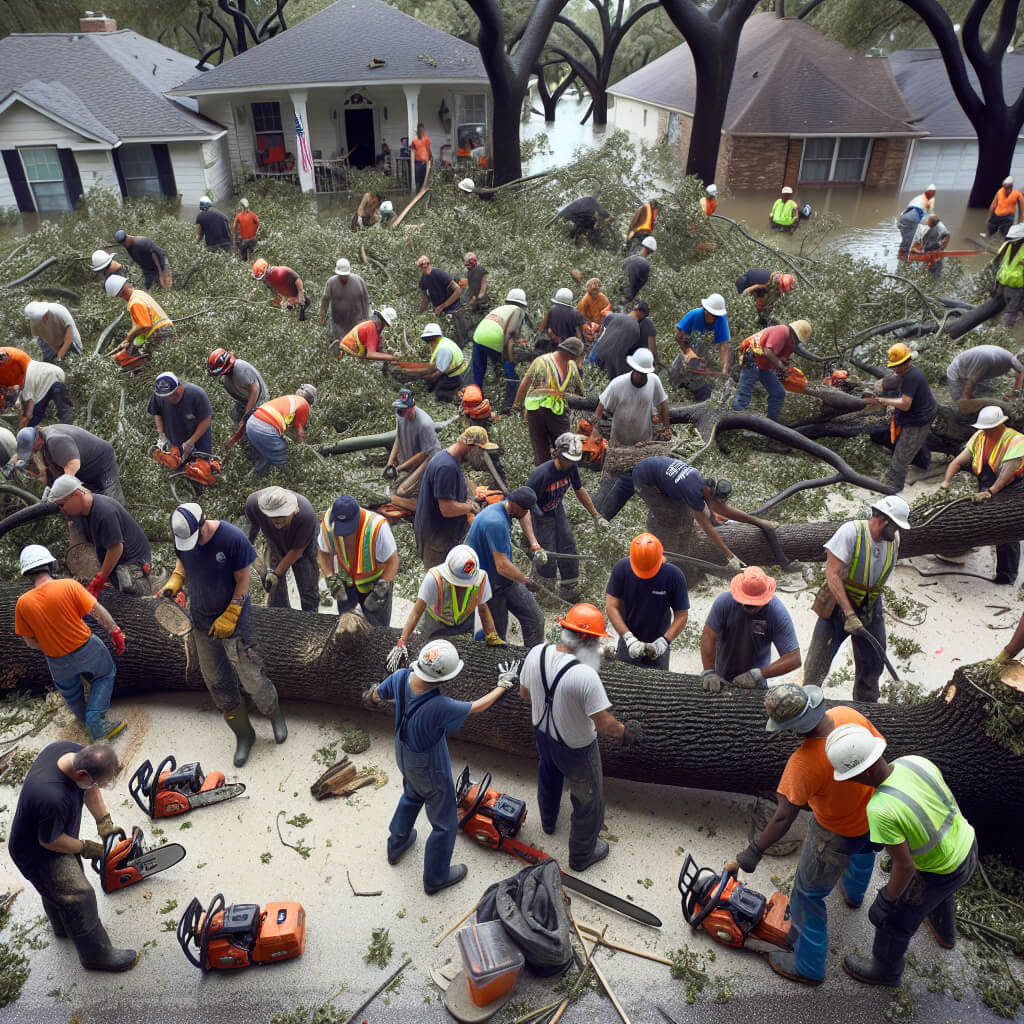
Houston’s storms are unpredictable. One week it’s calm, and the next, a squall line or early-season hurricane turns neighborhoods into obstacle courses of fallen limbs and uprooted trees. In this article, I’ll walk through why emergency tree removal is so vital after storms, what really happens during these calls, and how Houston homeowners can prepare before the next big one hits.
Why Emergency Tree Removal Is Critical After Storms
Storms in Houston don’t just knock over trees — they expose weak roots, split trunks, and bring down power lines. Our clay soil expands and contracts with heavy rain and drought cycles, which means even strong trees can lose stability when the ground turns to mush. I’ve seen hundred-year-old live oaks in the Memorial area go down overnight after three days of steady rain.
When a heavy branch or whole tree falls toward your home, you’re dealing with a safety emergency — not just debris cleanup. A compromised tree can keep shifting for hours or days. I’ve had cases in Sugar Land where a pine looked solid in the morning but gave way by evening, collapsing onto a fence. That’s why emergency removal isn’t about “getting it done fast,” it’s about doing it safely and strategically to protect people and property.
What Really Happens During an Emergency Removal
Every situation is different, but here’s how I usually handle it. Once I arrive on site, the first thing I do is assess how the tree is loaded — which direction it’s leaning, where the weight is distributed, and whether there’s tension in the limbs that could snap. Trees under tension can behave unpredictably. One wrong cut and the section could swing or roll. So I take photos, plan the drop zones, and secure ropes and rigging before we start cutting.
We often use cranes or bucket trucks for large or unsafe removals, especially when a fallen oak ends up across power lines or roofs. During Harvey, I worked multiple jobs where we had to coordinate with CenterPoint Energy to de-energize lines before cutting. I remember one job off Westheimer where a sweetgum tree took out a backyard utility pole — we had to section it off piece by piece from a lift while rainwater rose around our boots.
Common Mistakes Homeowners Make After Storms
First thing I always tell people: don’t grab a chainsaw and start cutting storm debris yourself, especially if the tree is leaning or the root ball is lifted. You can’t always tell which sections are under pressure. I’ve seen homeowners in Spring try to cut through a branch that was supporting half a trunk. The energy release can be violent — we’re talking thousands of pounds of force shifting in a second.
Another common mistake is hiring whoever knocks on your door after a storm. Houston always gets an influx of “tree guys” with pickup trucks and chainsaws, but many aren’t insured or trained for technical removals. I’ve had to fix jobs where those crews caused more damage — dropped limbs on fences, tore shingles, even hit sprinkler lines. Always make sure your contractor is insured and, ideally, an ISA Certified Arborist.
Costs of Emergency Tree Removal in Houston
emergency tree removal costs more than standard work for a few good reasons — time, equipment, and risk. You’re paying for trained crews on-call during storm conditions, often late at night. In my experience around Houston, most homeowners pay between $900 and $3,500 for emergency removals. Smaller jobs, like a medium pine that fell in an open yard in Katy, might run closer to $700. But when you’ve got a large oak leaning over a house in Memorial that needs crane support, you’re easily around $4,000 or more.
One factor that really dictates price is access — if our trucks can’t get close, or we have to climb instead of using a lift, that increases time and risk. I always tell clients that paying for proper tree removal now beats paying for roof repairs later.
Preventing Emergency Removals Through Regular Maintenance
You can’t stop the storms, but you can reduce your risk. Regular tree trimming and pruning make a huge difference. Weak limb unions, over-extended branches, and rotten spots can all be identified early by a certified arborist. I do a lot of risk inspections every spring before hurricane season — especially for folks in master-planned communities who need HOA compliance. Keeping your trees healthy and structurally sound means they’re more likely to withstand high winds and saturated soil.
Also, keep an eye on roots. In Houston’s clay-heavy yards, roots can suffocate if the soil stays soggy for weeks. After major floods, I’ve seen oak roots rot out quietly from too much moisture. By the time symptoms show, the tree is already compromised. If you’re not sure about a tree’s stability, get a professional risk assessment done. It’s cheaper than an emergency call later.
What Homeowners Should Do Right After a Storm
First, stay safe. Don’t approach downed trees that are touching wires or structures. Call your utility company if you suspect electrical hazards. Then, take photos for your insurance company — they’ll likely need them. Once that’s done, reach out to an emergency response team familiar with local conditions. Experienced crews like mine have handled post-storm cleanups after Harvey, Beryl, and Uri — we know how Houston’s weather and soil respond after extreme events.
Lastly, don’t panic. Trees are resilient, and most damage can be managed if you act fast and safely. We Houston arborists have seen just about everything at this point — from 80-foot pines uprooted in Cypress to waterlogged elms tipping near bayous. The main goal is quick, careful action — not rushed or reckless cleanup.
FAQ
How soon should I call for emergency tree removal after a storm?
Right away. The sooner you call, the easier it is to prevent secondary damage. I’ve seen trees shift hours after storms. If the tree is unstable, call a certified arborist immediately rather than waiting until daylight.
Can my homeowner’s insurance cover emergency tree removal?
In many cases, yes. If the tree lands on a structure, fence, or driveway, most policies cover removal and damage repair. I always tell homeowners to document everything with photos and get a written estimate for their adjuster.
How do I know if my tree needs emergency removal or just trimming?
If the tree is leaning more than 15 degrees, has cracked sections, or exposed roots, it’s usually unsafe. A quick risk assessment by a professional can confirm whether emergency tree removal is needed or if careful pruning will do.
Do emergency removals cost more at night?
Typically, yes. Crews working at night work under tough conditions — rain, limited visibility, active hazards. Expect a surcharge, but for safety-critical situations, it’s worth every penny.
What should I do if power lines are involved?
Never touch or approach those trees. Immediately call the power company and a licensed arborist experienced with electrical hazards. In Houston, we coordinate directly with CenterPoint Energy before any work near energized lines.
Conclusion
When it comes to storm recovery in Houston, emergency tree removal is often the first step toward restoring safety and normalcy. The faster you deal with dangerous or unstable trees, the fewer surprises you’ll face later. Whether it’s a limb on your roof or a giant oak leaning toward the street, having a trusted arborist to call can make all the difference when storms hit. Houston weather will always keep us on our toes, but with preparation and the right help, your trees — and your property — will stand strong.