
<!–meta: Learn how Houston homeowners can handle emergency tree removal safely and when to call a certified arborist after a storm.–>
Introduction
About a week after Hurricane Beryl roared through Houston, I got a panicked call from a homeowner in the Heights. A massive live oak had come down overnight, its trunk resting on the corner of their garage. They were frightened—rightly so. The weight of that tree could’ve easily crushed their roof or worse if they tried moving it on their own. I’ve seen it time and again—after every major storm, from Harvey to Uri, Houston homeowners wake up to fallen or leaning trees and wonder what to do next.
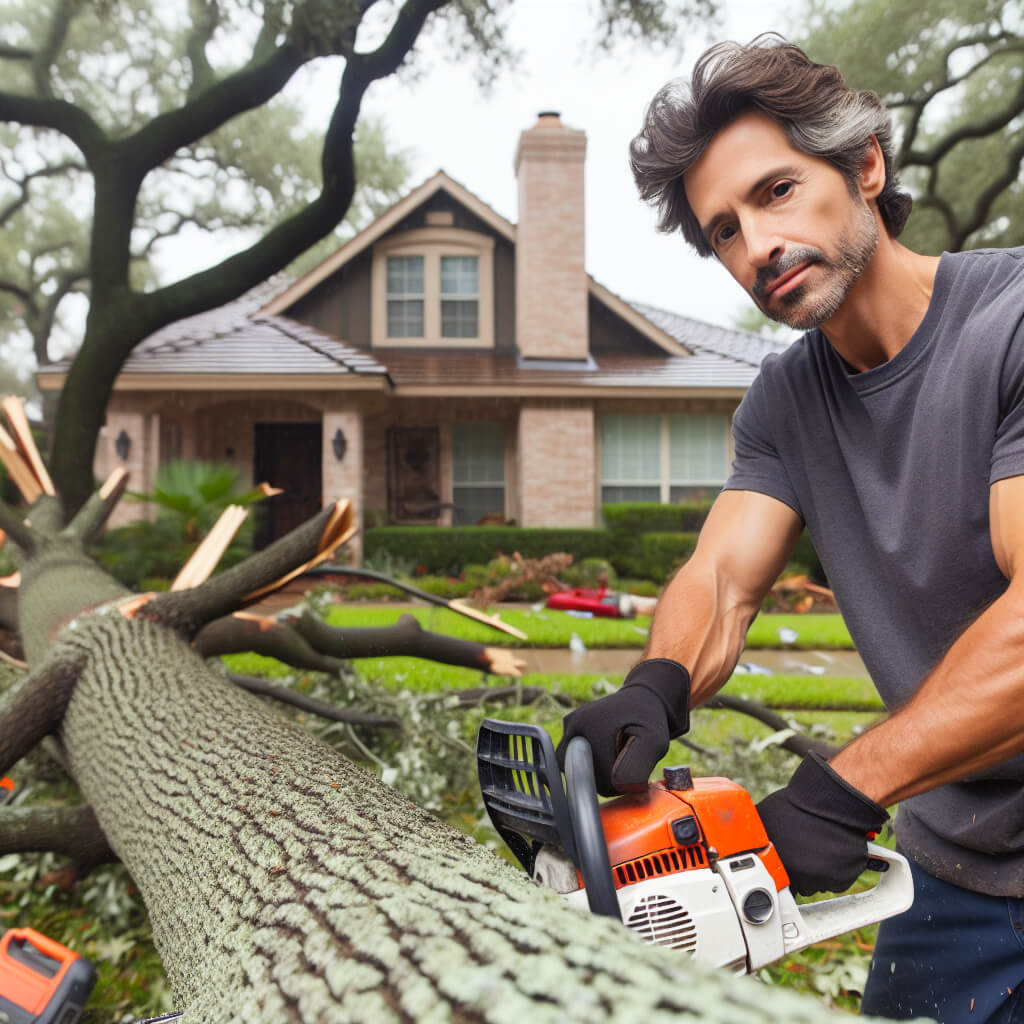
In this article, I’m going to walk you through what “emergency tree removal” really means, how to handle it safely, what it typically costs here in Houston, and how to prevent tree disasters before the next hurricane rolls in. I’ll also share a few hard-learned lessons from the field—cases where the right (or wrong) decisions made all the difference.
What Counts as an Emergency Tree Situation?
Not every fallen branch is an emergency, but certain situations call for immediate professional help. Generally, it’s an emergency when a tree:
- Has fallen or is leaning dangerously toward a home, power line, or road
- Has cracked limbs dangling over structures or paths
- Is blocking driveways or emergency access routes
- Was struck by lightning or uprooted during a storm
I still remember a job in Memorial after Harvey. A 50-foot pine had split halfway down the trunk—looked stable to the untrained eye, but I knew that split meant the internal structure was gone. Within hours, it could’ve broken completely, crushing the homeowner’s carport. We carefully roped it and performed sectional removal to keep everyone safe. That’s the kind of judgment that comes from years in the field.
First Steps When a Tree Falls
If a tree comes down on your property, the most important thing is don’t panic—and don’t touch it. Here’s what I tell every homeowner:
- Check for safety hazards. Stay away from downed power lines and gas meters. Call CenterPoint Energy if there’s any sign of wires involved.
- Document the damage. Take photos for your insurance company before any cleanup begins.
- Call an ISA Certified Arborist. A professional can assess whether it needs immediate emergency tree removal or temporary stabilization.
- Keep people away. I’ve seen well-meaning neighbors get hurt trying to cut large limbs on their own.
During Hurricane Harvey, I helped a homeowner in Sugar Land who started cutting a fallen oak with his own chainsaw. The branch shifted unexpectedly and pinned his leg. He ended up hospitalized—and that’s one story I never want to repeat. These situations look simple until a few thousand pounds of timber starts moving.
How Emergency Tree Removal Works in Houston
Professional crews like ours are equipped for fast, safe removals. Depending on the situation, we may use cranes, bucket trucks, or advanced rigging systems to control each cut. The goal is always safety first—protecting homes, people, and other trees around the site.
After a major storm, local demand skyrockets. Certified crews book fast, so I always recommend homeowners have a trusted contact saved in their phone before hurricane season hits. You can find reputable tree removal companies through ISA directories or local referrals. And yes, you should always ask about insurance and credentials—no exceptions.
Emergency Tree Removal Cost in Houston
Prices vary depending on tree size, access, and risk. In my experience:
- Simple removals (small trees, straightforward access): $500–$1,000
- Medium-sized trees (like pines or maples near structures): $1,200–$2,500
- Large or hazardous removals with cranes or near power lines: $3,000–$6,000+
Insurance often covers part or all of emergency work if the tree damaged your home or blocked access. However, it rarely covers preventative removals—something to remember when scheduling maintenance before storm season.
Preventing Future Emergencies
Most of the disasters I’ve seen could’ve been avoided with regular tree trimming and preventive care. Houston’s clay soil, unpredictable rain cycles, and windstorms put huge stress on root systems. I recommend homeowners schedule at least one inspection a year—especially for large oaks, pecans, and pines.
Weak limbs, root damage, and hollow trunks can all be addressed early. For example, last spring I helped a family in Katy with a live oak that leaned slightly toward their house. We stabilized it with cabling and reduced its crown weight. Then Hurricane Beryl passed—and that tree didn’t budge an inch. Preventive action saved them thousands of dollars.
Regulations and Permits
In Houston, protected tree ordinances apply mainly to right-of-way or public property trees. But homeowners in subdivisions—like Cinco Ranch or The Woodlands—should check their HOA’s HOA compliance requirements before removal. Some neighborhoods require permits or replacements if large shade trees come down.
DIY vs. Professional Removal
Aside from very small debris, I never recommend DIY removal after a storm. Storm-damaged trees are unstable, and even minor cutting can cause sudden shifts. A professional crew has the right gear—rigging lines, wedges, saws—and experience to anticipate movement. I’ve climbed 80-foot pines after hurricanes that looked rock solid from the ground but were internally hollow.
Frequently Asked Questions
How much does emergency tree removal cost in Houston?
Most homeowners pay between $800 and $2,500 for moderate-size emergency removals. Large hazardous trees can reach $4,000 or more, especially when cranes are needed. Insurance sometimes helps if there’s property damage.
Can I remove a storm-damaged tree myself?
I strongly advise against it. Storm-stressed trees can shift unexpectedly. Even seasoned climbers treat every cut with caution. Call a certified arborist instead.
Will my insurance cover tree removal after a hurricane?
Homeowner policies typically cover removal if the tree damages a structure or blocks access to your property. Always take photos and contact your insurer promptly before cleanup begins.
What should I do while waiting for the crew to arrive?
Keep people and pets away from the affected area, especially near hanging limbs. Take pictures for insurance, and don’t attempt to move debris yourself.
When should I schedule preventive tree service?
Late winter or early spring is best, before storm season. Schedule annual health checks and pruning to keep your trees strong and balanced.
Conclusion
I’ve seen firsthand how quickly a strong Houston storm can turn a healthy tree into a dangerous situation. But I’ve also seen how timely care and inspection prevent most emergencies. If you’ve got large trees near your home—or one that’s already showing stress cracks or leaning—it’s time to get it checked before hurricane season. An expert eye today could save you thousands tomorrow.
And if you ever face a true emergency, don’t take risks—call a certified crew for emergency tree removal. We’ve got the gear, the training, and the experience to handle it safely and restore peace of mind fast.