
<!–meta: Learn how emergency tree removal helps protect Houston properties from storm hazards and fallen trees, and what to do when disaster strikes.–>
Introduction
Last summer, right after Hurricane Beryl rolled through Houston, I got a panicked call from a homeowner in the Heights. A massive limb from a mature live oak had crashed onto their carport around 3 a.m. The homeowner told me, “I didn’t think the tree would ever come down—it’s been there since before the house was built.” I’ve heard that more times than I can count. Houston’s storms have a way of testing even the strongest trees, and when one fails, you don’t have much time to think—you act. That’s where emergency tree removal comes in.
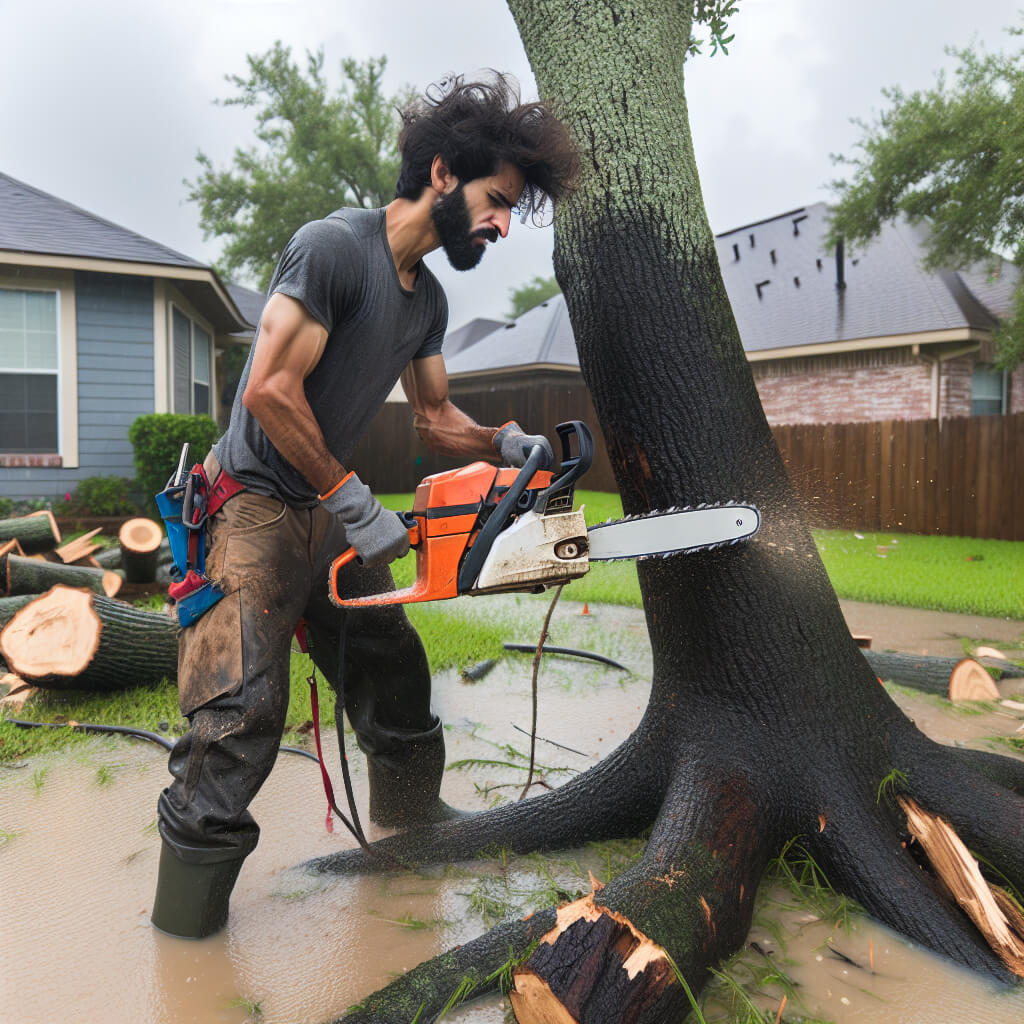
In my 17 years working as a certified ISA arborist across the Greater Houston area, I’ve responded to thousands of tree emergencies—some simple, some life-threatening. In this article, I’ll walk you through what “effective” emergency removal really means, the steps involved, and how to prevent a bad situation from turning tragic. I’ll share a few stories from recent Houston storms and explain how professional crews keep you safe while minimizing damage to your property.
What Makes Emergency Tree Removal Different?
Emergency tree removal isn’t the same as your typical tree removal. We’re dealing with unstable trees that are broken, uprooted, or tangled in power lines—often in the middle of the night and sometimes in pouring rain. Every move counts because one wrong cut can shift thousands of pounds in the wrong direction. That’s why it takes a team with the right equipment, training, and experience to do it safely.
After Hurricane Harvey, I spent three days straight in Meyerland and Bellaire helping residents clear trees that had smashed into fences, roofs, and power lines. One particular pine in Meyerland had fallen across two backyards and was balanced on a fence like a seesaw. We had to rig it with a crane just to prevent the trunk from rolling when we started cutting. That kind of precision isn’t possible with a chainsaw and a ladder—it requires professional rigging equipment and knowledge of tree physics.
Common Houston Tree Emergencies
Houston’s tree emergencies usually fall into a few key scenarios:
- Storm or hurricane damage: High winds and saturated clay soil can uproot even healthy trees like live oaks and pecans.
- Fallen limbs on structures: Large branches from water oaks or hackberries often give way suddenly, especially after heavy rain or drought stress.
- Lightning strikes: We see this often in Memorial and the Energy Corridor—one strike can split a pine down the center.
- Root failure: Expansive Houston clay swells and contracts, weakening root systems over time. When a big storm hits, those roots can’t hold.
One case that sticks with me happened in Sugar Land after a severe thunderstorm. A massive water oak tipped just enough to lift one side of the root plate out of the ground—about four inches. The homeowner called because “it looked a little crooked.” Within 48 hours, the entire tree had come down. If they hadn’t moved their car, it would’ve been crushed. That’s how fast tree failures can happen.
The Process of Effective Emergency Tree Removal
1. Safety Assessment
Before touching a saw, my team always assesses the entire scene: hanging limbs, electrical hazards, access points, and load-bearing pressures. We look for tension and compression in the wood to prevent snapping or rolling. If power lines are involved, CenterPoint Energy must secure them first. Homeowners should never approach a downed tree near wires.
2. Securing the Area
We rope off unsafe areas and clear debris paths. During emergency removals, you’ll often see crews setting up pulleys and rigging systems in nearby trees to control each cut. Sometimes we’ll even climb the damaged tree if conditions allow, using harnesses and micro-pulleys to lower heavy limbs piece by piece. It’s controlled chaos, but it keeps everyone safe.
3. Controlled Dismantling
Depending on the situation, we might use cranes or aerial lifts for precision. In tight Houston neighborhoods like the Heights or Montrose, space is limited. We often use smaller, compact lifts to navigate between houses. For larger oaks or pines, we may block off a section of street temporarily with city permits.
4. Cleanup and Restoration
Cleanup is the final—and most overlooked—step. Once the hazard is mitigated, we handle debris removal, stump grinding, and site restoration. Leaving a damaged stump behind can attract pests like termites or root rot fungi, especially in our humid Houston climate.
Why Professional Help Matters
I know Houston homeowners who’ve tried to remove fallen trees themselves, thinking they could save a few hundred bucks. But I’ve also seen the aftermath—damaged roofs, crushed fences, even hospital visits. Tree removal is one of the most dangerous jobs in the country for a reason. When you combine chainsaws, unpredictable loads, and unstable footing, things can go south fast.
Professional crews carry specialized insurance, use certified climbers, and follow ISA safety standards. We also handle permits and documentation for city or HOA compliance. In neighborhoods like River Oaks or West University, that paperwork can make the difference between a smooth removal and a costly fine.
What It Costs in Houston
Emergency removals aren’t cheap because of the risk and after-hours response. For most Houston properties, prices range from $1,000 to $4,500, depending on size, access, and hazard conditions. A simple patio-sized tree blocking a driveway in Katy might run $750. But a massive oak on a roof in Tanglewood that needs a crane? That could exceed $5,000 easily. The goal is always to minimize secondary damage—every measured cut protects your home and your wallet.
How to Prepare Before the Next Storm
I always tell neighbors this: the best emergency is the one you never have. Preventive maintenance through regular tree trimming and inspections can make a huge difference. Weak branch unions, decay pockets, and shallow root systems are warning signs. Have an arborist assess your trees at least once a year, especially before hurricane season.
After Winter Storm Uri, I saw dozens of trees fail because of hidden root rot, not the freeze itself. Annual health checks could’ve caught that early. I offer these assessments year-round, and many times, just a few well-placed pruning cuts can prevent a future call for emergency removal.
FAQ
How much does emergency tree removal cost in Houston?
Most Houston homeowners spend between $1,000 and $4,500 for emergency tree removal. Costs depend on tree size, location, and whether equipment like a crane is needed. After-hours or storm-related calls usually run higher.
What should I do if a tree falls on my house?
First, make sure everyone is safe and stay out of the damaged area. Call 911 if you suspect electrical hazards. Then contact a professional emergency storm damage service to assess and remove the tree safely. Document everything for your insurance claim.
Can insurance cover emergency tree removal?
Yes, most homeowners’ insurance policies cover removal when a tree damages a structure. They may not cover debris cleanup for trees that simply fall in the yard without touching anything.
How soon should I call after a storm?
Immediately. The sooner a professional gets onsite, the faster we can stabilize the area and prevent additional damage. Delays often lead to more roof leaks or limb shifts.
How can I tell if my tree is at risk?
Look for cracks in the trunk, soil heaving around the base, mushrooms growing on roots, or limbs crossing each other. If you’re unsure, schedule an inspection by a certified arborist—you might catch a problem early enough to save the tree.
Conclusion
When severe weather hits Houston, fallen trees can become instant dangers to your property and family. Having the right professionals on call for emergency tree removal can mean the difference between a controlled recovery and a bigger crisis. Don’t wait until your tree is already leaning or split—schedule a preventive check today. I’ve seen what these storms can do, but I’ve also seen how much heart Houston homeowners have in protecting their properties. Stay safe, stay prepared, and let the pros handle the heavy lifting.