
<!–meta: Expert tips from a Houston ISA Certified Arborist on emergency tree removal and how to protect your home this hurricane season.–>
Introduction
Every year around June, my phone starts ringing nonstop. Homeowners from the Heights to Katy call me about leaning live oaks, split pines, or giant limbs hanging dangerously over roofs. That’s how you know hurricane season has officially arrived in Houston. And believe me—I’ve seen what an underestimated tree can do when the winds pick up. During Hurricane Harvey, a 70-foot water oak in Midtown came down on a garage with such force it cracked the slab foundation beneath it. The homeowner told me afterward, “I never thought it would fall.” That’s something I still hear every single season.
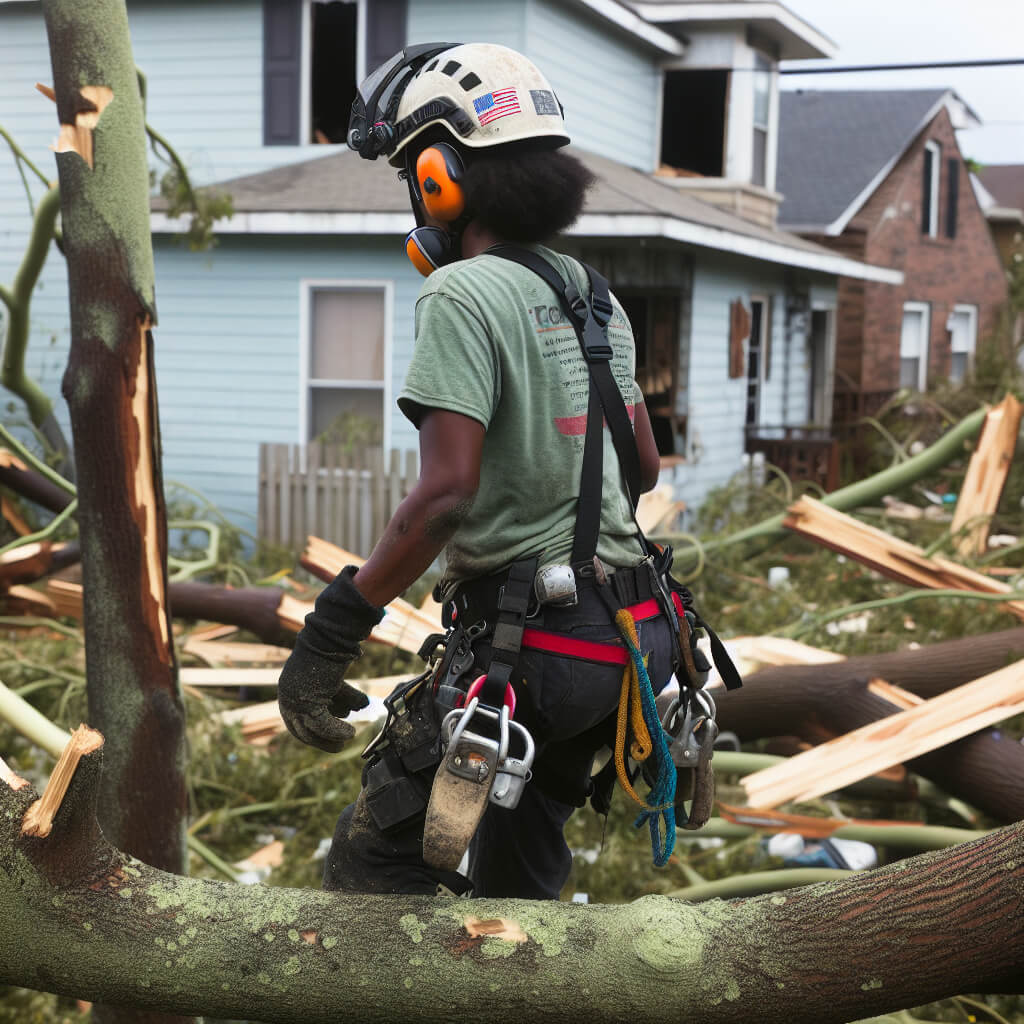
When it comes to emergency tree removal, speed, experience, and safety all matter. So in this article, I want to walk you through what emergency removal really involves, how to spot danger early, and what you can do before the next big storm hits. Think of this as a little hurricane prep session—neighbor to neighbor.
Why Emergency Tree Removal Matters During Hurricane Season
Houston has a wild mix of weather—humid summers, drought patches, and then sudden flooding from tropical systems. Those extreme swings stress trees. Clay soil contracts during droughts, roots lose grip, and then heavy rain loosens everything overnight. Add hurricane-force winds, and… well, you’ve got a recipe for uprooted giants.
After Hurricane Beryl, I removed a massive pine in Cypress that had tipped at the roots. The tree looked healthy from the outside, but once we started cutting, the rot inside the base had eaten nearly a third of the trunk. That hidden decay is one of the biggest reasons trees fail in storms.
Common Tree Failures I See After Major Storms
- Root failure: Especially common in live oaks and sweetgums sitting in over-saturated soil.
- Trunk splits: Bradford pears and Chinese tallows are notorious for this. I’ve probably seen more split pears in Meyerland than anywhere else.
- Canopy breakage: High winds yank out poorly pruned or dense canopies, turning branches into dangerous projectiles.
When you call for tree removal after a hurricane, chances are your tree isn’t just inconvenient—it’s a liability. I’ve seen trees block driveways, tear down power lines, and crush fences. Quick, professional removal isn’t about convenience—it’s about preventing secondary damage and safety hazards for your family.
How Emergency Tree Removal Works in Houston
When I show up after a big storm, my first step is always a safety assessment. We look at leaning angles, hanging limbs, and what structures or wires are nearby. In many neighborhoods like Memorial or Sugar Land, power line clearance adds a layer of complexity. I coordinate directly with CenterPoint Energy when necessary to make sure the area’s de-energized before we bring down anything near conductors.
Once we secure the site, the crew uses rigging systems—ropes, pulleys, and cranes if needed—to control each cut. We don’t just “chop it down.” Every section comes down with intention. That’s especially important when the tree’s hung up over a roof or fence. I remember a job in River Oaks where a 50-foot post oak had collapsed into a pool enclosure. We had to dismantle that thing piece by piece using a crane boom over the house. The whole process took six hours, but we didn’t so much as scratch the tile.
After the tree’s down, we handle debris clearing and stump grinding. It’s easy to overlook the stump in the rush of cleanup, but leaving it behind attracts pests and disease. Termites love a fresh stump.
Early Warning Signs: Spot Danger Before the Storm
A lot of emergency calls could be avoided with a simple pre-season inspection. In my experience, 7 out of 10 trees that fail during hurricanes were already showing symptoms weeks—or months—before the storm hit. Here’s what to look for:
- Leaning tree with soil heaving or cracking around the base
- Mushrooms or soft spots along the root flare (rot inside)
- Major dead limbs or cracks larger than 2 inches in diameter
- Branches touching the house or growing toward the roofline
- Dense canopy that hasn’t been properly thinned in years
If you see those red flags, schedule a tree trimming or risk assessment before hurricane winds arrive. Preventive trimming and load reduction can make the difference between a tree standing tall and one blocking your driveway in 80 mph gusts.
Real Houston Examples: What Emergency Jobs Teach Us
One job that still sticks with me was in Pearland right after a tropical storm. A healthy-looking laurel oak dropped half its crown through the homeowner’s sunroom. When we cut into the broken section, it was hollow almost halfway up the trunk—heart rot had quietly worked for years. A simple inspection six months earlier could’ve prevented that entire mess.
I also remember during Winter Storm Uri, the freeze cracked several older water oaks in Memorial. The homeowners didn’t notice the fractures until summer storms reopened those wounds. We had to remove three large trees that could’ve been saved with early pruning and sealing. Trees remember stress. It just shows up months later when you least expect it.
What Emergency Tree Removal Costs in Houston
Prices always depend on access, tree size, and risk factors. But to give you a ballpark, most homeowners in Houston pay between $1,200 and $3,500 for urgent removals. Smaller trees that fall clear of structures might be as low as $600. But once you’re dealing with a large oak over a roofline, the equipment and labor make it a bigger job.
Last month, we removed a 65-foot pine from a driveway in Katy—$950, full cleanup included. That same week, we handled a massive live oak resting on a garage in West University. Between cranes, permits, and line coordination, it came out to just under $4,800. Both were emergencies, but very different in complexity. That’s why I always recommend homeowners call for a quick assessment before damage happens—prevention’s a lot cheaper than cleanup.
FAQ: Emergency Tree Removal in Houston
How fast can you respond to an emergency tree removal in Houston?
My crew’s usually on-site within 1-3 hours depending on the storm’s severity and road conditions. During big events like Harvey, we prioritized trees on homes first. If your tree’s threatening a structure or blocking access, we bump it straight to the top of the list.
Do I need a permit for emergency tree removal in Houston?
In most residential areas, no permit is needed for emergency work, especially if the tree poses immediate danger. In the City of Houston’s protected tree zones, we document the condition with photos for compliance, but emergency removals are allowed without delay.
Will my insurance cover emergency tree removal?
Typically yes, if the tree damaged a covered structure—like your home or fence. Insurance won’t usually cover healthy trees that just fall without causing property damage. Always call your adjuster before cleanup if possible.
Can I remove a fallen tree myself?
I wouldn’t recommend it. Fallen trees hold unpredictable weight and tension, especially when resting on structures or fences. One wrong cut and it can spring unexpectedly. I’ve seen homeowners get seriously injured trying to DIY hurricane damage cleanup. Call a professional—it’s just not worth the risk.
What can I do now to prepare my trees for hurricane season?
Schedule a professional inspection in late spring or early summer, thin crowded branches, and remove dead or weak limbs. Prune any growth hanging over your roof or driveway. And if a tree already looks unstable, don’t wait for a storm to make the decision for you.
Conclusion
Here’s something I’ve learned after nearly two decades climbing Houston trees: it’s not the storm itself that causes most headaches—it’s the trees that were already compromised beforehand. A simple inspection today can save thousands in emergency work later. So before the next big tropical system rolls through, take a walk around your property. Look up. Check those leaners, cracks, and overgrown crowns. And if something worries you, reach out to a certified arborist fast. It’s always better to remove a dangerous tree on your terms than have Mother Nature do it for you.