
<!–meta: Learn how emergency tree removal protects Houston homes during storm season, with expert insights from a certified Houston arborist.–>
Every summer in Houston, as storm season creeps in, my phone starts ringing nonstop. Homeowners from places like Meyerland, Memorial, and Katy call me in a panic—usually after a big branch has already landed where it shouldn’t. Just a week ago, I was in the Heights helping a family whose massive water oak had split right down the middle during a thunderstorm. Luckily, nobody got hurt, but it did crush part of their fence and came within inches of hitting their kids’ bedroom window.
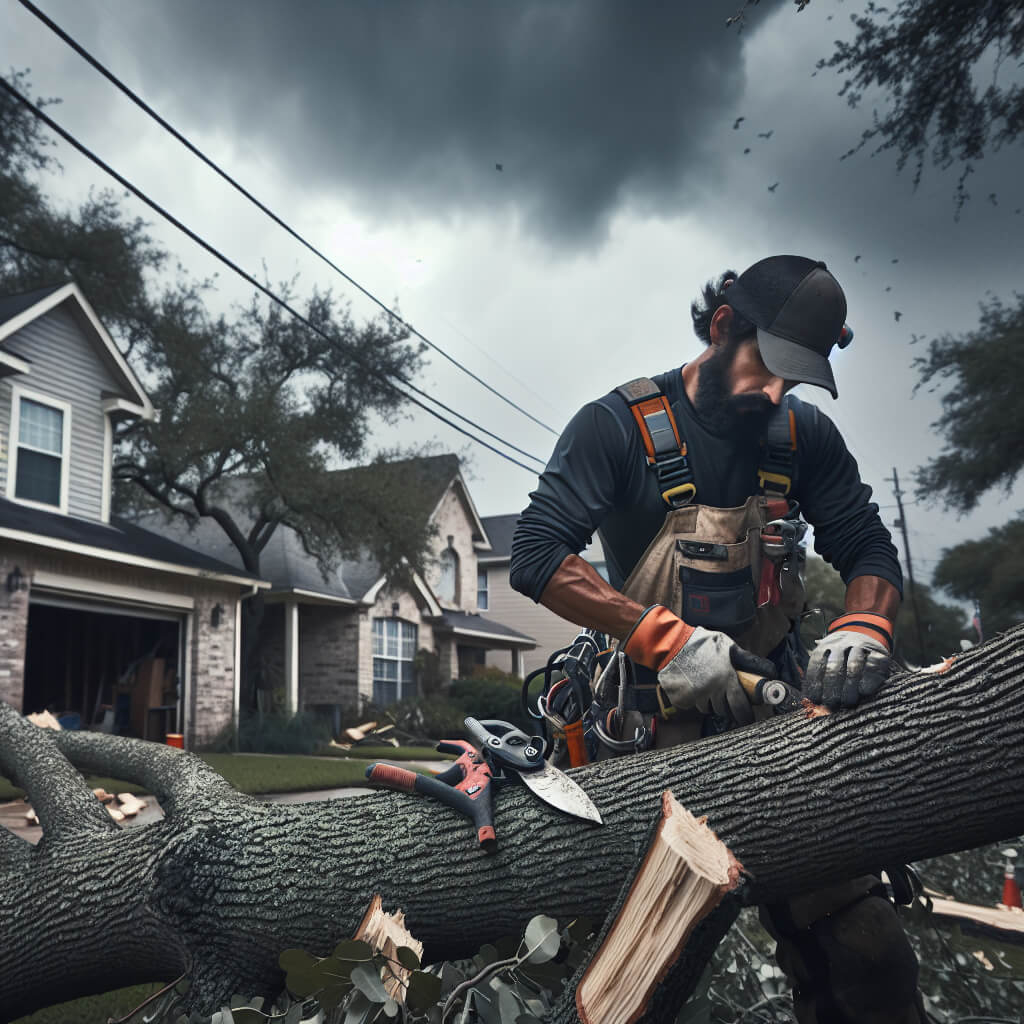
That’s the reality of Houston’s storm season. Between sudden gusts, soaked clay soil, and saturated roots, even healthy-looking trees can fail in an instant. I’ve seen it thousands of times. And that’s why emergency tree removal isn’t just about cleanup—it’s about protecting homes and families when nature decides to turn rough.
Why Houston Trees Fail During Storm Season
Our city has a unique mix of heavy clay soil and unpredictable weather. When dry weeks are followed by intense rain, the soil expands rapidly, loosening tree roots. Add 50-60 mph gusts from a Gulf storm and you’ve got the perfect recipe for uprooted pines and split oaks. During Hurricane Harvey, I remember pulling six mature live oaks out of front lawns in Memorial that had seemed perfectly fine just days earlier.
Pine trees, especially those in neighborhoods like Cypress and Spring, are notorious for toppling in drought-to-storm transitions. Their root systems are shallow, and in our region’s shifting soil, they simply don’t have the anchoring power once the ground softens. I’ve also seen fast-growing species like Bradford Pears and Chinese Tallows snap like matchsticks—their brittle wood just can’t handle Houston’s violent gusts.
How Emergency Tree Removal Protects Property
When a tree goes down—whether it’s blocking a driveway or leaning dangerously toward a house—time matters. I’ve worked storm scenes where waiting just an extra hour meant the difference between a free-standing power line and one draped across a roof. Emergency tree removal isn’t about rushing through the job; it’s about stabilizing the situation safely and efficiently.
1. Preventing Secondary Damage
One of the most overlooked dangers after a storm is the partially fallen tree. A trunk caught in another tree or hanging over a structure may seem stable, but all it takes is a shift in wind direction or a small vibration to bring it crashing down. We use ropes, pulleys, and cranes to secure sections before making cuts. During Winter Storm Uri, I saw hundreds of frozen limbs hanging precariously; one move the wrong way and they’d shatter like glass onto parked cars below.
2. Protecting Power and Utility Lines
In the Heights and Montrose, older neighborhoods often have power lines running right through thick canopies. During Hurricane Beryl, I had calls where live limbs had tangled into power cables—situations that could’ve electrocuted anyone trying to cut them down. This is where training and equipment make all the difference. A certified crew knows how to coordinate with utility companies before touching anything near live wires.
3. Maintaining Property Access
Blocked driveways, trapped vehicles, and debris-covered streets—these aren’t just inconveniences. Emergency crews need access during major storms. We’ll often clear driveways or right-of-ways first so homeowners and first responders can come and go safely. Last year in Sugar Land, after a microburst flattened several ash trees across a cul-de-sac, we worked late into the night just to open a path wide enough for a fire truck.
What to Expect During Emergency Tree Removal
Homeowners sometimes assume emergency work means sky-high pricing or rushed service. That’s not necessarily true. The cost depends on the tree’s size, location, and the complexity of removal. For example, a simple pine removal in Katy might run about $700, while a massive oak tangled in power lines in Memorial could reach $3,500 or more. The difference? Access and risk. We always provide clear estimates before starting any work.
When you call for tree removal after a storm, expect an immediate safety assessment first. We’ll check for electrical hazards, weak limbs, and ground stability. Then we prioritize cuts from top to bottom, section by section. Cleanup and debris hauling are usually part of the service, though some homeowners prefer to keep the wood for mulch or firewood if it’s safe to process.
Preventing Future Emergencies
While I make my living responding to emergencies, I always tell homeowners: don’t wait for a storm to find out if your tree’s stable. Preventive care—especially regular tree trimming and proper pruning—can make an enormous difference. Overgrown canopies catch more wind, and poor branch structure adds unnecessary weight. A proper structural prune doesn’t just make your tree look tidy; it redistributes stress points to handle high winds better.
In my experience, homeowners who schedule inspections before June (when hurricane season ramps up) avoid 90% of emergency calls later. We look for warning signs like cracked bark, trunk cavities, exposed roots, or fungus at the base. If caught early, those trees can often be saved—or safely removed before they cause damage.
When to Call for Emergency Tree Removal
Here’s the rule I tell clients: if a tree has shifted position, exposed its roots, or is touching your roof or power lines—it’s an emergency. Even if it looks stable, Houston’s winds can shift quick. I’ve seen trees that appeared fine in the morning come down by dinnertime just from soil saturation alone.
And a quick word of caution—never try to cut or pull a fallen tree yourself when there’s tension in the wood. It can whip back with explosive force. That’s one of the most dangerous situations we face in the field, especially when trunk fibers are twisted or compressed.
Real Stories from the Field
I’ll never forget one job in Bellaire after a tropical storm. A 65-foot pecan tree had fallen perfectly across a roofline. The homeowner told me, “It landed so gently, I thought it might be fine.” But once we got up there, the trunk was grinding into the rafters with every gust—it had cracked two main beams. It could’ve been a total collapse if left another day. We rigged the entire tree off the roof in sections using three climbers, and not a single shingle was damaged during removal.
Another time near Kingwood, during the aftermath of Harvey, I worked 18 straight hours clearing streets choked with loblolly pines. What sticks with me isn’t the mess—it’s how thankful people were just to have their driveway clear again. That’s what emergency tree work is really about: restoring a little normalcy when everything else feels chaotic.
FAQ
How much does emergency tree removal cost in Houston?
Most homeowners spend between $800 and $2,500, but costs can rise for large or complex situations—like trees near homes or power lines. We provide upfront estimates before starting any emergency job.
Can insurance cover emergency tree removal?
Yes, in many cases. If a tree damages insured property—like your house, fence, or driveway—your homeowner’s insurance often applies. Always check your policy and take photos before cleanup begins.
What should I do while waiting for a crew to arrive?
Stay clear of the damaged area, especially if power lines or leaning trunks are involved. Avoid walking under cracked branches, and keep children and pets indoors. Send photos to your arborist so we can dispatch the right equipment faster.
Is it safe to do my own emergency removal?
Unless it’s a small branch on the ground, I don’t recommend it. Storm-damaged trees behave unpredictably. Tension and compression in the wood can cause sudden movement. Always bring in a licensed and insured arborist with proper equipment.
Can preventive pruning reduce storm damage?
Absolutely. Proper tree pruning reduces weight, improves airflow, and strengthens structure. Well-maintained trees fare much better during Houston’s hurricane season compared to neglected ones.
Conclusion
Emergency tree removal isn’t something anyone plans for—but living in Houston, it’s something every homeowner should understand. The combination of unstable soil, powerful storms, and mature trees makes it essential to have a certified arborist on speed dial when the wind starts howling. If your trees haven’t been inspected in a while, don’t wait for the next thunderstorm to find out the hard way. A quick safety check now can prevent thousands in damage—and maybe even protect your home and family when it matters most.