
Introduction
When that first thunderclap rolls through Houston and the wind starts ripping at the trees, my phone lights up like a Christmas tree. After every big storm—whether it’s a hurricane, one of those sudden Gulf thunderstorms, or a winter freeze—homeowners are left staring at fallen limbs and uprooted trees wondering where to start. Just last summer in Memorial, I got a 2 a.m. call after a huge pine toppled across a driveway. The homeowners were trapped until sunrise. Fortunately, we got there fast, cleared a lane within an hour, and removed the whole tree safely before lunch.
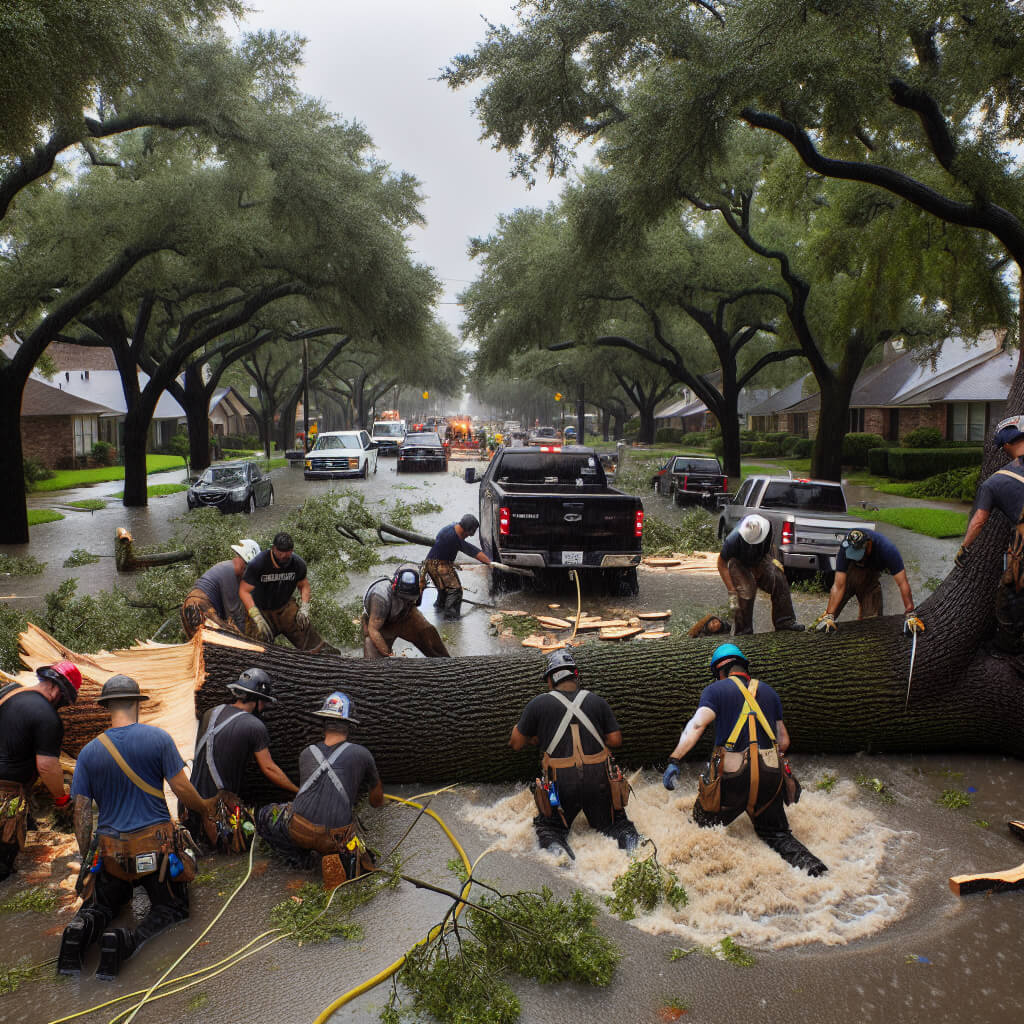
In my 17 years as an ISA Certified Arborist here in the Greater Houston area, I’ve helped thousands of homeowners through storm recovery. I’ve seen trees twist in half like matchsticks during Hurricane Harvey, and oaks lose half their roots when the clay soil swells after heavy rain. Storm cleanup isn’t just about clearing debris—it’s about doing it safely, preventing more damage, and protecting what’s left of your landscape. This guide walks you through what to expect with emergency tree removal in Houston, how to handle post-storm cleanup, and what to do before the next one hits.
Why Houston Trees Are Especially Vulnerable to Storms
Let’s start with the obvious: Houston weather is intense. Between hurricane season (June to November) and those heavy spring thunderstorms, we get it all. Our clay-based soil doesn’t drain well. That means roots loosen easily when the ground stays saturated, especially for big trees like pines and water oaks. Then you’ve got high winds acting like a lever on top-heavy canopies. It’s a perfect recipe for uprooted trees or snapped trunks.
I’ll never forget a case in Bellaire after the Memorial Day Flood a few years back—a sweet gum leaned 15 degrees after the storm. The homeowners figured it would settle back upright. Instead, the next storm finished it off, and it crushed their fence and tore out irrigation lines. That’s a $4,000 event that could’ve been a $700 preventive fix with timely tree trimming or cable installation.
Step-by-Step: What to Do After a Storm Hits
1. Assess from a Safe Distance
After any major storm, take a slow walk around your property—but do it carefully. Look for power lines mixed in with branches, leaning trees, or hanging limbs (we pros call them “widow makers”). Never try to move heavy limbs or climb trees yourself. The structure of a tree after storm damage can be unpredictable, and I’ve seen healthy-looking branches snap with barely any weight shift.
2. Call an Emergency Arborist Immediately
Speed matters, especially if you have a blocked driveway, roof impact, or a tree tangled in power lines. Professional emergency storm damage crews like ours operate 24/7 after storms because a few hours can make a big difference in safety and cost. For example, during Hurricane Beryl, I handled more than 60 calls in 48 hours—trees across streets, on roofs, even through attics in Katy and Sugar Land. The faster we respond, the less secondary damage there tends to be.
3. Document Damage for Insurance
Before the debris is moved, snap photos and videos. Homeowners’ insurance often covers tree removal and structural damage if the tree hit a covered structure like your home or fence. I always remind clients in the Heights and River Oaks to keep proof for claims before we start the cleanup.
4. Clear Dangerous Trees First
Once we’re on site, we focus on hazard elimination—removing hanging or cracked limbs, stabilizing leaning trunks, and clearing access to your home. In some cases, especially after hurricanes, trees can be under tension. One wrong cut can send thousands of pounds of wood rolling or splitting unpredictably. That’s why professional rigging, cranes, and saw handling experience make all the difference.
5. Schedule Restoration and Preventive Care
After emergency removals, you still need cleanup—stump grinding, grading, and planting. But more importantly, a post-storm inspection helps you understand which trees can be saved with structural pruning or soil remediation. Healthy trees recover surprisingly well with the right care. I’ve rehabbed live oaks in West University that lost 40% of their canopy but came back beautifully with regular pruning and soil aeration.
How Emergency Tree Removal in Houston Works
When you call for emergency service, we prioritize based on safety. Jobs involving blocked homes, power lines, or unstable trees go first. Crews are dispatched with specialized equipment—bucket trucks, chainsaws, cranes, and stump grinders. Every cut is planned. We use ropes and pulleys to guide falling limbs so nothing else gets damaged.
Most homeowners are surprised by the cost differences. In my experience, a standard tree removal ranges $800–$2,500 in normal circumstances. But emergency removals during storms often start around $1,500 and can go as high as $5,000–$7,000 for complex or dangerous jobs. That’s mostly because of the urgency, specialized rigging, and risk factors like power lines or roof impact. I always try to save homeowners money by stabilizing a tree first and completing a full removal only if it’s truly unsafe.
Common Mistakes Homeowners Make After Storms
Over the years, I’ve seen a lot of well-meaning DIY attempts that backfire. The most common? Cutting partially fallen trees without understanding the tension and load dynamics. I had one homeowner in Cypress try to remove a leaning pine himself with a chainsaw—ended up cracking his patio slab when the trunk twisted mid-cut. Thankfully, no one got hurt, but it could’ve been much worse.
Another big mistake is waiting too long. A compromised tree rarely “heals itself.” If it’s leaning or showing cracks, the problem typically gets worse fast, especially with Houston’s soil shifting from wet to dry seasons. A simple structural pruning or cabling job can cost a few hundred bucks versus thousands for a full removal after the next storm.
Preparation: The Key to Avoiding Future Storm Damage
Preventive work goes a long way here. Houston homeowners often overlook trees until they become a problem, but regular tree pruning and inspections before hurricane season make a huge difference. When we selectively thin the canopy of live oaks or reduce sail weight on water oaks, we’re lowering their wind resistance by 20–30%. That’s often the difference between a tree standing or falling when 70 mph gusts hit.
Also, pay attention to soil and drainage. If your yard in Sugar Land stays soggy for days, your trees are more likely to uproot. A soil aeration service or grading fix before the rains start can save you major headache later.
FAQ: Houston Emergency Tree Removal
How much does emergency tree removal cost in Houston?
In my experience, emergency removals usually cost between $1,500 and $5,000, depending on tree size, access, and hazards like power lines or roof contact. Big jobs after hurricanes can exceed that, especially with crane work or limited access in flood conditions.
Does insurance cover tree removal after a storm?
Most homeowners’ policies cover removal if the tree damages a covered structure (like a roof or fence). Insurers rarely pay just for downed trees lying in the yard, so documentation and a professional report help you make your case.
How soon should I remove a leaning tree after a storm?
Immediately. Leaning trees often indicate root failure. Even if they look stable, Houston’s soft clay soil can’t hold that weight long-term. I recommend an arborist inspection within 24–48 hours.
Can some storm-damaged trees be saved?
Absolutely. If less than a third of the canopy is broken and the trunk’s intact, pruning and structural bracing can help recovery. I’ve saved many live oaks and sycamores this way, but timing matters—get help quickly.
What should I do with leftover debris?
We usually chip smaller limbs into mulch or haul them for recycling. Large trunks can be cut into manageable logs. Houston’s heavy trash pickup may not handle everything, so professional hauling keeps things clean and quick.
Conclusion
Houston storms aren’t going anywhere, but with some knowledge, you can handle them safely. The key is quick, professional action when damage occurs—and preparation before the next one. If you’ve got a tree leaning after strong winds or hanging limbs over your home, don’t wait. Get an inspection from a certified arborist and keep your family and property safe before the next storm season rolls through.