
Introduction
Right after Hurricane Beryl tore through Houston, my phone rang nonstop for two days. One call that stuck with me was from a homeowner in the Heights who woke up to find a massive live oak stretched across their driveway, blocking their car in. They told me, “We heard the cracking right before dawn—it sounded like a gunshot.” When I stopped by, the tree had missed their garage by less than two feet. We got to work with the crane within an hour.
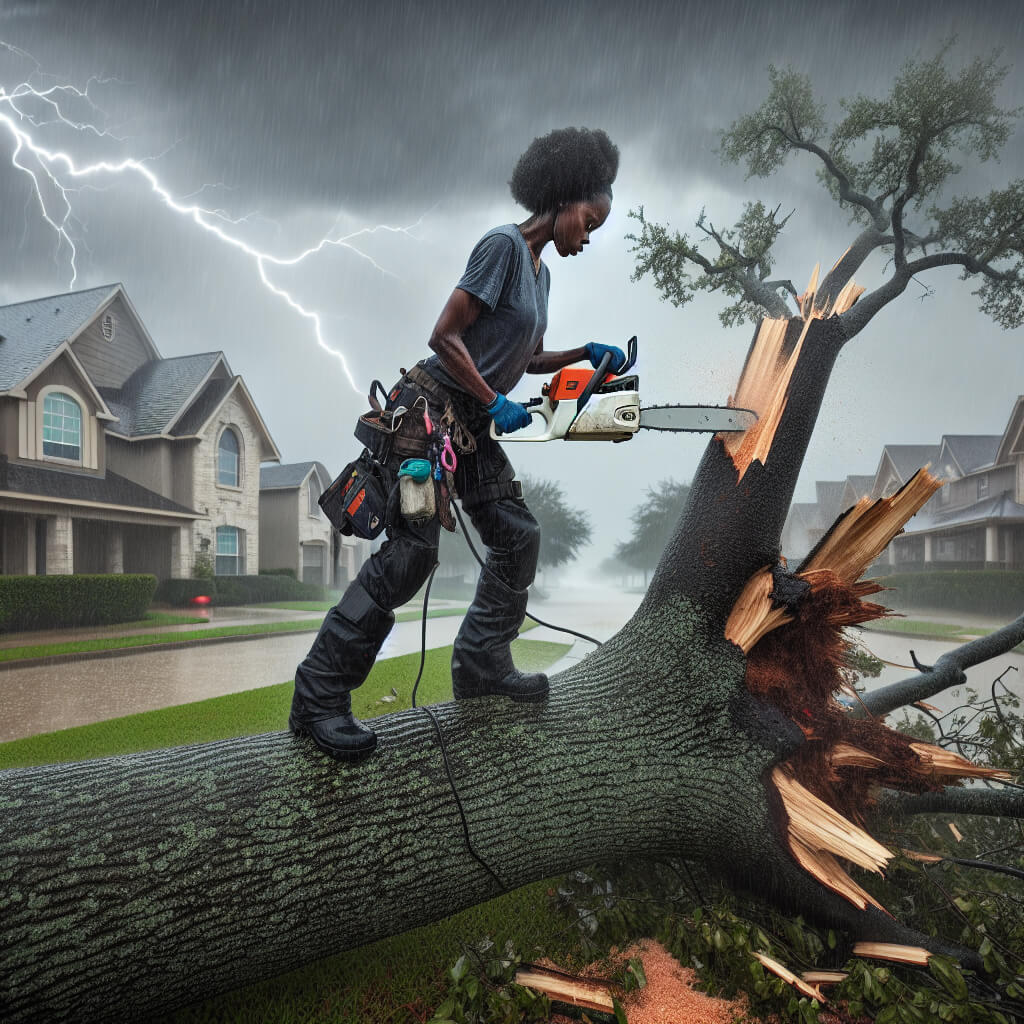
I’ve responded to hundreds of these situations—after Harvey, after Uri, after each unpredictable Gulf storm that reminds us how fragile our trees can be. And every time, it’s the same lesson: the faster you handle an emergency tree situation, the more damage—and cost—you prevent. In this article, I’ll share what actually happens during emergency storm damage calls, how professionals approach them, and what Houston homeowners can do to protect their homes before and after severe weather.
When Does a Tree Become an Emergency?
Not every fallen branch or leaning trunk needs a panic call, but Houston’s storms create specific risks that shouldn’t wait. I’ve seen pine trees in Memorial that looked fine after a storm, only to collapse two days later because their roots lifted in saturated clay soil. Houston’s gumbo soil expands and contracts, loosening roots, especially when heavy rains follow drought.
If a tree is leaning toward your roof, tangled in power lines, or has root plates lifting, you’re looking at a true emergency. The weight shift after a storm can suddenly drop thousands of pounds of wood onto your home or into the road. I’ve cut up oaks weighing over 20,000 pounds that toppled overnight.
What Happens During an Emergency Tree Removal
Every emergency removal is different, but here’s how we typically approach them. First, my crew and I assess the situation from a safe distance. I’m looking for electrical hazards, structural tension (when branches are under pressure and could spring), and property threats. During Harvey, I remember a job in Sugar Land where a pecan tree had pierced a second-story wall—our challenge was to remove it without causing the wall to collapse further.
Once we’ve stabilized the area, we use specialized rigging equipment, cranes, and sometimes even loaders to section the tree in a controlled sequence. It’s not just about cutting branches—it’s about physics, balance, and awareness of where each piece will land. After removal, we handle debris and coordinate any necessary tree removal permits if the location requires them.
Real Houston Examples After Major Storms
After the 2021 freeze (Winter Storm Uri), pine trees in northwest Houston suffered internal cracking from the cold. That spring, homeowners started noticing them suddenly dropping limbs during light winds. One family in Cypress called me after their pine split from the middle out, landing inches from their fence line. That tree had been weakened months before, but the damage didn’t surface until later.
And during Hurricane Harvey, a homeowner in Bellaire thought a leaning water oak was fine because it “bounced back.” Two weeks later, soil expansion loosened the roots, and the tree fell right onto their pool house. The repair cost was triple what preventive trimming would’ve been.
Common Mistakes Homeowners Make After Storms
One of the biggest mistakes I see? Trying to cut storm-damaged trees themselves. I’ve seen homeowners in Klein using ladders against partially hanging limbs, with power lines two feet away. Please don’t do that. Chainsaws and ladders are a dangerous mix, especially with unpredictable storm-damaged wood under pressure.
Another mistake: delaying the call. People hope the leaning tree stabilizes, but if the rain continues or the clay soil shifts again, that’s when collapse happens. In Houston, a “small lean” can become a crisis overnight.
Cost of Emergency Tree Removal in Houston
emergency removals are more complex than scheduled removals. You’re paying for speed, hazard control, specialized equipment, and sometimes after-hours response. In my experience, most Houston homeowners pay between $800 and $3,500 for emergency removal, depending on size, access, and danger level.
For example, we recently cleared a 40-foot red oak from a front yard in West University for about $950 because it was accessible and clear of wires. But another job just a few miles away in the Heights, with a massive live oak blocking a driveway and tangled in a fence, ran over $3,800. Access, debris hauling, and crane use make the biggest differences.
How to Prepare Trees Before Houston’s Storm Season
I always tell my clients in Katy and Sugar Land: storm preparation starts long before hurricane season. Proper tree trimming and pruning every 2–3 years can reduce canopy weight and minimize breakage. Look for these warning signs before storms arrive:
- Cracks or splits in major limbs
- Soft or rotting wood near the trunk base
- Fungal growths or hollows in roots
- Canopy imbalance (one-sided growth from sunlight competition)
- Recent soil movement or exposed roots
When in doubt, call a certified arborist for an inspection. A simple assessment ($100–$150 usually) can flag hidden issues that may cost thousands later if ignored.
After a Storm: What to Do Immediately
If you wake up after a Houston storm and see a downed or leaning tree, here’s what I recommend:
- Stay safe. Don’t approach or touch the tree if power lines are nearby.
- Take photos. Document before removal for insurance claims.
- Call an ISA Certified Arborist. Certified arborists (like me) can evaluate whether removal, stabilization, or pruning is best.
- Avoid random door-to-door crews. After hurricanes, some unlicensed workers pop up. Always ask for insurance and certification.
Insurance companies often cover emergency removals when a tree damages your home or blocks access, but they’ll want proof it was dealt with safely and professionally.
How much does emergency tree removal cost in Houston?
Most homeowners spend between $800 and $3,500 for emergency tree removals. If a crane or overnight response is needed, costs can climb above $5,000. I always provide a written estimate before starting work so there are no surprises.
Will my insurance cover tree removal after a storm?
Typically, yes—if the tree caused structural damage or blocked driveway access. Cosmetic cleanup (like limbs scattered in the yard) usually isn’t covered. It’s always best to document everything and speak to your insurer immediately.
Can I save a leaning tree after a storm?
Sometimes, if the tree isn’t uprooted and soil conditions are stable. I’ve successfully stabilized young oaks and pines using cabling systems. But if the root plate’s lifted more than a few inches, it’s generally unsafe to keep.
How fast can an emergency crew arrive in Houston?
During large storms, certified emergency crews like mine usually respond within a few hours. For single-site emergencies (like a blocked driveway), we prioritize same-day service whenever possible.
Conclusion
Storm damage in Houston is unpredictable—one minute it’s calm, the next you have a 60-foot oak resting on your roof. The key takeaway? Don’t wait for the next hurricane to figure out who to call. Build a relationship with a certified arborist, schedule preventive care, and know your emergency response options. When the next Gulf storm hits, you’ll be ready—and so will your trees.