
<!–meta: Learn when and why Houston homeowners need emergency tree removal after storms, plus real examples, safety tips, and local pricing insights.–>
Just last month, after one of those nasty evening thunderstorms rolled through Memorial, I got a frantic call around midnight. A huge live oak had split down the middle and was resting on a homeowner’s roof. They said it sounded like a car crash when it happened. By the time I got there, shingles were torn, gutters crushed, and branches sprawled across the entire lawn. This is the kind of situation that makes emergency tree removal not just necessary—but urgent for safety and property protection.
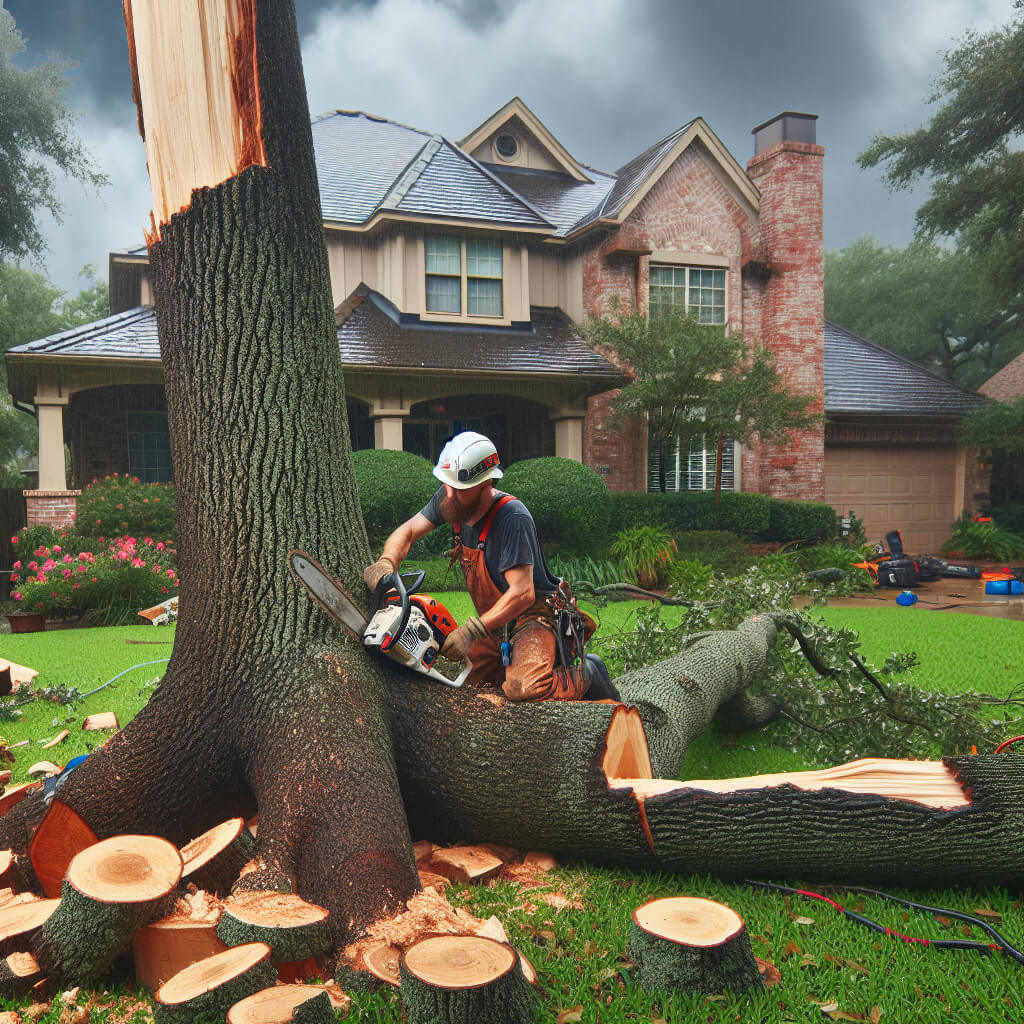
In my 17 years working as an ISA Certified Arborist across Houston, I’ve handled thousands of calls just like that one—from Sugar Land to the Heights, from simple limb failures to full-blown storm disasters. When trees fail suddenly, the difference between quick action and waiting till morning can be the difference between a damaged roof and a totaled home.
What Is Emergency Tree Removal?
Emergency tree removal means safely removing a tree that poses an immediate risk to people or property. These aren’t the regular weekend pruning jobs. These are moments when a fallen pine blocks your driveway, or a cracked pecan threatens to crush your fence—or worse, your home.
I remember during Hurricane Harvey, I spent nearly two straight days in Katy clearing massive waterlogged pines that had uprooted in the saturated clay soil. Clay expands and contracts with moisture changes, and during a storm, that movement plus wind can make even sturdy trees unstable. Houston’s soil and storm combination create a perfect recipe for emergencies.
Common Reasons for Emergency Tree Removal in Houston
1. Storm Damage
Hurricanes, tropical storms, and even our surprise cold snaps can all create hazardous tree conditions. After Hurricane Beryl, my crew removed over 60 trees that had snapped clean at the base. It’s often the pines and old water oaks that suffer most—they’re tall, top-heavy, and rooted in shift-prone clay.
2. Structural Failure
Cracks, hollow trunks, and weak branch unions are silent threats. I’ve seen homeowners ignore a visible crack in a 40-inch oak, thinking it’s “probably fine.” A few months later, one side split open after a heavy rain. Structural weakness is one of the top causes I see behind urgent emergency tree removal calls.
3. Root Damage
Construction, soil compaction, or constant saturation can weaken root systems. I once helped a family in Pearland after a new irrigation system was installed too close to an oak’s base—the extra water softened the soil, and the tree began to lean within weeks. We had to remove it before it toppled during a storm.
4. Disease or Rot
Tree diseases like oak wilt and fungal root rot spread fast in Houston’s humidity. Once a tree starts decaying internally, it can collapse without warning. The problem is most homeowners can’t tell from the outside. That’s why routine tree trimming and inspection by a certified arborist can prevent emergencies altogether.
How We Handle Emergency Tree Removal Safely
These calls usually start frantic—and understandably so. The first thing we do is assess the situation: Is there active danger? Are power lines involved? Is the tree stable enough for equipment access? Every job is different. I’ve worked in tight backyards in Meyerland where we had to use cranes, and open lots in Cypress where a simple cut-and-lift handled it.
We follow ISA standards for safety and use specialized equipment: climbing gear, rigging ropes, cranes, and in some cases, aerial lifts. Sometimes we bring in a traffic control plan for trees blocking public roads. The goal is always the same—remove the hazard efficiently, safely, and without additional damage.
And let me be honest—after a big storm, not every company that shows up is legit. I saw dozens of unlicensed crews driving neighborhood to neighborhood after Harvey, offering cheap removals but leaving behind yard ruts, debris piles, and unsafe cuts. Always verify insurance and ISA certification before hiring anyone, especially for emergency work.
What Does Emergency Tree Removal Cost in Houston?
Prices depend on complexity. In my experience:
- Small emergency removals (under 20 ft, easy access): $400–$800
- Medium trees near a home or fence: $1,200–$2,500
- Large or hazardous removals with crane work: $3,000–$7,000+
For example, in the Heights last year, I removed a massive red oak wedged between two houses after a storm—it required a crane, traffic coordination, and careful disassembly piece by piece. Total cost: about $5,200. In contrast, a pine that fell cleanly across a front yard in Katy cost just $650 to cut and haul.
Insurance often covers storm-related tree removal, especially when the tree damages structures. But always notify your insurer before any work begins, and photograph everything for your claim.
Preventing Tree Emergencies Before They Happen
The best emergency removal is the one that never has to happen. I tell every homeowner—especially here in Houston—have your trees inspected at least once a year, ideally before hurricane season in late spring.
Watch for signs like:
- Cracks or splitting in the trunk
- Leaning trees or root lifting
- Dead branches high in the canopy
- Mushrooms or decay at the base
- Recent changes to soil or grading near roots
Proper pruning and balance—what we call “crown reduction”—helps trees handle high winds. I’ve seen well-maintained oaks stand strong through 70 mph gusts while their neglected neighbors toppled. If you’re not sure, call an arborist before hurricane season hits.
How fast can a crew respond to an emergency?
During calm weeks, we can usually be on-site within a few hours. After a major storm, response times vary, but certified crews like mine prioritize jobs that pose immediate danger to homes or power lines. Always mention if the tree’s touching a structure or line—it bumps your priority up fast.
Can homeowners remove fallen trees themselves?
I don’t recommend it. Fallen trees are unpredictable—hidden tension, heavy limbs, and chainsaw kickback kill more people than most realize. Unless the trunk is small and safely on the ground, rely on professionals with proper gear and training.
Does insurance cover emergency tree removal?
Usually yes, if the tree caused damage to an insured structure like a house, fence, or shed. But if it simply fell in the yard without causing damage, insurance rarely pays. Always check your policy details and document the scene before cleanup.
What should homeowners do while waiting for help?
Keep people and pets far from the damaged area. Avoid touching any tree tangled in electrical lines. If rain continues, move valuables away from exposed areas like broken roofs or windows. And take photos right away—those help both insurance and the arborist assess the situation.
Final Thoughts
When a tree goes down unexpectedly, time and safety matter most. Emergency tree removal can save your home, prevent injury, and restore peace of mind faster than most realize. After all these years in Houston’s storms, I’ve learned one thing—trees give us plenty of beauty, but when they turn dangerous, you want someone who knows the local conditions inside and out.
If you’ve got a leaning tree, a huge limb over your roof, or you’re prepping for hurricane season, don’t wait for the next big storm. Schedule a professional inspection and stay ahead of the problem. Your future self—and your roof—will thank you.