
<!–meta: Learn how Houston homeowners can handle emergency tree removal safely, quickly, and affordably after storms or fallen trees.–>
Last summer, right after Hurricane Beryl tore through Houston, I got a panicked call around 2 a.m. from a homeowner in the Heights. A 50-foot pine tree had come down across their driveway, blocking their vehicles and tearing down part of their fence. They had no idea what to do. I’ve seen that scene hundreds of times over the past 17 years—trees on roofs, driveways, even swimming pools. In Houston, with our storms, clay soil, and tall tree canopy, this kind of thing isn’t rare—it’s expected. And when it happens, quick, safe emergency tree removal is key.
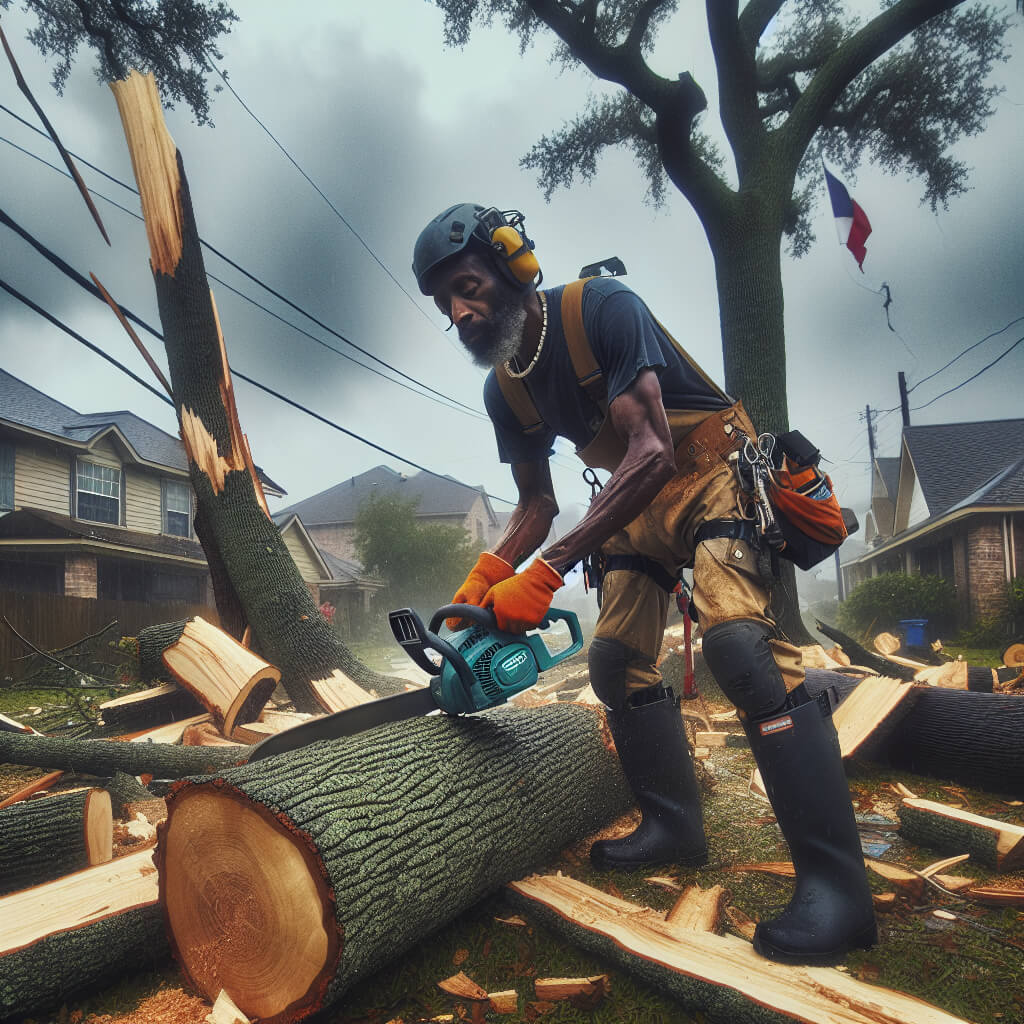
Whether you live in Memorial, Katy, or Sugar Land, every Houston homeowner should know what to do after a tree falls. In this guide, I’ll walk you through how emergency tree removal works here in Houston—what to do first, what it costs, and how to avoid making things worse (because trust me, I’ve seen some DIY attempts go very wrong).
What Counts as a Tree Emergency in Houston?
If a tree falls during a storm and damages your property, blocks your driveway, or threatens power lines, that’s considered an emergency. I’ve handled trees that barely missed a roof and others that shattered entire patios. Sometimes, even a leaning or cracked tree that hasn’t fallen yet is an emergency waiting to happen. After heavy rain, Houston’s clay soil gets slick, and root systems lose their grip—you’ll see big oaks start to lean more than usual.
Here are a few signs you’re dealing with an emergency:
- A tree or branch is resting on your roof, fence, or car
- Power lines are involved (call CenterPoint Energy first!)
- The tree is cracked or leaning after a storm
- You can’t safely exit your property
- Large limb movement or creaking sounds from a weakened trunk
If you notice any of those, don’t wait. Tree issues often get worse overnight, especially when Houston humidity and rain soften the ground.
First Steps After a Tree Falls
When I arrive on a scene—say, a pine snapped across Westheimer or a live oak down in Bellaire—the first thing I do is assess safety. Before anyone touches a chainsaw, we make sure there are no electrical hazards. Downed power lines are silent killers. Once that’s verified safe, I evaluate the weight distribution and structure of the fallen tree. Cutting the wrong section first can cause hundreds of pounds to shift suddenly—it’s how people get hurt.
Here’s what you should do if a tree falls at your home:
- Clear people and pets from the area. The biggest danger is secondary collapse.
- Call your utility company if power lines are involved.
- Document the scene. Take photos for your insurance provider—roof, fence, cars, anything that’s damaged.
- Contact a certified emergency tree removal service. Professionals can stabilize, cut, and haul the tree safely.
- Stay patient. During major storms, response times can slow because hundreds of homeowners are calling at once.
When I responded during Hurricane Harvey, we worked 18-hour shifts helping families trapped in flooded neighborhoods where uprooted trees blocked driveways. In those moments, quick decisions keep people safe, but experience keeps things from turning tragic.
How Emergency Tree Removal Works
Unlike a standard tree removal job, emergencies often require cranes, rigging, and coordination with other services like roof repair or fence contractors. It’s not just cutting—we’re talking about careful dismantling under pressure. Every move matters.
Here’s the typical process:
- Initial assessment: A licensed arborist inspects the situation and develops a removal plan.
- Stabilization: We secure sections of the tree to prevent rolls or further damage.
- Cutting and lowering: Using ropes, pulleys, or cranes, we bring the tree down piece by piece.
- Debris cleanup: Branches and logs are either hauled off or staged for city pickup.
- Follow-up: If needed, we handle stump grinding and soil cleanup so you can restore your yard.
Most emergency removals take several hours, though complex jobs—like a 70-foot oak on a two-story roof in River Oaks—can stretch into the next day.
What Emergency Tree Removal Costs in Houston
This is always the tough question. Costs vary, but here’s what I’ve personally seen across Houston:
- Small jobs (fence or driveway only): $600–$1,200
- Medium trees (one-story roof involvement): $1,200–$2,500
- Large trees with crane access or roof damage: $3,000–$6,500+
A couple of months ago in Katy, we removed a 40-foot pine that fell on a garage for $1,800. But a different job in Memorial, where a massive live oak split and crushed multiple sections of roof, ended up around $5,700 with crane and debris removal. Access, size, and danger level drive the price more than anything else.
Most homeowners insurance will cover tree removal when there’s property damage involved. Always take pictures and call your insurance provider before removal if possible—they’ll usually approve emergency work when safety is a concern.
Choosing the Right Company
During crises, you’ll see trucks from every direction rolling through Houston offering “discount removals.” I always tell people—don’t be fooled by the lowest price. Unlicensed operators can cause more damage and won’t be around if your roof caves in later.
Look for these when hiring someone for emergency work:
- ISA Certified Arborist (like myself—Certification #SO-7392A)
- Proof of liability and workers’ compensation insurance
- 24/7 emergency service availability
- Local references (ideally from your area)
- Written estimates and signed agreements before cutting
I once had to re-do a job in Sugar Land after a homeowner hired a cut-rate crew. They left exposed limbs jammed into the roof and debris against the fence. It cost twice as much to fix it the right way. A professional keeps your home (and your wallet) safe in the long run.
Preventing Future Tree Emergencies
Emergency removal is stressful and expensive—but most of it is avoidable. In my experience, regular tree trimming and inspections save homeowners thousands over time. Weak forks, internal decay, and overextended limbs can all be caught early.
I visit neighborhoods like Cypress and The Woodlands every spring just to perform preventive pruning before hurricane season. Having a certified arborist check your trees once a year—especially oaks, pines, and pecans—can catch cracks or root issues before they become dangerous. Houston’s wet-dry cycles are brutal on root systems, so keep an eye on soil heaving or exposed roots too.
FAQ: Emergency Tree Removal in Houston
How fast can a crew come out after a storm?
In most cases, we respond within 1-3 hours for true emergencies. During citywide storms, it might take longer, but we prioritize trees on homes, cars, or blocking driveways.
Will my insurance cover all the costs?
Usually, yes—if there’s property damage. Insurance typically covers removal from the damaged area and repairs. Debris removal from your yard only (no damage) might not be included, though some plans have storm cleanup allowances.
Is it safe to cut small branches myself after a storm?
If it’s a small limb on the ground, sure. But if it’s hanging, cracked, or near a line, don’t risk it. I’ve seen homeowners injured because a branch sprang back unexpectedly under tension.
What if a tree is on my neighbor’s property but fell on my fence?
It depends on where the base of the tree is. In most cases, your insurance covers your fence, and your neighbor’s covers their tree, but always verify with your agent.
Can you remove trees at night?
Yes, when safety demands it. We use floodlights and cranes routinely during nighttime emergency calls after hurricanes or severe wind events.
Final Thoughts
If you take one thing from this, it’s that quick, safe action matters after a tree falls—but preparation matters even more. Whether it’s keeping your trees trimmed, inspecting after storms, or knowing who to call when disaster strikes, being ready can save you thousands and protect your family. Houston weather isn’t letting up anytime soon, but with the right knowledge (and a good arborist on speed dial), you’ll be ready for whatever blows through next.