
<!–meta: Houston arborist shares firsthand storm experiences and useful emergency tree removal tips to help homeowners prepare and protect their property before severe weather.–>
Introduction
Last summer, right after the outer bands of a tropical storm passed over Houston, I got a call from a homeowner in the Heights. A big water oak had split down the middle and was resting halfway on their roof. The storm had barely cleared when we got there with the bucket truck. The ground was soaked, power lines were humming, and the yard looked like a swamp. We spent hours carefully rigging that tree section by section to keep it from collapsing through the living room ceiling. That job really reminded me—most storm emergencies could’ve been prevented with a little prep.
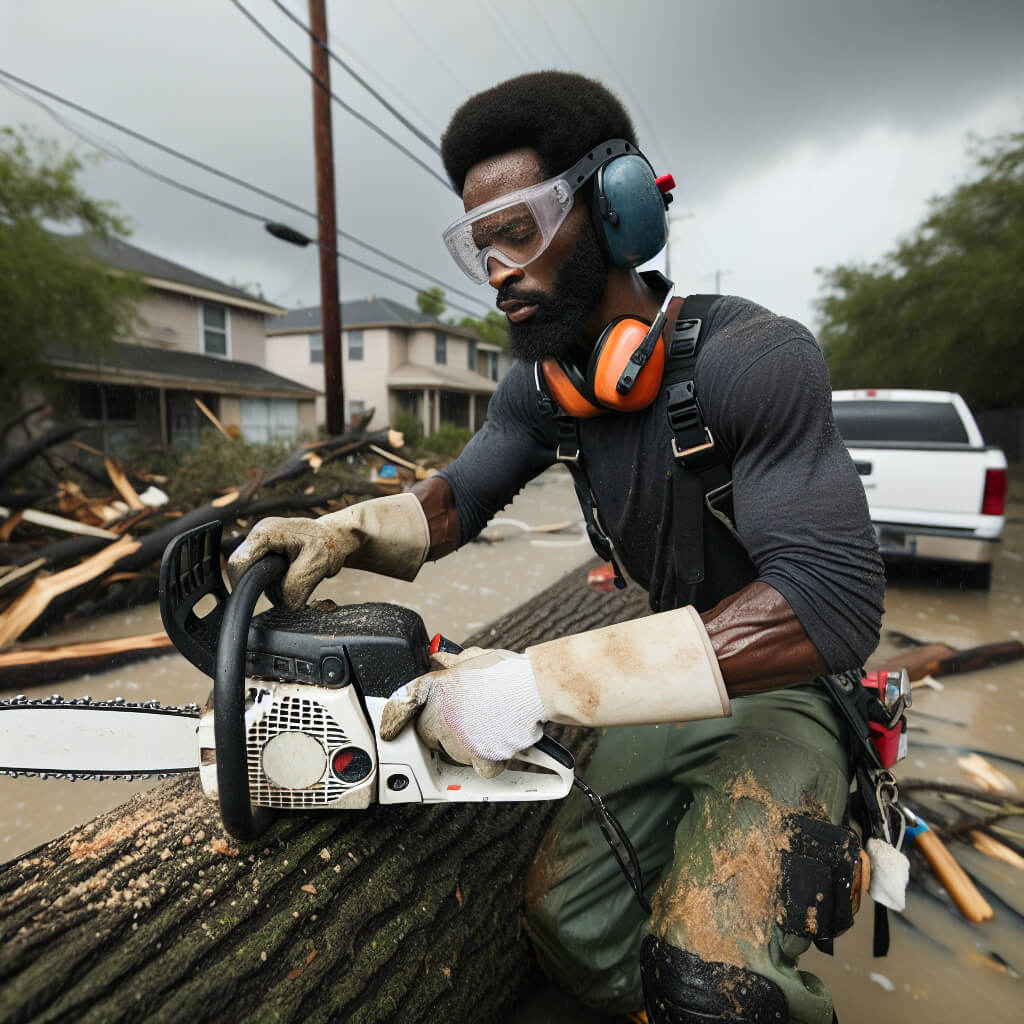
I’ve responded to hundreds of these calls over the years—from Hurricane Harvey to Winter Storm Uri—and one thing’s for sure: Houston homeowners face unique tree challenges. Between our clay soil, hurricane winds, and sudden downpours, trees can go from healthy to hazardous overnight. So in this article, I’ll walk you through how to prepare your property for severe weather, what to look for before storms, and what to do right after—especially if you need emergency tree removal.
Understanding Houston’s Tree Risks Before a Storm
Houston’s weather doesn’t play around. Our clay soil expands when it’s wet and contracts when it’s dry, which can loosen even well-established root systems. I’ve seen massive live oaks in Memorial and pine trees in Spring uprooted because their soil turned soft like pudding after heavy rain. Add our frequent storms to the mix, and you’ve got the perfect recipe for fallen trees.
Some tree species are naturally more vulnerable too. Bradford pears, for instance, look nice in spring but they split easily in high winds. Shumard oaks and loblolly pines can get top-heavy if they’re not pruned properly. When Harvey hit, I must’ve cleared at least fifty Bradford pears in the Bellaire and Meyerland areas alone.
Pre-Storm Preparation: What to Check Before Hurricane Season
Hurricane season here runs from June through November, and every year I encourage my clients to schedule a preventive inspection by early summer. A certified arborist can spot structural issues long before they become emergencies. Here’s what I typically look for during these assessments:
- Leaning trees – A slow lean often means root instability. You can test by seeing if the soil lifts or cracks near the base when you push gently on the trunk.
- Dead or cracked branches – Weak limbs snap fast in wind. Removing them with proper tree pruning cuts reduces risk and improves wind flow through the canopy.
- Signs of decay – Soft spots, fungi, or cavities near the base can signal internal rot. I once inspected a pine in Katy that looked fine outside but was hollow—completely gone inside. We removed it two days before a thunderstorm that definitely would’ve taken it down.
For most homeowners, a preventative tree trimming visit costs between $250 and $700, depending on tree size and access. It’s nowhere near the $2,000-$3,000 many end up paying for emergency removal when a tree actually falls. That’s one of those times where it truly pays to be proactive.
When the Storm Hits: Staying Safe
Once gale-force winds kick up, it’s too late to do much except stay indoors. Don’t go outside to “check the trees”—I’ve seen people seriously injured by limbs that snap without warning. If you hear creaking, popping, or see a tree starting to tilt, assume it’s coming down and move away from that area of the house if possible.
After the storm passes, hazards remain. Power lines often come down with branches, and saturated soil makes trees unstable even if they’re still upright. Always call a professional if you suspect damage. We use insulated equipment and follow ANSI Z133 safety guidelines when performing emergency storm damage clearing.
Post-Storm Actions: What to Do When a Tree Falls
The first thing I tell homeowners after any storm: take photos for insurance, but don’t touch the debris. Especially if it’s near power lines or structures. Most insurance companies require proof of the incident before cleanup anyway.
Once it’s safe, call a certified arborist or emergency crew. During Hurricane Beryl, I saw some people try DIY removals with chainsaws in soggy ground—it’s incredibly dangerous. We use ropes, pulleys, and cranes for controlled removal. I remember one oak near Westheimer that had crushed half a fence but was resting on a neighbor’s roof pitch. We had to rig the trunk and lift it off in sections, one at a time. Took about six hours, but nobody got hurt and both houses ended up undamaged.
For reference, emergency tree removals in Houston typically range from $1,000 for small jobs to over $4,000 when equipment or cranes are needed. Accessibility and debris disposal costs play a big part. In tight urban neighborhoods like Montrose or the Heights, we sometimes need to block a street or coordinate with CenterPoint Energy—that adds cost and time.
Tips to Minimize Future Storm Damage
Here’s some advice based on what I’ve seen work time and again in our area:
- Routine maintenance – Annual pruning and structural inspections go a long way. Especially for oaks and pines that grow fast in our weather.
- Proper planting distance – Don’t plant large trees too close to houses or driveways; those clay soils cause root heave when they dry and swell.
- Remove dead or declining trees early – If your arborist recommends removal, don’t delay. I’ve seen a tree that looked “fine” one week end up on a garage the next from high winds.
- Know your limits – DIY pruning’s fine for small branches, but anything over 12 feet or near power lines should always be handled by a pro.
Being prepared also means knowing who to call. Keep a trusted arborist’s contact info handy—someone licensed, insured, and experienced with Houston’s storm conditions. When emergencies hit, the good crews book up fast.
FAQ
How much does emergency tree removal cost in Houston?
In my experience, most emergency removals run between $1,000 and $3,500 depending on the tree’s size, location, and damage. If a crane is needed, you can expect higher costs. I always remind homeowners that safety and professionalism come first—cheap work often leads to bigger problems later.
Can I prevent my trees from falling during storms?
You can’t guarantee anything in hurricane conditions, but preventive care helps a lot. Regular pruning, root health checks, and load reduction pruning can keep trees more storm-resilient. I usually advise clients to schedule an inspection before June each year.
What should I do if a tree falls on my house?
Stay out of that area until the power company and emergency crews confirm it’s safe. Call your insurer, then contact a certified arborist for emergency tree removal. Avoid DIY cleanup—it’s risky and can complicate insurance claims.
Does homeowners insurance cover emergency tree removal?
Most policies cover removal if a tree damages insured property (like your roof or fence). However, fallen trees that don’t cause damage may not be covered. Always document everything—photos, videos, and receipts will make your claim much smoother.
Conclusion
Every storm teaches me something new about trees and Houston’s resilience. The biggest lesson? Preparation always beats cleanup. Take time before hurricane season to inspect and maintain your trees. Don’t wait for that first thunderstorm to expose hidden weaknesses. And if you do face a fallen tree, call professionals who understand how to work safely and efficiently in our Gulf Coast conditions. As someone who’s helped thousands of homeowners through some rough weather, trust me—being ready makes all the difference when the next storm rolls in.