
<!–meta: Learn what to do when a tree falls on your property after a Houston storm. Step-by-step emergency tree removal advice from ISA certified arborist Michael Torres.–>
Introduction
Last summer after Hurricane Beryl tore through Houston, my phone lit up like a Christmas tree. Calls came in from homeowners in Katy, Memorial, and the Heights — all panicked about huge oaks and pines leaning across roofs and driveways. I remember one in particular: a 70-foot pine had crashed through a garage in Meyerland around 2 a.m. The homeowner told me, “I didn’t even know who to call first.” That’s when I realized a lot of people don’t really know what to do when a storm brings a tree down.
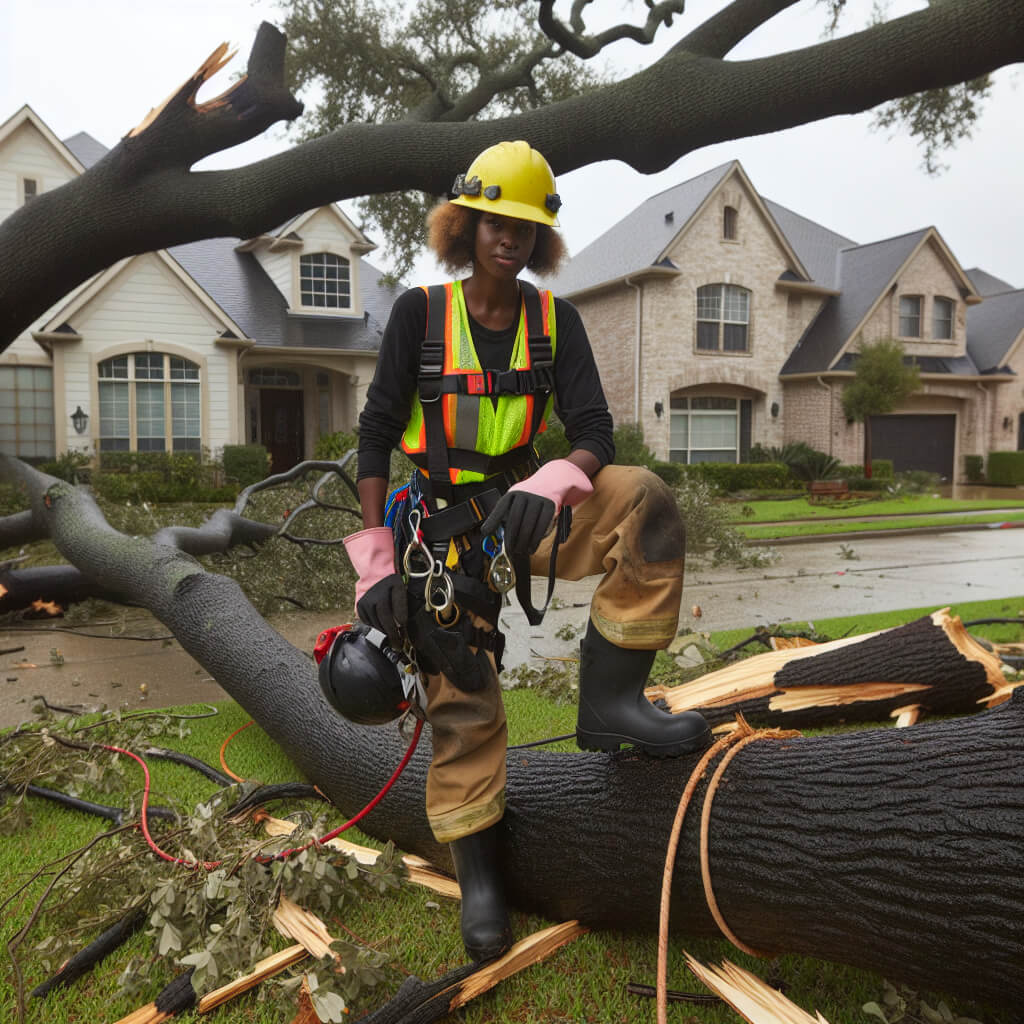
I’ve been doing this for 17 years now, and I’ve responded to more than 3,000 tree emergencies across Greater Houston — from Harvey to Uri and beyond. In this article, I’ll walk you through the essential steps every Houston homeowner should take when a tree falls suddenly. We’ll cover what to do first, who to call, how to stay safe, and what you can expect during the emergency tree removal process. Because in this city’s wild weather, it’s really not a matter of if — it’s when.
Step 1: Make Safety Your First Priority
The very first thing you do after a storm should always be to make sure everyone’s safe. That means checking for downed power lines, gas leaks, and structural damage before even stepping outside. I can’t tell you how many times I’ve shown up to a site where a homeowner tried cutting branches themselves with a chainsaw while lines were live or the tree was under tension. One wrong cut and the weight of the trunk can whip the saw right back at you. Don’t risk it.
If power lines are involved, stay far away and call CenterPoint Energy immediately. Then contact a professional tree removal crew that’s licensed, insured, and equipped for dangerous takedowns. Crews like ours use cranes, rigging, and ground protection mats to safely dismantle heavy trunks without causing more property damage.
Step 2: Call a Certified Arborist — Not Just Any Tree Guy
There’s a big difference between someone with a chainsaw and someone with ISA training. As an ISA Certified Arborist (Cert. #SO-7392A), I’ve gone through extensive safety and technical standards training for emergency response situations. When we arrive at a scene, we assess things like root stability, canopy weight distribution, and how the tree failure occurred. That helps us prevent more damage — and sometimes, preserve what’s salvageable.
For example, after Winter Storm Uri, I handled dozens of Live Oaks that looked dead but were just frost-stressed. Instead of removing them all, I recommended pruning and deep root feeding for recovery. An inexperienced crew might’ve cut everything down unnecessarily. Calling a knowledgeable pro saves trees, money, and sometimes lives.
Step 3: Document Everything for Insurance
Once it’s safe, start taking photos and videos from different angles. Capture the tree’s base, where it fell, any damaged structures, and your street number for proof of location. This documentation is gold when filing homeowners insurance claims.
Most insurance companies will cover tree removal if the tree damaged a covered structure (like your house, fence, or garage). But if it just fell in your yard without causing property damage, removal costs likely fall on you. In Houston, typical emergency removals cost between $1,200 and $4,500, depending on size, access, and hazards. For instance, a 50-foot pine blocking a driveway might run $1,500, but a massive oak tangled in power lines near Rice Village could easily top $4,000.
Step 4: Secure the Site Until Help Arrives
If the fallen tree’s blocking your driveway or sidewalk, rope off the area or use traffic cones. I once had a client in Sugar Land who parked too close to a cracked tree trunk after a storm — it gave way hours later and crushed their truck. Nature’s unpredictable after a big weather event, especially when Houston’s clay soil is saturated and unstable.
Don’t try moving heavy limbs yourself. Even small sections can weigh hundreds of pounds when wet. Crews performing emergency storm damage work use cranes and mechanical advantage systems to lift debris safely without causing secondary collapses.
Step 5: Remove the Tree Safely and Professionally
Once we mobilize, the removal process moves quickly. For a large hazard tree, we might bring a crane or bucket truck, cut the damaged sections piece by piece, and lower them to the ground with ropes. The debris gets hauled away or chipped on-site. Sometimes we’ll recommend stump grinding afterward to eliminate tripping hazards and prevent termites.
One of the most complicated removals I’ve done was in West University — a huge camphor tree that had split in half over a garage. The crane operator had about six inches of clearance between the house and the power line. But by 11 a.m., it was down, debris cleared, and the homeowners could finally breathe again. That kind of precision takes training, teamwork, and certified experience you just can’t fake.
Step 6: Prevent Future Tree Emergencies
After things settle down, schedule a post-storm inspection. I often find that if one tree failed, others on the property are compromised too — roots loosened, canopy overextended, bark tears that invite pests. The best prevention? Regular tree trimming and health assessments.
For example, Live Oaks with dense canopies hold a lot of wind resistance. Reducing interior weight through selective pruning can make them more storm-resilient. Pines need root zone checks, especially in older neighborhoods like Garden Oaks, where expanding roots can lift sidewalks and destabilize during floods.
FAQ: Houston Emergency Tree Removal
How much does emergency tree removal cost in Houston?
In my experience, most Houston homeowners pay between $1,200 and $4,500 for emergency removals. The price depends on the tree’s size, proximity to structures, and urgency. Weekend or overnight emergencies usually cost more since crews respond immediately under dangerous conditions.
Can my insurance pay for tree removal?
If a tree damages your home, roof, or fence, most policies will cover removal and repairs. But if it falls without causing covered damage, you’ll likely pay out-of-pocket. Document everything with photos and contact your agent before scheduling work.
What if a tree falls across my neighbor’s fence?
This happens all the time after Houston storms. Generally, the property owner where the tree originated covers removal from their own yard, and the neighbor handles cleanup on their side. But if negligence or clear decay was involved, that’s when insurance adjusters may step in.
Should I try cutting up small branches myself?
It’s tempting, but I’d advise caution. Even small limbs can be under tension after a fall. I’ve seen branches whip back unexpectedly and break wrists. Unless you’ve got proper PPE and a clear understanding of how the tree fell, leave it to the pros.
How can I prevent this from happening again?
Schedule annual inspections, especially before hurricane season. I can spot cracks, leaning trunks, and root issues long before a homeowner notices. A little preventive pruning and root care can save you thousands later.
Conclusion
When a tree comes down suddenly, it’s stressful and urgent — but with the right steps and the right team, it doesn’t have to turn into a disaster. Focus on safety, call a certified arborist, document everything, and let professionals handle the heavy lifting. Then, once the dust settles, take some time to strengthen your trees before the next Houston storm rolls through. Trust me, a little prevention now can keep you from another midnight call during hurricane season.