
<!–meta: Learn essential emergency tree removal tips for Houston homeowners from a certified arborist with real storm response experience.–>
Introduction
Just last summer, after one of those fast-moving Gulf storms rolled through Memorial, I got a frantic call from a homeowner whose massive live oak had split right down the center—half of it resting on her roof, the other still standing. She told me, “I thought that tree was healthy. It looked perfect just yesterday.” That’s something I hear all the time working as an arborist here in Houston.
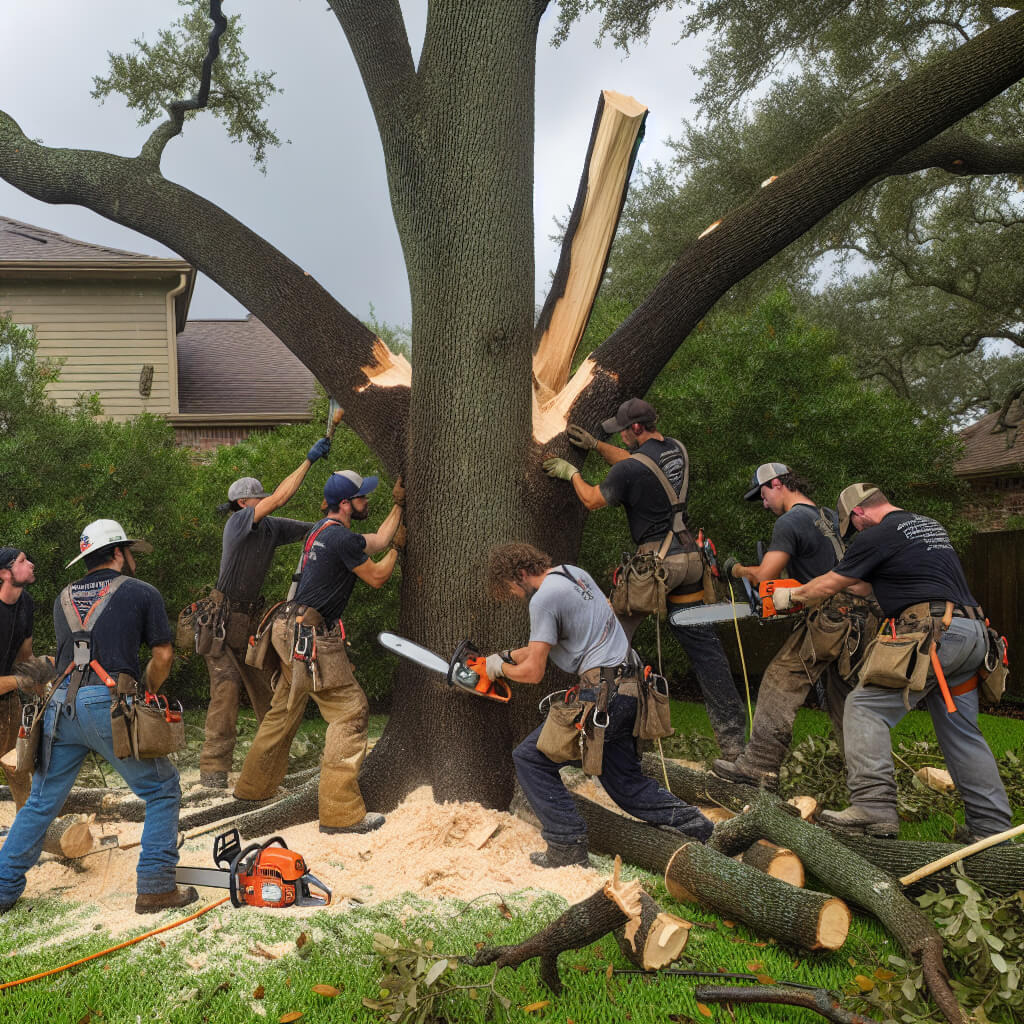
When it comes to emergency tree removal, time, safety, and experience matter more than anything else. Houston’s mix of heavy clay soil, high winds, and sudden downpours makes our trees especially vulnerable to uprooting and cracking. I’ve seen healthy pines in Katy go down overnight and half-dead water oaks in Sugar Land still standing after two hurricanes. Sometimes luck plays a part—but often it’s about preparation.
In this guide, I want to share what every Houston homeowner should know before and after a tree-related emergency—how to stay safe, what to look for, who to call, and how to avoid paying too much in the panic of the moment.
1. Safety Comes First—Always
The first thing I tell any homeowner is this: don’t go near a damaged or fallen tree until a professional’s been on-site. After hurricanes like Harvey or Beryl, I’ve seen downed branches tangled in live power lines, and roots pulling up gas lines or irrigation systems. Those can be deadly situations.
If a tree falls on your house or driveway, call 911 if power lines are involved, then contact an ISA-certified arborist (you can verify certifications at isa-arbor.com). We’re trained to safely assess the risk and stabilize the area. It sounds dramatic, but during Hurricane Harvey, one homeowner in The Heights tried cutting a limb off his fence himself. The branch shifted, and his chainsaw kicked back—he ended up with a broken shoulder and $9,000 more in property damage.
2. Know the Signs Your Tree Is About to Fail
Most emergency calls I get could’ve been prevented with earlier action. Even in Houston’s humidity and heat, trees usually show warning signs before they come down. Keep an eye out for:
- Cracks or splits in major limbs or trunk
- Fungus or mushrooms growing around the base
- Sudden leaning, especially after heavy rain (clay soil loosens fast)
- Dead or brittle branches dropping more often than usual
- Root exposure or heaving around sidewalks or driveways
Last spring, I inspected a declining pine in Cypress that had been leaning maybe 10 degrees since Winter Storm Uri. The homeowner kept saying, “It’s been leaning like that forever.” Well, two weeks later, that same tree came down onto his detached garage after a mild windstorm—$6,000 in damages that a simple $350 tree pruning job could’ve prevented.
3. What to Expect During Emergency Tree Removal
When I show up for emergency tree removal in Houston, the first step is securing the area and assessing hazards—electrical lines, structural pressure points, and stability of the remaining tree. We use ropes, cranes, and rigging to remove the tree piece by piece if needed. It’s not a quick job, but safety trumps speed every time.
A tricky removal in Bellaire last year involved a water oak that had pierced through a roof and into an attic. We had to coordinate with the homeowner’s insurance adjuster and bring in a crane because the backyard access was limited. That 6-hour removal cost about $3,800, while simpler emergency jobs (like a single fallen pine in an open yard) can run between $900 and $1,800. Price always depends on accessibility, equipment, debris disposal, and storm conditions.
4. Choosing the Right Company
In the chaos after storms, Houston gets flooded with out-of-state crews looking to cash in. Be careful—many aren’t insured or trained to handle large removals safely. Always check for:
- Current insurance and worker’s comp
- ISA certification (that means we follow industry standards)
- Local references or recent reviews
- Written estimate before work starts
After Hurricane Ike, I remember helping several homeowners fix dangerous “band-aid” jobs done by unlicensed workers who left half-cut limbs hanging over houses. You don’t want to deal with that while handling storm cleanup and insurance claims.
5. Document Everything for Insurance
Houston homeowners often ask, “Will insurance cover tree removal?” It depends. Generally, if a healthy tree falls on your home or blocks access, most policies help cover the cost. But if it just falls in the yard without property damage, most policies won’t. I always tell clients to take photos—before, during, and after the removal. That documentation makes a big difference when claims adjusters come around.
6. Preventive Steps Before the Next Storm
You can’t predict every storm, but you can prepare for it. A good routine includes:
- Annual inspection by a licensed arborist
- Thinning dense canopies (especially live oaks and pecans)
- Removing decayed or dead limbs early
- Checking roots and drainage zones in clay-heavy soil
- Keeping mulch rings clear to promote stable root growth
When I checked on a subdivision in Richmond just before hurricane season, we pruned and balanced several large trees near property lines. When the storm passed a month later, every one of those adjusted oaks was still standing while unmaintained trees nearby were toppled. Preventive tree care really pays off.
7. Understanding Emergency Tree Removal Costs in Houston
Emergency removal is often more expensive than scheduled tree removal because it involves time-sensitive work, heavier equipment, and safety risks. In my experience:
- Simple emergency tree removals: $800–$1,800
- Moderate jobs (partial roof or fence involvement): $2,000–$3,500
- Complex crane-assisted removals: $3,500–$6,000+
I always advise homeowners to get at least two estimates—but never choose the cheapest if it means skipping insurance or certification. It’s not worth the risk when a 10,000-lb oak is resting against your roofline.
FAQ
How much does emergency tree removal cost in Houston?
Most emergency removals run between $800 and $3,500 depending on size, access, and urgency. During big storms, prices rise due to demand. For jobs requiring cranes or power line coordination, total costs can exceed $5,000.
Who should I call first if a tree falls on my house?
If power lines are involved, always call 911 first. Then reach out to your utility company and a certified arborist. Don’t attempt to remove parts of the tree yourself—it’s not worth risking injury.
Will my homeowners insurance cover tree removal?
Yes, if the tree causes property damage or blocks access. But fallen trees that simply end up in the yard usually aren’t covered. Document everything and contact your insurance adjuster right away.
Can I remove a tree myself after a storm?
I don’t recommend it. Fallen trees are unpredictable—especially when under pressure. I’ve seen homeowners hurt when limbs suddenly shift. Leave it to a professional crew with cranes and safety gear.
What can I do now to prevent tree emergencies?
Schedule regular inspections, trim back heavy branches, and watch how your soil behaves after heavy rain. Houston’s expanding clay soils often lead to root instability if trees aren’t maintained properly.
Conclusion
Living in Houston means learning to expect the unexpected when it comes to our trees. Storms happen fast, and weak or neglected trees can turn into real hazards overnight. But with regular maintenance, annual inspections, and a reliable professional to call when emergencies strike, you can avoid damage—and keep your property safe year-round. I’ve seen it all out here, from simple limb removals in the Heights to whole-canopy extractions after hurricanes. The key is preparation. Don’t wait for your tree to tell you it’s in trouble—schedule an inspection before the next big storm hits.