
<!–meta: Practical advice from a Houston ISA Certified Arborist on safe, timely emergency tree removal after storms and hurricanes.–>
Introduction
Just a few weeks after Hurricane Beryl hit, I found myself standing in a front yard in Spring Branch where a massive water oak had snapped right across a homeowner’s driveway. The limb crushed their new SUV, blocked the street, and wedged up against the power line. It was one of those situations where every hour mattered — rain still falling, power flickering, and neighbors anxious to get out. That’s what emergency tree removal in Houston looks like in real life.
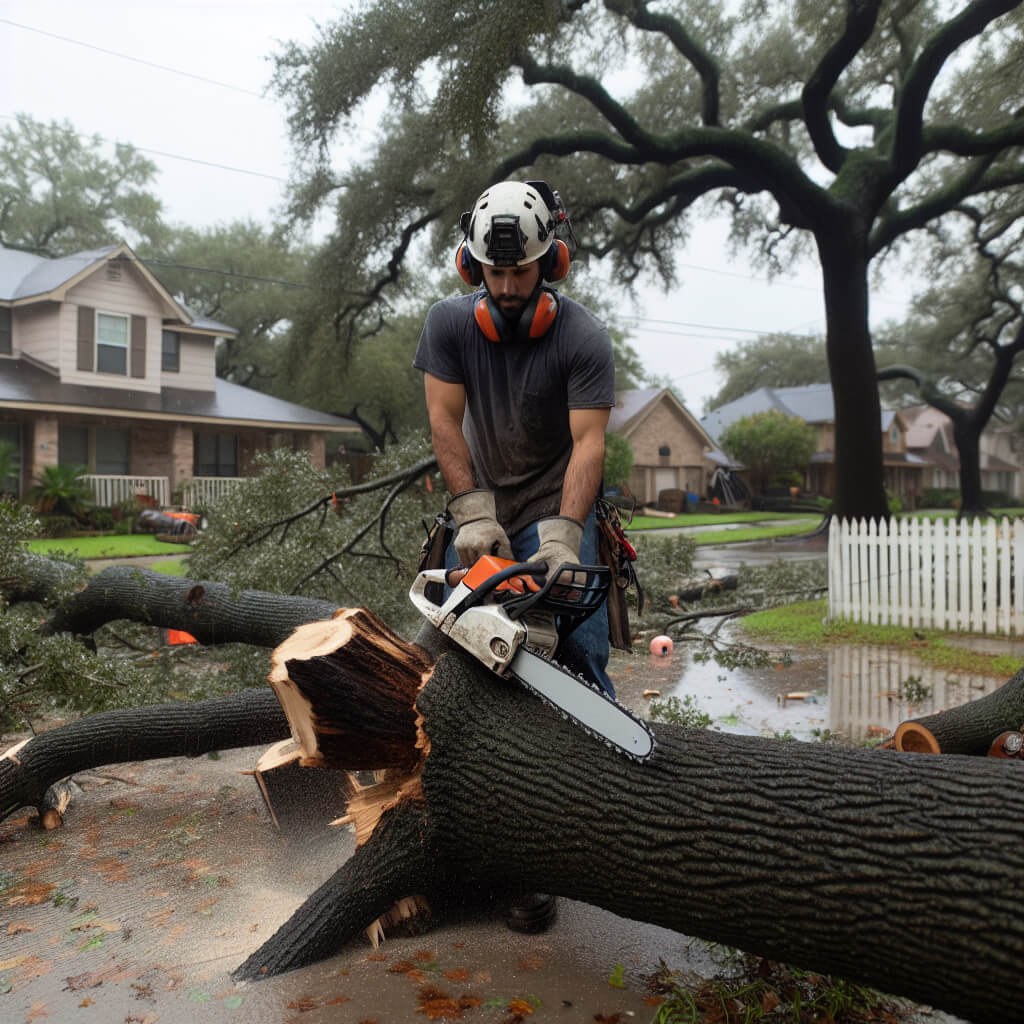
I’ve been through scenes like this more times than I can count — during Hurricane Harvey, Winter Storm Uri, and more summer storms than I care to remember. When trees fail suddenly, it’s stressful, dangerous, and often expensive. But I’ve also seen how a few smart steps before and after a storm can make the difference between an easy cleanup and a full-blown disaster response.
So, in this guide, I’ll walk you through what to do when a storm brings a tree down on your property, how emergency tree companies operate, what to expect cost-wise, and how to keep your family safe while help is on the way.
What Counts as Emergency Tree Removal?
In Houston, I consider it an emergency whenever a tree poses an immediate risk to people, property, or utilities. We’re talking about trees leaning on roofs, tangled in power lines, or blocking driveways and roads. During Hurricane Harvey, for instance, I handled over 80 emergency calls in just four days — mostly broken pines in Tomball and sugar maples in The Heights that had taken out fences and carports.
Sometimes homeowners aren’t sure if a situation is “emergency” level. My rule of thumb: if waiting 24 hours could make it worse or put someone in danger, call it in. Better safe than sorry.
What to Do Right After a Tree Falls
Here’s what I tell every homeowner I work with after a major storm:
- Stay clear of power lines. Electricity can travel through wet branches and even the ground. Never try to move a fallen tree near wires — call CenterPoint or the city first.
- Document everything. Take wide and close-up photos before the cleanup starts. Your insurance company will want proof of the damage and the cause.
- Call a certified arborist. A licensed professional (like me or any ISA Certified Arborist) can assess whether the tree can be saved or needs full tree removal.
- Keep people and pets away. I’ve seen trees shift even hours after falling — especially those with twisted trunks or root-ball lift.
When a big live oak uproots in our Houston clay soil, it can leave a massive hole. If groundwater is involved, the soil stays unstable for days. I’ve stepped into yards where the ground felt like walking on a sponge — 100% unsafe for untrained folks.
How the Emergency Tree Removal Process Works
Once you call for emergency tree removal, a reputable company should send someone out quickly to assess safety and create a plan. Here’s how my crew usually handles it:
1. Assessment and Safety Check
We start by identifying any utility hazards, structural risks, or unstable limbs. If power lines are involved, we coordinate with the utility company first. No cutting until it’s safe.
2. Step-by-Step Removal
For a blocked driveway or roof hit, we’ll often use a stepwise dismantle method — cutting small sections using rigging ropes or a crane to avoid secondary damage. After one of the Memorial Day floods, we removed a massive pecan from a two-story home in Bellaire using this exact technique — inch by inch, carefully lowering pieces over the roofline with a crane.
3. Cleanup and Stump Handling
Once the hazard is gone, we’ll clear debris and offer stump grinding to level out what’s left. Some homeowners skip this part, but leaving a stump can attract termites or fungus, especially in Houston’s warm, humid conditions.
What Emergency Tree Removal Costs in Houston
People are often surprised by the price range for emergency work. In normal conditions, standard tree removal around Houston runs between $800 and $2,500 for mid-sized trees. But after a storm, when the situation is dangerous or requires cranes, costs can jump to $2,000–$6,000 or more depending on access, size, and risk level.
For example, last summer in Katy, I removed a 70-foot pine tree that had cracked halfway up and was hanging over a garage. The job took five hours, a crane, and four crew members — it totaled about $3,800. A simpler job the same week in Sugar Land (a downed crepe myrtle blocking a driveway) cost just $450. That’s how much tree size and conditions affect price here.
Insurance usually covers at least part of removal — especially if the tree hit your house, fence, or power lines. Always check your policy before committing to big costs.
How to Prevent Emergencies Before They Happen
Over half the “emergency” calls I get could’ve been avoided with regular tree trimming and health inspections. Trees don’t just fall out of nowhere — they usually give warning signs:
- Cracks or cavities in the trunk
- Leaning more than 15 degrees from vertical
- Exposed or lifting roots (especially in our clay soil)
- Dead limbs high up in the canopy
- Fungal growth at the base (indicating internal decay)
Just last year, I inspected a huge live oak in Memorial that looked fine from the street — green leaves, solid trunk — but had internal rot halfway through the core. We caught it early, pruned out the deadwood, and cabled two main limbs. When the next summer storm came through, that oak didn’t budge. Preventive care saved that homeowner thousands in future damage.
Choosing the Right Emergency Tree Company
If you’re rushing to find help after a storm, it’s easy to get burned. After Harvey, Houston was flooded with out-of-town tree crews with no insurance or credentials. I saw homeowners stuck with damaged lawns, broken fences, and unfinished work after paying cash.
Here’s how you spot a reliable team:
- Ask for proof of insurance (workers’ comp and general liability)
- Verify ISA certification — professionals trained in arboriculture, not just chainsaw operators
- Check local reviews and address (make sure they actually serve Houston)
- Get a written estimate before work begins
FAQ
How fast can emergency tree removal crews respond in Houston?
During major storms, crews triage by priority — trees on houses or roads first. Typically, I can get a crew onsite within 2–4 hours for urgent cases inside Beltway 8. Out in Katy or The Woodlands, it might take a bit longer if access is flooded or traffic’s bad.
Does homeowners insurance cover emergency tree removal?
In most cases, yes — if a tree damages a covered structure like your roof, fence, or carport. If it just falls in your yard without hitting anything, it depends on your policy. Always document the scene with photos and call your agent right away.
Can I handle a small tree removal myself?
If it’s under 10 feet tall, fully on the ground, and nowhere near power lines — maybe. But once saws, ladders, or lifting branches are involved, hire a pro. I’ve treated too many DIY injuries over the years. A lot can go wrong quickly.
What if a fallen tree blocks a public street or driveway?
If it’s blocking public access, call 3-1-1 (City of Houston) or your local precinct. The city handles clearance for public spaces, but private property owners are responsible for trees within their property line.
Conclusion
Storms are just a part of life here in Houston. But being prepared — knowing who to call, how to stay safe, and how to spot trouble early — can save you a lot of stress and money. I’ve seen families in The Woodlands lose massive oaks overnight and others in Pearland who avoided damage altogether because they’d trimmed and inspected months before.
If a storm ever leaves you staring at a fallen tree, don’t panic. Step back, stay safe, document the damage, and reach out to a trusted local professional for help. With an experienced crew and the right approach, your property will be back to normal in no time.