
<!–meta: Learn what homeowners in Houston need to know about emergency tree removal, including safety steps, costs, timing, and hiring a certified arborist.–>
Introduction
Last summer, right after Hurricane Beryl tore through Houston, my phone was flooded with calls from homeowners panicking about fallen trees blocking driveways, crushing fences, even leaning onto roofs. One call that stuck with me came from a family in the Heights — a massive live oak had come down across their front yard overnight, and they didn’t even realize until they opened the door the next morning. We had to act fast to clear the debris and make sure their property was safe again.
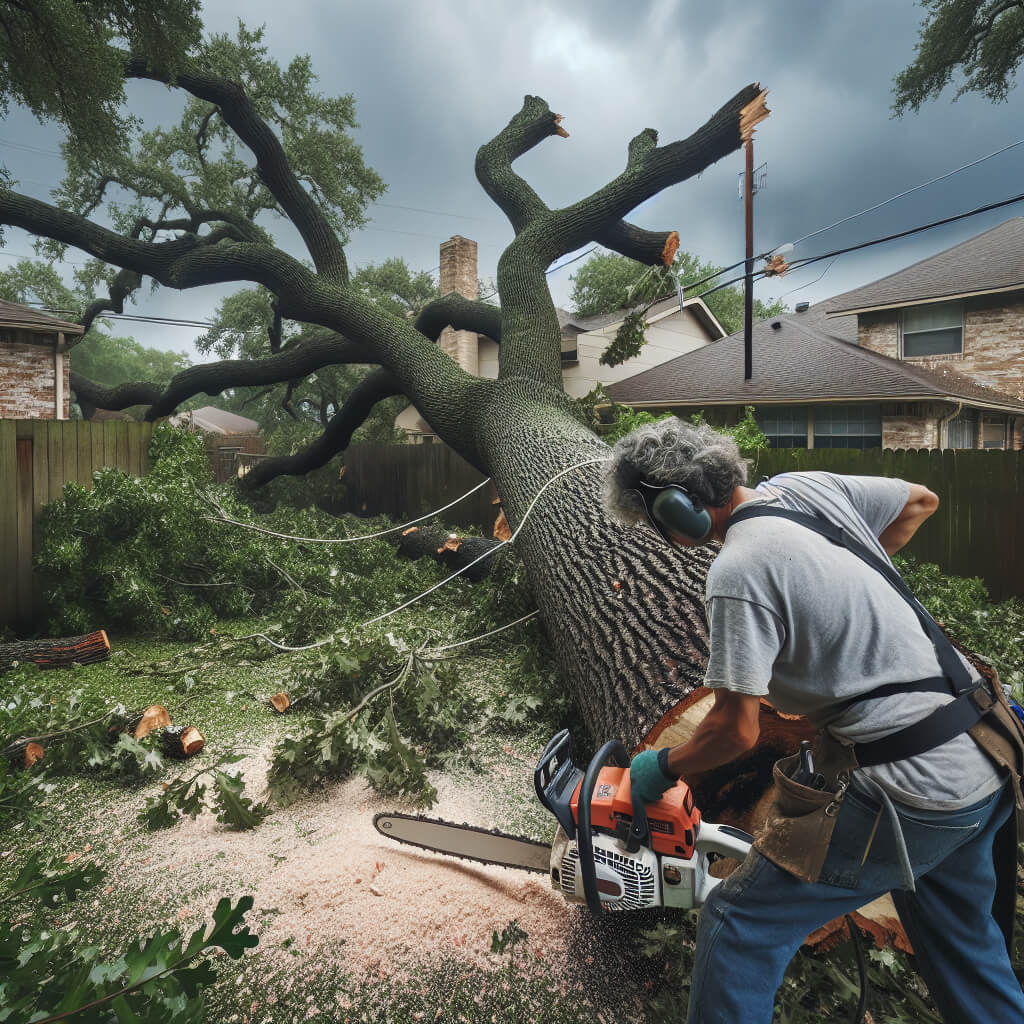
In my 17 years as a certified arborist, I’ve handled more than 3,000 emergency situations across the Greater Houston area, from Katy to Kingwood. And I can tell you this — tree emergencies here don’t just happen during hurricanes. They happen after heavy rain, drought, high winds, or when a diseased tree finally gives out. So in this article, I’ll break down what you need to know about emergency tree removal in Houston — what to do when disaster strikes, how to stay safe, how much it might cost, and how to choose the right team to handle it fast.
What Counts as a Tree Emergency?
Not every fallen branch calls for a 2 a.m. phone call, but some situations definitely do. I tell homeowners to think of it this way — if a tree or large limb is posing an immediate risk to life, property, or utility lines, it’s an emergency. Here are the most common cases I see:
- A tree has fallen onto your home or garage
- A large limb is hung up over your roof or driveway and could fall at any moment
- Power lines are tangled with branches
- The trunk of a tree has cracked or split after a storm
For example, after Harvey, I got a call in Sugar Land from a homeowner whose 55-foot pine had snapped right at the base. The roots had lifted their sidewalk like a seesaw — one wrong move, and it could’ve crushed the front porch. That’s when you call an emergency tree removal team immediately.
What to Do Before Help Arrives
First rule: don’t get close to a damaged tree. It might look stable, but I’ve seen trees shift or roll suddenly, especially in Houston’s soft, waterlogged clay soil. Here’s what you should do instead:
- Keep everyone away from the danger zone — especially kids and pets.
- Turn off power if lines are down or nearby. Always call CenterPoint if you’re unsure.
- Document damage with photos for insurance — before any work starts.
- Call a certified arborist — someone trained in emergency removals, not just a guy with a chainsaw.
That last one matters. Certified arborists are trained to assess tree stability, load balance, and rigging points for safe removal. I’ve seen plenty of do-it-yourself efforts turn into bigger disasters — one in Memorial ended with a homeowner’s fence (and pride) in pieces because they tried to pull a fallen oak themselves with a pickup truck.
How Emergency Tree Removal Works
Every emergency is unique, but the process usually goes something like this:
- Assessment: I evaluate the tree’s condition, surroundings, and hazards (power lines, fencing, structures).
- Stabilization: If a tree is resting on a roof, we use bracing or cranes to prevent further damage while cutting.
- Sectioning: Using ropes and rigging gear, we remove branches and trunk sections in pieces — never in one drop.
- Cleanup and disposal: We haul debris or chip it on-site; sometimes homeowners request stump grinding afterward if the base is left.
I still remember one emergency in Bellaire after a strong windstorm — a 40-inch diameter oak had fallen across two driveways, blocking both homeowners in. We rigged a high-line crane at dawn and cleared the path before 10 a.m. Safety and speed go hand in hand when dealing with fallen trees in Houston’s tight residential lots.
Cost of Emergency Tree Removal in Houston
Let’s talk numbers — because nobody likes surprises. Emergency tree removal pricing in Houston usually runs higher than routine tree removal, mainly due to urgency, time of day, and safety risk. In my experience:
- Small trees (under 25 ft): $450–$900
- Medium trees (25–50 ft): $900–$2,500
- Large trees (50+ ft or near power lines): $2,500–$5,000+
For instance, removing a pine that had fallen onto a garage roof in Katy cost about $1,800, while a massive live oak tangled with power lines in River Oaks ran closer to $4,800 — mostly because we needed a 35-ton crane and coordination with CenterPoint.
insurance often helps. Most homeowner policies cover tree removal if the tree damaged insured structures, though policies vary. Always check your coverage before the next storm season hits.
Choosing the Right Emergency Tree Service
When you’re stressed and staring at a fallen tree on your car, it’s tempting to hire the first person who shows up with a chainsaw. Don’t. After every major storm, I see unlicensed crews flooding Houston neighborhoods offering “cheap emergency tree work.” Here’s what to look for:
- ISA Certification: It means the arborist follows professional standards (that’s what my credential, ISA #SO-7392A, signifies).
- Proper insurance: Ask for proof of general liability and workers’ comp.
- Clear estimate and contract: Never agree to verbal pricing in emergencies.
- Local experience: Houston’s sticky clay, sprawling oaks, and storms make our removals different from other cities.
Ask neighbors for trusted recommendations or check local reviews — especially those mentioning emergency work. A good team should respond within hours and communicate clearly about safety and next steps.
After the Removal — Prevention for Next Time
Most tree emergencies could’ve been prevented with regular tree trimming and health inspections. I’ve seen countless failures caused by root rot, poor pruning, or compacted soil that weakened trees over years. Here are a few lessons I share with homeowners:
- Prune branches that overhang roofs or driveways.
- Have an annual inspection done by a certified arborist — especially before hurricane season.
- Deep-water trees during droughts; Houston’s clay soil dries out fast and cracks roots.
- Watch for signs of decay — mushrooms on roots, soft spots, or sudden leaning.
I always say, a $300 routine pruning beats a $3,000 emergency removal any day.
FAQ
How fast can emergency tree removal services respond in Houston?
During normal conditions, most reputable companies (including us) aim to respond within a few hours. After major storms, response times can vary, but we prioritize trees that pose immediate dangers to people or structures first.
Does homeowners insurance usually cover emergency tree removal?
Typically, yes — if the tree damages an insured structure like your home, garage, or fence. If it just fell in your yard without causing structural damage, you might have to pay out of pocket. Always check your policy details.
Can I handle a fallen tree myself?
You can clear small limbs, but never attempt to cut large sections without proper gear or training. Trees under tension can snap, roll, or spring. I’ve seen serious injuries from DIY attempts.
Do I need a city permit for emergency tree removal in Houston?
In true emergencies, permits are usually waived for safety reasons. But if the tree is on a city easement or protected species, you might need formal documentation afterward. A certified arborist can guide you through it.
What should I do with the leftover stump?
You can leave it, but if it’s an eyesore or in the way, schedule stump grinding once the ground dries out. It’s fast, affordable, and prevents regrowth or pest problems.
Conclusion
Emergency tree removal isn’t something most Houston homeowners think about until it happens — usually at 3 a.m., in the pouring rain. But knowing what to do, who to call, and how it works can save you time, stress, and thousands in preventable damage. If a tree ever threatens your home, step back, stay safe, and call a certified local professional. And when things calm down, schedule a preventive inspection so you’re ready before the next storm rolls through.