
<!–meta: Learn how professional emergency tree removal keeps Houston homes safe after storms and what to do when a tree fails unexpectedly.–>
Introduction
Just a few days after Hurricane Beryl pushed through Houston, I stood in a Meyerland backyard at sunrise staring at a massive hackberry that had collapsed across two fences. The homeowner told me, “It looked fine yesterday.” That’s the thing about storm damage here—things can seem stable one moment and be catastrophic the next. Over my 17 years working across Houston, I’ve handled thousands of emergency tree removal calls just like that, from downed pines in Katy to uprooted oaks in the Heights.
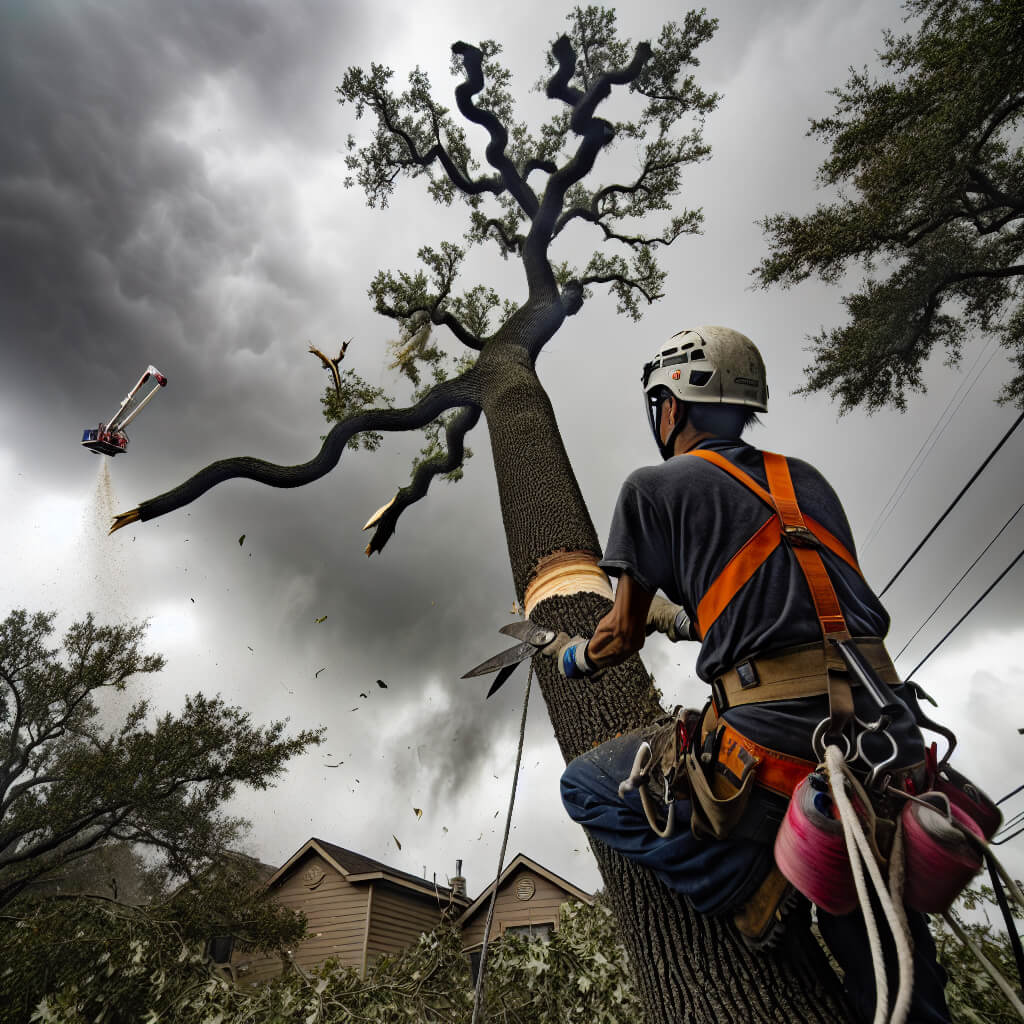
In this article, I’ll walk you through what qualifies as a real emergency, what steps you should take when it happens, how professional crews handle dangerous tree removal, and what kind of cost range you can expect. Whether it’s after a hurricane, a random gusty thunderstorm, or clay soil destabilizing your foundation, knowing what to do can make all the difference.
When Does a Tree Emergency Happen?
People often call me and ask, “Is this really an emergency?” Let me tell you—if a tree is leaning over your roof, vehicle, or power lines, it’s an emergency. Houston storms don’t need to be major hurricanes to knock down trees. I’ve seen a 40 mph wind gust take down a shallow-rooted pine that looked sturdy enough. A few inches of saturated soil and that’s all it takes.
One Memorial homeowner waited too long after noticing cracks forming in the soil around their big oak. After a rainy week, that tree uprooted and blocked their entire driveway. Luckily, nobody was hurt. In cases like that, always call a certified arborist or licensed tree service immediately—don’t touch the tree yourself, especially if power lines are involved.
How Emergency Tree Removal Works
Every tree removal situation is unique, but the general process is pretty consistent. Here’s how it normally goes when my crew responds to a call:
1. Safety Assessment
First, we examine the site for power line involvement, structural hazards, and soil stability. If there’s any electrical contact, we coordinate with CenterPoint Energy before touching anything. Safety always comes first for both the homeowner and my crew.
2. Strategic Sectioning
Once it’s clear, we plan our cuts. Large limbs are sectioned and lowered with ropes, sometimes using a crane if access is tight. During Harvey cleanup, we often had to remove multi-ton limbs from rooftops without causing further structural damage—precision rigging really matters here.
3. Debris and Cleanup
After the danger is neutralized, we handle full debris removal and optional stump grinding. Many homeowners underestimate how much material an 80-foot oak creates—it can be multiple truckloads. It’s not just cutting the tree; it’s safely getting it out of there.
Why You Shouldn’t DIY Emergency Removal
I’ve seen homeowners try to chainsaw a fallen limb off the roof at 3 a.m. with a flashlight. Don’t do it. A tree under tension can spring loose unpredictably. I once responded to a call in Cypress where a homeowner was pinned by a limb that swung back during a cut. He was lucky to come out of it with just a fractured leg.
Professional emergency crews use rigging gear, cranes, and saw techniques that prevent secondary damage. One bad cut with a regular chainsaw could shift the entire trunk or split the roof. Plus, licensed crews are insured—if something goes wrong, you’re covered. If you do it yourself, you’re not.
Typical Cost of Emergency Tree Removal in Houston
emergency removals cost more than planned jobs because they’re risky, urgent, and often done at night or in storm conditions. But for reference, most Houston homeowners pay between $800 and $3,500 for a single tree removal. I’ve handled simple pine removals in Katy for around $650, while a complex oak tangled in power lines in the Heights ran over $4,000.
Price depends on access, size, risk level, and debris volume. Insurance will often cover the removal if the tree damaged a structure or blocked access, but not every case qualifies. Always take photos before cleanup and contact your insurance company right away.
Preventing Future Emergencies
The best emergency is the one that never happens. I tell homeowners all the time: take Houston’s storm season seriously. Schedule regular tree trimming to reduce canopy weight, remove deadwood, and balance your trees before hurricane winds arrive. Weak branch unions, especially on live oaks and Bradford pears, are notorious breaking points in our storms.
I’ve seen homes in Sugar Land avoid costly damage just because their trees were properly pruned before a big wind event. And don’t ignore soil issues—our clay soil expands and shrinks dramatically, loosening roots during droughts followed by sudden rain. Keeping your trees watered during dry periods helps the root systems stay stable.
What To Do Right After a Tree Falls
- Get everyone inside and away from the damaged area.
- Call a licensed, insured emergency tree removal service.
- If there are power lines, stay clear and alert the utility company.
- Take photos for documentation.
- Notify your homeowner’s insurance.
And remember, timing is key. The longer a leaning or fallen tree sits on your structure, the greater the risk of secondary damage or rot developing. I’ve removed trees where just a few days of waiting caused major roof leaks that doubled the homeowner’s repair costs.
Work with Certified Arborists
When choosing a company, look for ISA-certified professionals like myself. Certification means we follow proper climbing and rigging procedures, and we understand how to assess structural and soil risk before touching anything. In Houston, that experience counts. Between our storms, humidity, and clay soil, it’s a tough environment for both trees and property owners.
How fast can crews respond during storm season?
During big events like Harvey or Beryl, response times vary. I’ve had days where our crew handled 10+ calls in 24 hours. Reputable companies prioritize trees on homes, driveways, and access routes first. Calling early and getting on the list is the best move you can make.
Are emergency removals covered by insurance?
Sometimes. If the tree damages your house, fence, or driveway, the cost is often covered. But if it just falls in your yard with no structural impact, usually not. It’s always worth checking your policy details and asking about reimbursement for debris removal, too.
Can a tree be saved after partially falling?
I’d love to say yes, but in Houston’s heavy clay soil, once a large tree starts uprooting, it’s usually done. Sometimes smaller or younger trees can be stabilized, but if over half the root system lifts, removal is almost always the safest choice.
Conclusion
When a storm hits Houston, every minute counts. Whether it’s a live oak threatening your roof or a pine lying across your garage, get professional help as soon as possible. The right emergency response can save you thousands in repairs and—more importantly—keep your family safe. If you live under mature trees, now’s the time to get them evaluated before the next storm season rolls in. A little proactive care can prevent the next midnight emergency call.