
<!–meta: Learn essential steps Houston homeowners should take during emergency tree removal after storms or hurricanes, guided by an ISA certified arborist.–>
Introduction
Just last month, right after a nasty thunderstorm rolled through Westchase, I got a panicked call around 2 a.m. A large pine had snapped halfway up its trunk and was resting on a client’s roof. The homeowner had just returned to Houston after being out of town and didn’t know where to start. That kind of situation happens more often than most people realize—especially during hurricane season.
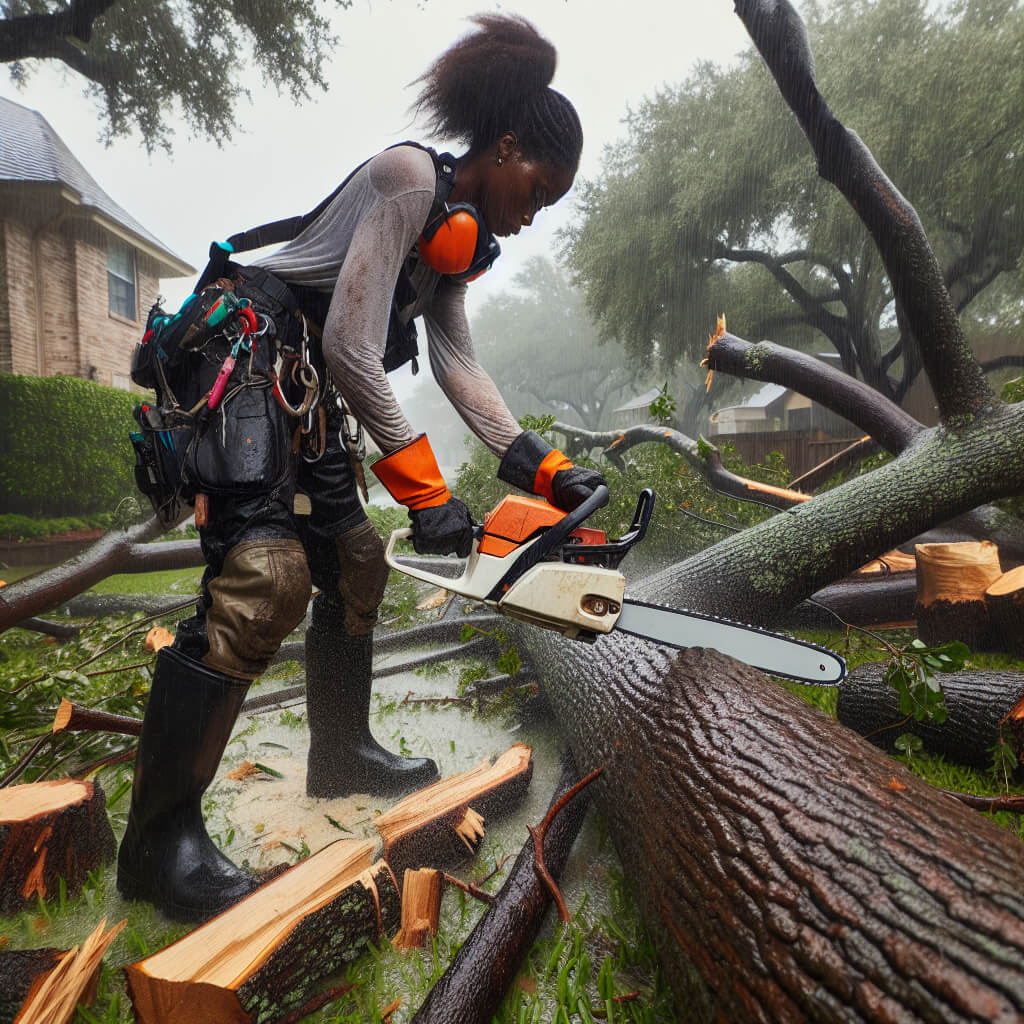
I’ve handled thousands of emergency tree removal calls over my 17 years in this business, from The Woodlands down to League City. Whether it’s a live oak uprooted by soaked clay soil or a brittle water oak splitting after a norther, the process is always urgent—but it doesn’t have to be chaotic. In this article, I’ll walk you through what homeowners should do when a tree becomes a danger, how professionals handle removals safely, and what to expect in terms of pricing and insurance in Houston’s unique climate.
1. Stay Safe and Assess the Immediate Danger
The first thing I tell homeowners: don’t rush outside. After Hurricane Beryl, I saw people stepping into their yards in the dark, tripping on downed limbs, or even live power lines. If a tree is leaning on your house, fence, or near wires—call CenterPoint or 911 before anyone else. Once you’re certain there are no electrical or structural hazards, take photos from a safe distance for insurance documentation.
It’s tempting to grab a chainsaw, but I’ve seen too many close calls. One man in Memorial tried to cut a broken limb he thought was stable, and the limb sprang back, damaging his shed and narrowly missing him. Trees under tension act like loaded springs—you never know which direction they’ll move once cut. Leave that to trained pros with the right gear and experience.
2. Call a Certified and Insured Tree Expert
Not all tree services are created equal, and unfortunately, storm damage brings out a wave of “truck and chainsaw” operators. Always make sure your arborist is ISA Certified, fully insured, and able to provide documentation. An emergency tree removal might cost more than a routine tree removal, but you’re paying for safety, equipment, liability coverage, and efficiency.
When Harvey hit, I partnered with crews to clear massive live oaks in Bellaire and Meyerland. Those jobs needed cranes, traffic coordination, and debris hauling—all while keeping the homeowner’s property intact. Professionals plan the work systematically, piece by piece, lowering sections with ropes or bucket trucks if space allows.
What Information to Provide When You Call
- Tree type (oak, pine, pecan, etc.)
- Damage details (uprooted, split, leaning, on roof)
- Access notes (fences, gates, power lines)
- Photos if possible
The more info you give, the faster we can assess and mobilize a team.
3. Understand the Removal Process
emergency removals differ from planned jobs because the tree is already unstable. In one case over in Sugar Land, a massive red oak had its root ball completely lifted by saturated soil. We had to secure the trunk with rigging, cut it in sections, and lift portions with a crane over the homeowner’s garage. The goal in every case is minimizing secondary damage while safely clearing the hazard.
If the tree fell completely, we’ll start from the top, cutting limbs systematically and keeping debris contained. If it’s on a structure, we may need to work closely with roofers and insurance adjusters. Depending on the case, debris hauling and stump grinding might come later, once the immediate danger’s taken care of.
4. Get Insurance and Documentation in Order
Most homeowner’s insurance policies in Houston cover tree removal only if the tree damaged a covered structure like a house, garage, or fence. If it just fell in the yard and didn’t hit anything, coverage may be limited. I always advise clients to keep all receipts, invoices, and photos. That documentation makes claims smoother and faster.
After the Winter Storm Uri freeze, I helped dozens of families in Katy file claims for fallen pines. In some cases, we were able to save them a few hundred bucks simply by labeling invoices correctly—“removal from structure” vs. “yard cleanup” makes a big difference to adjusters.
5. Costs: What to Expect in Houston
emergency jobs run higher than planned removals because of risk, urgency, and after-hours scheduling. In my experience across Houston neighborhoods:
- Small Tree (20-30 ft, easy access): $500 – $900
- Medium Tree (30-50 ft, partial roof contact): $1,200 – $2,500
- Large Tree (60+ ft, power lines or heavy damage): $3,000 – $6,000+
For example, a 40-foot water oak that fell onto a yard in the Heights cost around $1,400 to remove and haul off. But a 70-foot live oak that toppled across two yards in Pearland, requiring a crane, was closer to $4,800. The difference usually comes down to access, tree size, and equipment.
6. Preventing Future Emergencies
Once things settle down, talk to your arborist about preventive care. Regular tree trimming, health assessments, and root inspections can make all the difference before the next tropical storm or high-wind event. Houston’s clay soil expands and contracts dramatically, which loosens root systems over time—especially for older trees planted too close to houses.
After the Memorial Day Flood a few years back, I visited a couple in Clear Lake who had lost three mature pines. The only one that survived? The one we’d pruned and root-aerated the year before. Proper maintenance doesn’t just keep your trees looking good—it literally saves you from future headaches and big repair bills.
FAQ
How much does emergency tree removal cost in Houston?
It depends on size, access, and urgency. Most homeowners spend between $800 and $2,500, but it can climb above $4,000 for large trees near structures or power lines. It’s always best to get an on-site quote.
Will my homeowners insurance cover tree removal?
Usually only if the fallen tree damaged a covered structure like your home or fence. Pure yard cleanup often isn’t covered. Be sure to document everything with photos and detailed invoices.
Can I perform emergency tree removal myself?
I wouldn’t recommend it. Downed trees are under enormous tension, and misjudging a branch cut can cause serious injury. Certified crews have ropes, pulleys, cranes, and insurance in case something goes wrong.
How fast can an emergency crew arrive after a storm?
During smaller storms, same-day service is common. After major weather events, response times depend on safety conditions. Crews prioritize homes where trees are on roofs or near electrical hazards first.
What can I do to avoid tree emergencies?
Schedule annual inspections, especially before hurricane season. Keep your trees thinned, reduce top weight, and check for roots lifting in clay soil. Minor pruning early can prevent expensive removals later.
Conclusion
When a tree comes down in Houston, it’s stressful—but having a plan makes all the difference. Keep safety first, call a certified professional, and gather your insurance details right away. Once the danger’s gone, schedule preventive maintenance to keep your trees strong before the next big storm. I’ve seen how much peace of mind that simple step brings. Don’t wait until the next hurricane—have your trees inspected today.