
<!–meta: Certified Houston arborist explains emergency tree removal tips, safety steps, and real local examples to help homeowners after storms.–>
Introduction
Just a few weeks ago, right after a heavy thunderstorm rolled through Memorial, I got a frantic call from a homeowner whose 50-foot pine had come down across their driveway. They were trapped, couldn’t get their car out, and the tree was resting against a power line. That’s the kind of call I get a lot during Houston’s storm season. Every storm that hits our area brings down trees—some old, some perfectly healthy, but weakened by Houston’s clay soil and high winds.
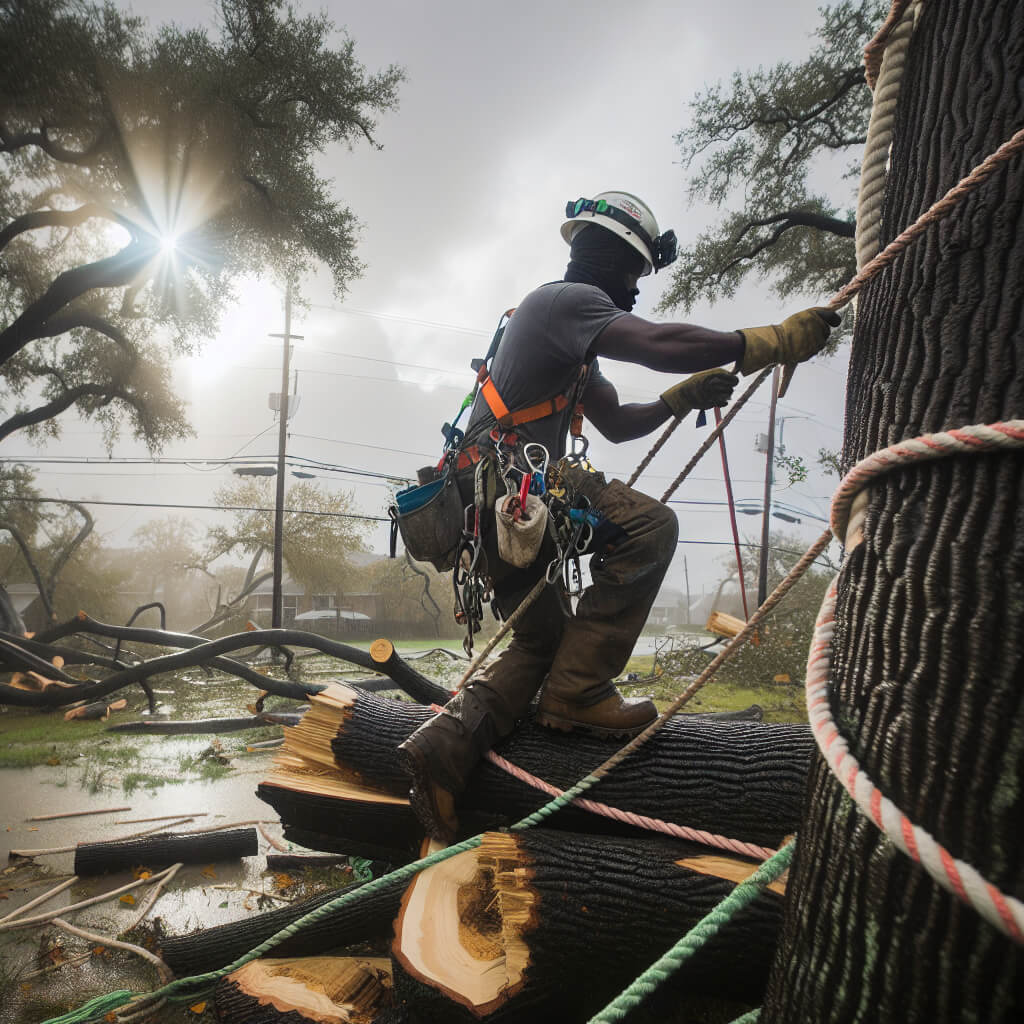
In my 17 years working as an ISA Certified Arborist in Houston, I’ve handled thousands of emergency tree removal jobs—from hurricane-ravaged oaks in The Heights to uprooted pines in Katy. What most homeowners don’t realize is how quickly these situations can turn from inconvenient to dangerous. So, in this article, I’ll walk you through what to do when you’re faced with a downed or unstable tree, how to stay safe, and when it’s time to call in the professionals.
What to Do When a Tree Falls on Your Property
The first thing I always tell homeowners: don’t panic, and don’t try to handle it yourself. A fallen tree may look stable, but it can shift unexpectedly. Branches can spring under tension, and power lines make things even riskier.
- Assess for immediate danger. If the tree’s touching your home, blocking your only exit, or near downed wires, step away and call 911 or CenterPoint Energy before anything else.
- Keep your distance. Don’t climb or cut into the tree yourself—especially if it’s been partially uprooted or suspended.
- Take photos for insurance. Document the damage before any removal starts.
- Call a certified arborist. Contact a licensed company like ours for professional tree removal service—especially if there’s risk to your home, fences, or power lines.
I’ll never forget one case in Sugar Land after Hurricane Harvey. A large live oak had fallen into a homeowner’s backyard, but half the root ball was still in the ground. The homeowner thought he could “cut away” some branches to clear space. By the time we arrived, the tree had shifted suddenly and crushed his new fence. That’s why I always say: the safest tool after a storm is your phone—call for help first.
Understanding Houston’s Unique Tree Challenges
Houston trees face a perfect storm of conditions. Our clay soil expands and contracts wildly through dry and wet cycles, weakening root systems. Combine that with saturated ground after a hurricane or one of those fast-moving summer fronts, and you’ve got a recipe for trees coming down.
Oaks, especially live oaks, often suffer from root heave during heavy rain. Bradford pears tend to split where multiple trunks meet. And tall pines? They usually tip over entirely when the ground softens. I’ve pulled pines out of driveways in Spring Branch and rooftops in Cypress after a single windy night.
How Emergency Tree Removal Works in Houston
When I arrive at an emergency site, the first step is a safety assessment. We check power lines, building proximity, and whether the tree’s under compression or tension. Then we plan a controlled dismantle using ropes, pulleys, and in some cases cranes. Every situation’s different, but safety always comes first.
For example, after Winter Storm Uri, I removed several partially fallen pines that had frozen roots but still held lots of tension in their trunks. One wrong cut could have sent the trunk whipping across the yard. That’s why trained crews use specialized rigging methods instead of chainsaws alone.
Typical emergency removals in Houston include:
- Clearing trees that have hit roofs or fences
- Removing uprooted trees blocking driveways or streets
- Stabilizing or bracing leaning trees threatening property
- Stump grinding after full removal to prevent pests or regrowth
How Much Does Emergency Tree Removal Cost?
Costs vary widely based on access, tree size, and storm conditions. In my experience, homeowners in Greater Houston can expect these general ranges:
- Small removals (under 20 ft): $400–$800
- Medium-sized trees (20–40 ft): $900–$1,800
- Large removals (40 ft+ or near power lines): $2,000–$5,000+
Last month in The Heights, we handled an 80-foot oak that came down across two yards and required a crane—it totaled around $4,200 due to limited access and cleanup needs. But a smaller pine removal in Katy ran just $650 because it was clear, simple, and we could chip everything onsite. The difference always comes down to risk and logistics.
Preventing the Next Emergency
Here’s the part many homeowners forget: most “emergencies” could’ve been avoided with regular care. I’ve seen countless trees fall because minor signs were overlooked—like cracks, soft soil around the base, or dead limbs over a roofline.
The best protection is consistent tree trimming and structural pruning. Proper pruning lightens canopy weight and reduces wind resistance. Annual inspections before hurricane season can also reveal hidden root issues or decay. And if you ever notice a tree starting to lean or develop mushrooms at its base, don’t wait—call a pro fast.
When to Call for Emergency Help
Some homeowners call me unsure whether it’s an emergency. My rule of thumb: if there’s damage to property, blocked access, or potential risk to people, treat it as urgent. We’re used to working in the middle of the night or right after storms—it’s part of life here in Houston. During Hurricane Beryl, I worked 16-hour days clearing trees from power lines in Bellaire and Memorial. Fast response can often mean saving part of a tree—or preventing more damage to your property.
FAQ Section
How much does emergency tree removal cost in Houston?
Most Houston homeowners pay between $800 and $2,500 for emergency tree removal. The cost depends on the tree’s size, location, and whether power lines or structures are involved.
Can my homeowner’s insurance cover emergency tree removal?
In many cases, yes—if the tree damaged a structure like your home, fence, or garage. Always take photos and call your insurance provider before removal if it’s safe to do so.
Should I try to remove a fallen tree myself?
Absolutely not. Trees under tension can twist or snap without warning. I’ve seen even experienced DIYers get injured. Always call a certified arborist for assessment first.
What if a tree’s leaning but hasn’t fallen yet?
That’s a red flag, especially after heavy rain or wind. Have it evaluated immediately. It’s often much cheaper—and safer—to remove or brace a leaning tree before it collapses.
How can I prepare my trees before hurricane season?
Schedule a professional inspection and tree pruning before June. Reducing weak or heavy limbs can prevent major storm damage later.
Conclusion
Emergency tree removal isn’t something any homeowner wants to deal with—but when you live in Houston, it’s part of reality. Between hurricanes, heavy rain, and clay soil shifts, our trees take a beating. The good news is that quick action and proper planning can make a world of difference. If you ever find yourself facing a fallen or dangerous tree, stay safe, stay clear, and call a certified arborist right away. And even better—schedule a pre-storm inspection before hurricane season hits. A little prevention now can save you thousands later and keep your home, family, and yard out of harm’s way.