
When Storms Hit Houston, Trees Take the First Blow
Just this past summer after a strong storm rolled through Memorial, I got a panicked call around 2 a.m. A giant live oak had split right down the middle, one half crushing a fence, the other leaning against the roof. That’s Houston for you — one moment it’s calm, the next a tree’s trying to come through your bedroom ceiling. I’ve been handling emergency tree removal for over 17 years, and every single storm season reminds me why response time and safety matter most.
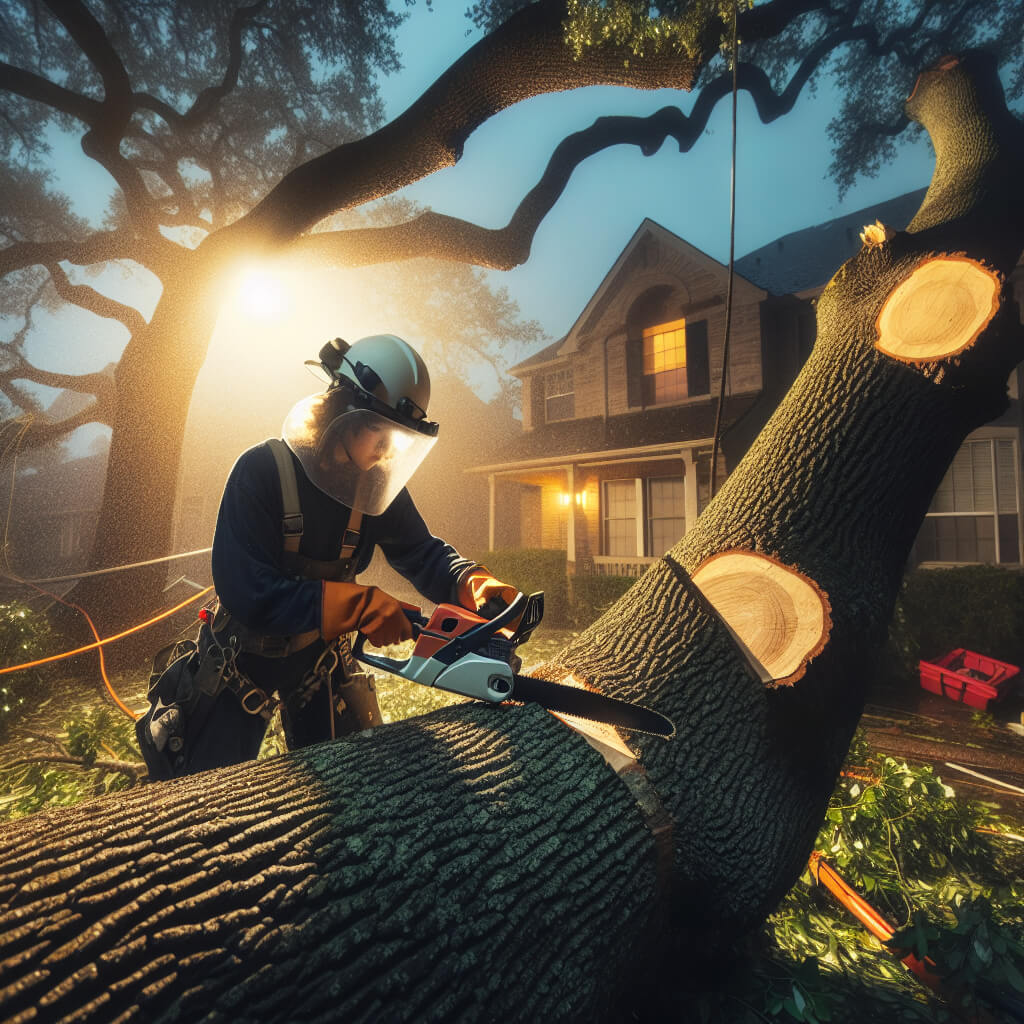
In Houston, storm damage rarely happens at a convenient hour. Whether it’s a hurricane, a derecho-style wind event, or one of those sudden microbursts that drop 60 mph gusts on the Heights, trees come down hard and fast. That’s why 24/7 emergency service isn’t just advertising fluff — it’s a necessity for Texas homeowners.
Why Emergency Tree Removal Matters in Houston
After storms like Hurricane Beryl or Harvey, I’ve seen ancient pines uprooted like toothpicks and oaks with massive trunk splits threatening power lines. The biggest danger? Waiting too long. Once a tree is destabilized, its internal structure changes — roots tear, fibers twist, and the weight shifts unpredictably. One push of wind can turn an already leaning tree into a disaster.
Our Houston clay soil doesn’t help either. It expands when wet and shrinks when dry, which makes root systems weaker during storms. I’ve seen massive root plates pop up in West University yards, leaving nothing but a crater behind. That’s why calling a certified crew immediately after a storm isn’t overreacting — it’s protecting your property and your life.
How 24/7 Emergency Response Works
Here’s what actually happens when you call me or any certified arborist for emergency service. We first assess whether it’s safe to approach. Sometimes the power lines are down, or branches are still snapping overhead. Once we confirm it’s secure, we stabilize the tree — either cabling large limbs or carefully cutting pressure points to control movement before removal begins.
We bring in cranes when necessary (common in River Oaks or areas with tight access). We also coordinate with CenterPoint Energy when lines are involved. The goal is simple: quick, controlled removal before additional damage happens. A typical emergency removal might take 2–6 hours, depending on access, size, and weather.
Real Houston Cases That Still Stick With Me
I’ll never forget the night during Hurricane Harvey when a 70-foot pine speared through a family’s roof in Katy. Nobody was hurt, thankfully, but it split a bedroom in two. We worked through the night with floodwater up to our shins, cutting piece by piece so the insurance adjuster could document it properly the next morning.
Another one that sticks out was a job in The Heights just after a strong windstorm. A dying Chinese Tallow tree had cracked halfway up the trunk. It looked stable, but the internal rot was so bad that as soon as we started cutting tension on one side, the whole thing gave way. That’s why you can’t always trust what you see — trees hide their weaknesses until it’s too late.
Pricing: What Emergency Tree Removal Costs in Houston
Emergency pricing always depends on risk, access, and timing. In most cases I’ve handled, homeowners pay between $900 and $3,500 for emergency removals. If heavy equipment or cranes are needed (like near homes or power lines), it can climb past $5,000. Nighttime, flood conditions, and hazardous setups naturally add cost — but good companies, like ours, provide upfront estimates before cutting begins.
For comparison, a normal daytime tree removal might only cost $600-$1,500. But when you’re dealing with a tree through your roof at midnight, specialized gear and safety procedures kick in fast. Still, I always tell homeowners — it’s far cheaper than repairing structural roof damage or replacing a car crushed in the driveway.
Preventing Emergency Calls Before the Next Storm
Here’s the part that often surprises people: about 70% of emergency removals I respond to could have been prevented. A simple maintenance visit — strategic tree trimming or structural tree pruning — can drastically reduce storm damage risk. I usually recommend an inspection every spring before hurricane season kicks in.
If your trees show signs like cracking bark, lifting soil near roots, sudden leaning, or hollow sounds when tapped, get them checked. Ignored warning signs can turn into midnight emergencies when those Gulf winds start howling.
Working With Your Insurance and HOA
Most homeowners’ policies cover fallen trees that damage structures, but not necessarily trees that simply fall in the yard. Documentation matters. I always photograph every angle and provide a written arborist report for claims. For homeowners in communities with strict HOA compliance rules like Cinco Ranch or Sugar Land, we also handle reports to prove emergency action was necessary — which protects you from HOA penalties after cleanup.
Houston Tree Species Most at Risk
After two decades in the field, I can tell you some trees handle storms better than others. Live Oaks are strong but heavy — once they start leaning, they rarely recover. Pines are tall and flexible but prone to uprooting in soaked soil. Bradford Pears? They’re the first to split in high winds (I call them “snap magnets”). If you have any of these species near structures or driveways, make sure they’re inspected regularly.
When to Call a Certified Arborist
You don’t need to wait for something catastrophic. If a tree seems off — a new lean, strange creaking sounds, major bark peeling — trust your gut. I’ve had countless homeowners tell me, “It didn’t look that bad yesterday.” Even a quick on-site assessment can save thousands in potential damage. We’re here 24/7 because trees don’t wait for office hours to fail.
FAQ
How fast can a crew arrive after a Houston storm?
During major events, we prioritize by safety — blocked driveways, structures hit, power line hazards. In most Houston neighborhoods, we can usually be on-site within 1-3 hours, even overnight.
Will insurance pay for emergency tree removal?
If a tree damages your home, fence, or car, most policies do cover removal and cleanup. Trees that simply fall in your yard without structural damage often aren’t covered. It’s always smart to call your provider after we stabilize the situation.
What if the tree is touching power lines?
Don’t touch it or try to cut anything yourself. Call the power company and a certified arborist. We coordinate with CenterPoint and other utilities to safely manage energized hazards before removal starts.
Can you remove trees during heavy rain or wind?
We can operate through light rain or clearing conditions, but high winds make cutting unsafe. In those cases, we secure the area and return as soon as weather allows continuous safe operation.
Do I need a permit for emergency tree removal in Houston?
Within the city limits, emergency removals are allowed without a prior permit if the tree poses an immediate safety risk. We document the condition and notify the city afterward if required for compliance.
Final Thoughts
When storms tear through Houston, fallen trees shouldn’t add to the chaos. The faster you get professional eyes on the situation, the safer your property will be. Whether it’s a midnight pine collapse in Katy or a live oak leaning dangerously in River Oaks, 24/7 emergency tree removal is your lifeline to fast, safe recovery. Don’t wait for the next warning siren — have your trees inspected now and stay ahead of the next storm.