
<!–meta: Learn how to handle emergency tree removal in Houston after storms, with practical advice and real experiences from a certified arborist.–>
Introduction
Just a few months ago, after a brutal afternoon thunderstorm rolled through the Heights, I got a call from a homeowner who woke up to find a massive pine tree leaning against their fence. Half the roots had lifted out of the ground, and the tree was pressing dangerously close to their power line. I’ve seen that sight hundreds of times across Houston—from Katy to Sugar Land—especially after hurricanes or those quick Texas downpours that dump inches of rain in an hour.
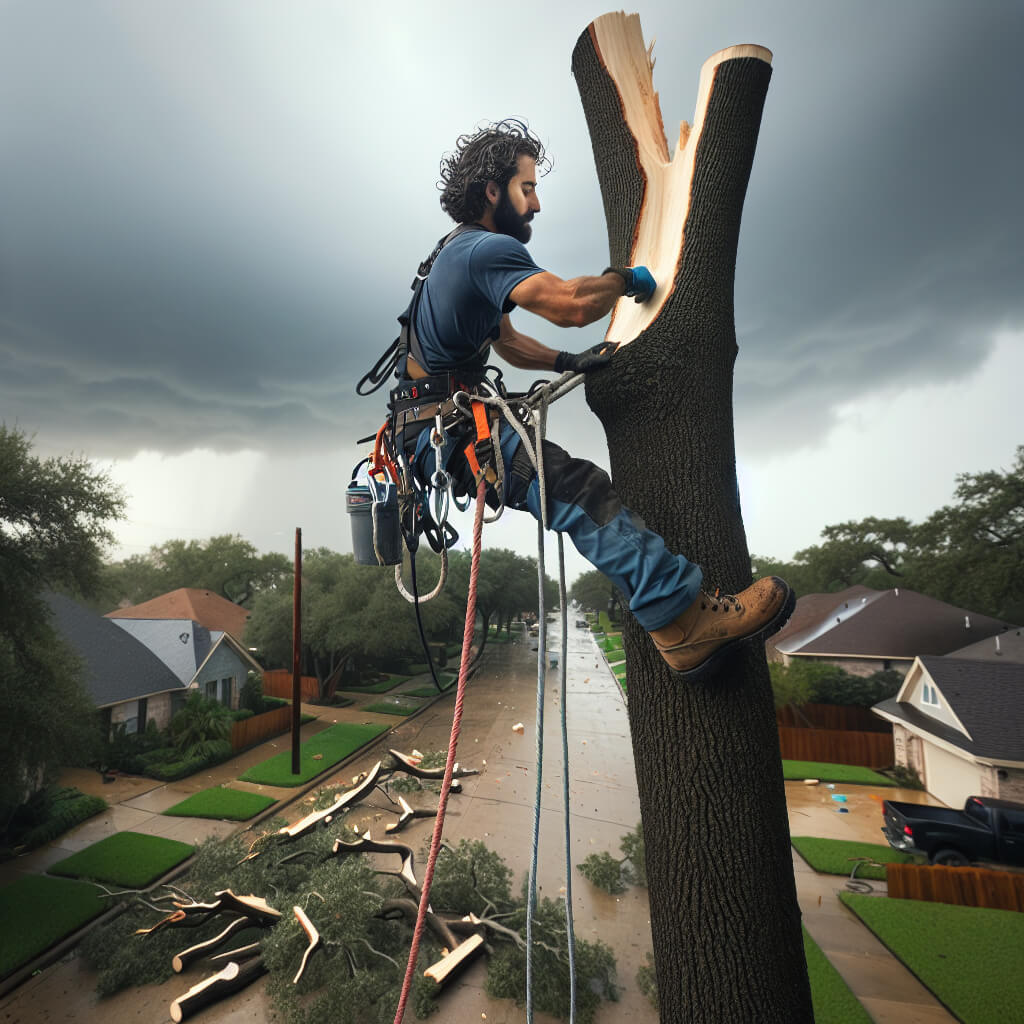
When a tree suddenly cracks or topples, it’s pure panic. I get it—you’re thinking about safety, insurance, maybe even where you’re going to sleep that night if it hits your roof. After 17 years of handling emergency tree removal around Houston, I’ve learned that what you do in those first few hours can make all the difference between a safe, affordable recovery and a drawn-out, stressful cleanup.
Let’s talk about what Houston homeowners need to know when a tree becomes a real emergency—from immediate safety steps to understanding cost and how to choose the right help fast.
When Does Tree Damage Become an Emergency?
Houston’s weather loves to keep us guessing. One day it’s dry and windy, the next a thunderstorm rolls through with 60 mph gusts. So how do you know when to call for emergency storm damage help instead of waiting until morning?
In my experience, there are a few clear situations where I tell people: don’t wait. If your tree is leaning heavily toward your home, any major structure, or power lines—that’s an emergency. Same goes if you see large cracks in the trunk or major limbs hanging by a thread. Trees rarely “heal themselves” in those cases; gravity will decide the outcome soon enough.
I’ll give you an example. During Hurricane Harvey, we had an 80-foot red oak in Memorial that looked solid at first glance. But a hidden root crack had developed from waterlogged soil. By the time I arrived, the base had shifted five inches, and the client’s patio roof was already crushed. If they’d called the night before when they first heard the “popping” sound, we could’ve saved their home thousands in damage.
First Steps: Staying Safe Before Help Arrives
The first rule I always tell homeowners: stay away from the tree until a professional inspects it. I know that urge to grab a chainsaw or push a branch away from your driveway, but downed trees can hide a lot of tension in their limbs. One wrong cut and a section weighing hundreds of pounds can whip back unexpectedly.
Here’s what you can safely do:
- Turn off power if limbs are near service lines (but only if you can safely access your breaker box—never touch live wires).
- Keep kids and pets far from the area.
- Take photos and videos for insurance purposes before removal begins.
- Call a licensed, insured, and ISA Certified Arborist—preferably someone local who knows Houston trees and soil conditions.
For smaller branches or debris, you can clear the lawn, but leave large structural damage to professionals. Even experienced homeowners with chainsaws get hurt that way—I’ve responded to more than a few “DIY” situations gone wrong.
How Emergency Tree Removal Works in Houston
Every job starts with a quick safety assessment. I typically look at whether the tree is stable enough to climb or if we need a crane. Houston’s compact lots, power lines, and fences make setups tricky, especially in neighborhoods like Bellaire or the Heights where space is limited.
In some cases, we’ll use rigging systems to lower branches piece by piece. Other times, especially after storms, we bring in a crane to lift the entire trunk off a house or structure. The goal is always the same: prevent further damage and remove the hazard fast but safely. Once the tree is down, we can handle stump grinding and cleanup later, once the immediate danger’s handled.
I remember one job in Sugar Land after a microburst came through. A massive live oak had fallen over two fences and blocked a cul-de-sac. We had to coordinate with CenterPoint Energy to shut off a transformer before starting. That’s why licensed contractors with insurance matter—you don’t want your emergency becoming a liability issue with your utility company or HOA.
Typical Costs of Emergency Tree Removal in Houston
This is the big question I get: “What’s it going to cost me?”
Emergency tree removal costs more than standard tree removal—mainly because of timing, risk, and equipment needs. In Houston, you’ll typically see prices anywhere from $1,000 to $4,500. Here’s how it usually breaks down in my experience:
- Small trees (under 30 ft): $600–$1,200 – Usually simple access and quick cleanup.
- Medium trees (30–60 ft): $1,500–$2,800 – Most of what I handle during storms.
- Large trees near houses or lines: $3,000–$5,000 – Requires cranes, extra crew, and careful rigging.
I once removed a 70-foot pine in Katy that missed a rooftop by inches. We were there within two hours, set up a crane, and had it cleared by sundown. It cost around $3,800, mainly because of the emergency response and heavy equipment. If it had been a scheduled job, it might’ve been $1,500 less.
Choosing the Right Houston Tree Service
Storm season brings out everyone with a truck and a chainsaw claiming to be an “expert.” Please don’t fall for that. I can’t tell you how many times I’ve been called after a homeowner paid cash to someone who vanished mid-job or damaged property further. look for these things when you hire emergency help:
- ISA Certification: Confirm they’re a certified arborist (like my ISA Certification #SO-7392A).
- Local references: Request jobs they’ve done in your area.
- Insurance proof: They should have at least $1M in liability coverage.
- Written estimates: Even in emergencies, get documentation for your insurance claim.
A good company won’t pressure you but will prioritize safety and transparency. We know you’re stressed—our job is to steady the situation, not make it worse.
Preventing Future Emergencies
Most emergency calls I get could’ve been prevented with regular tree trimming or inspections. Houston’s compacted clay soil, high winds, and alternating drought/flood cycles put constant stress on root systems. If you see slow root heave, dead limbs, or fungus near the base, call someone before hurricane season gets busy.
Before Hurricane Beryl hit, for instance, several longtime clients in Memorial had me inspect their big oaks. We adjusted weight loads by thinning canopies and cabling weak joints. After the storm, not one of those trees failed. preventive care is always cheaper than cleanup.
FAQ
How soon can a crew respond to an emergency tree removal in Houston?
In real emergencies—like trees on roofs or blocking driveways—we can usually get there within two to four hours. During major storms, response times might be longer, but licensed crews prioritize immediate hazards and safety access first.
Does homeowners insurance cover emergency tree removal?
Usually yes, if the tree caused damage to a covered structure like your house, fence, or driveway. Most policies won’t cover removal if it just falls in your yard without hitting anything. Always document damage before any work begins.
Can I cut part of a fallen tree myself?
It depends on size and location. If it’s a small branch not under tension or touching wires, you might handle it. But if the tree’s leaning, split, or touching any structure, call a pro. I’ve seen too many near-accidents from homeowners trying to save a few bucks.
How do I avoid “storm chaser” scammers?
Always ask for proof of insurance, a physical Houston address, and ISA certification. Legit companies provide written estimates and won’t demand full payment upfront. Local reviews help too—check Google Maps, not just Craigslist.
What’s the best time to prepare my trees for hurricane season?
Ideally, early spring. That gives time to trim, assess roots, and brace weak limbs before the windstorms start. Waiting until June or July usually means longer scheduling delays and higher demand.
Conclusion
When it comes to emergency tree removal in Houston, speed matters—but safety matters more. Don’t wait for a damaged tree to make the next move. If you’ve got a tree threatening your roof, driveway, or power line, call a certified arborist right away. And once things calm down, schedule a full inspection before hurricane season rolls around again. Preparing your trees now can save you thousands later—and maybe even keep your family safe during the next storm that rolls through our city.