
<!–meta: Learn how to handle emergency tree removal in Houston—what to do first, how pricing works, and when to call a certified arborist.–>
Just last month, I got a panicked call from a homeowner in the Heights around 2 a.m. A massive pine had come down after one of those sudden Gulf thunderstorms, crushing their fence and blocking the driveway. They had no idea what to do first—insurance, the city, tree service—it’s overwhelming when it happens unexpectedly. I’ve seen this scene play out hundreds of times across Houston, from Kingwood to Katy, especially after hurricanes and heavy windstorms. So, I put together this straightforward guide to help Houston homeowners handle emergency tree removal safely, calmly, and efficiently.
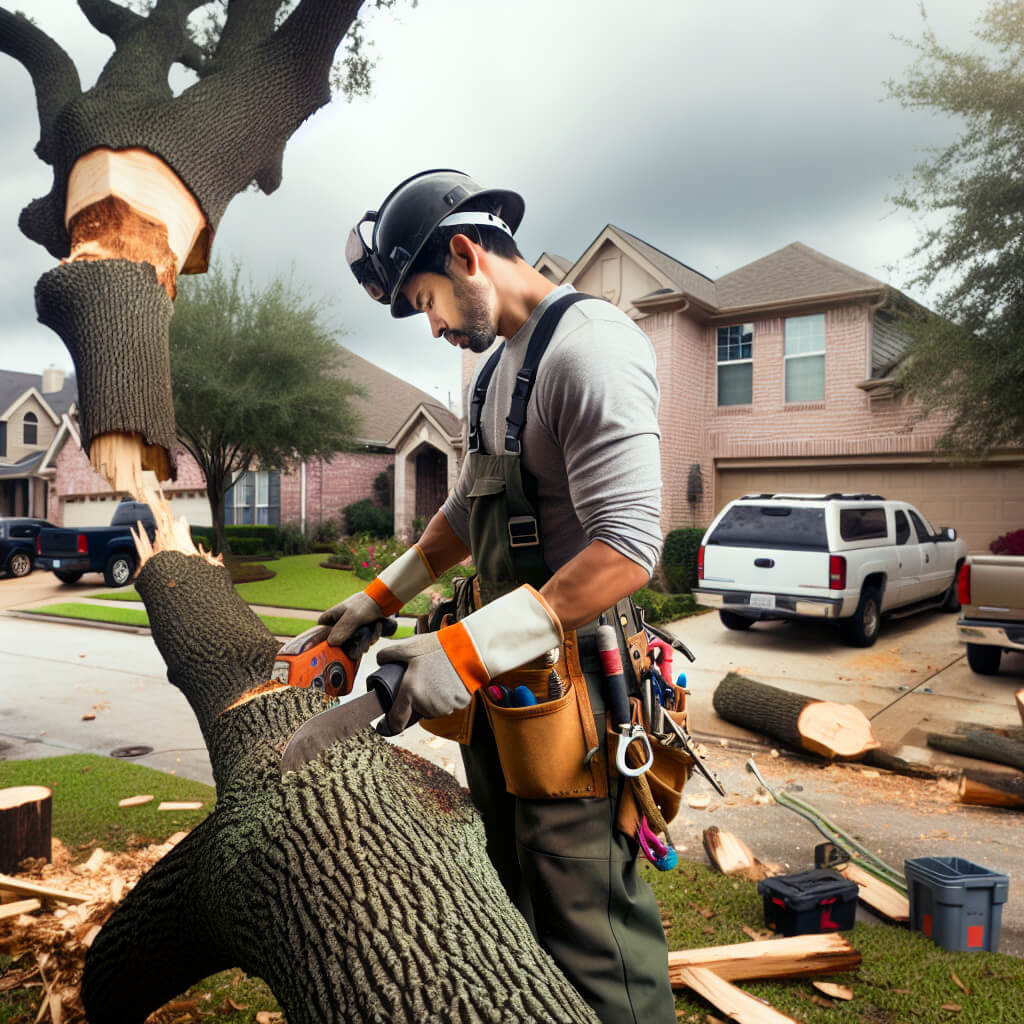
What Counts as an Emergency Tree Situation?
In my 17 years around Houston trees, I define an emergency tree removal as any situation where a tree is posing an immediate threat to life, property, or utilities. If a limb has fallen across your power lines, or a leaning oak is threatening to tear into your roof, that’s an emergency. After Hurricane Harvey, I responded to dozens like this—live oaks that looked fine the day before suddenly shifted with saturated soil and smashed fences overnight.
Other common emergencies include:
- Tree uprooted and leaning toward your home or neighbor’s property
- Large branches blocking driveways or trapping vehicles
- Tree movement near visible root lifting after heavy rain
- Broken branches hanging dangerously over power lines or roofs
What to Do Immediately After a Tree Falls
When that tree comes down (and trust me, it always feels louder than you’d expect), take a few deep breaths. Then follow these steps:
1. Check for safety hazards first
Before doing anything, make sure everyone’s okay. If power lines are involved, stay far away and contact CenterPoint Energy before anyone touches the tree. I can’t stress that enough—I’ve seen homeowners try to move limbs tangled with live wires, and it’s a split-second mistake that can cost a life.
2. Document everything
Take photos and videos from a safe distance—angles showing where the tree landed, where it broke, and any damages. This helps when submitting insurance claims. After one storm in Clear Lake, a homeowner’s insurer refused coverage until we provided photos showing that the tree had fallen due to high winds, not negligence.
3. Call a certified arborist
Contact a professional right away—not your neighbor with a chainsaw. A licensed tree removal team with emergency experience will know how to remove a tree safely, especially one near structures. In some cases, I’ve had to bring in cranes to lift heavy trunks off roofs or vehicles. Cutting in the wrong place can cause additional collapse or roof punctures.
Understanding Emergency Tree Removal Costs in Houston
This is probably the number one question I get after people realize their homeowner’s insurance may or may not help: “How much is this going to cost me?” Well, it depends on a few real factors like tree size, access, where it landed, and emergency timing.
In Houston, most emergency tree removals cost between $1,200 and $3,800. For example, I removed a 40-foot live oak that fell across a pool in Memorial for about $1,500 because it was easy to access. But a similar-sized tree wedged between two homes in the Heights after Hurricane Beryl cost closer to $4,000—crane work, tight space, utility lines, the whole deal. And yes, rates can go up during widespread storm damage, simply because crews are working around the clock.
Will Insurance Cover It?
Usually, yes—but only if the tree actually caused damage or is blocking access. Most Houston homeowners don’t realize that if a healthy tree simply falls into their backyard without hitting a structure, the removal might be out of pocket. That’s why I recommend discussing policy details with your agent before storm season starts (June through November).
I’ve seen some good insurers help pay for part of tree removal or debris hauling even when the damage wasn’t catastrophic. Bring them your photos, invoices, and the arborist’s assessment report to support the claim.
Why You Shouldn’t DIY a Fallen Tree
I get it—Houston’s full of handy folks who think a chainsaw and a Saturday morning can fix anything. But after storms, I’ve seen more trips to urgent care than I can count from DIY attempts. Fallen trees can be under extreme tension, especially in our heavy clay soil where roots twist and hold unpredictable pressure. One bad cut and the tree can spring, roll, or shift suddenly.
The pros have specialized equipment—rigging systems, cranes, winches, and experience reading where the stresses are. If you want to handle smaller cleanup safely, stick to light branches on the ground and leave anything larger or suspended for professionals.
Choosing the Right Houston Arborist for the Job
Not all tree companies are equal—especially after a major storm, when pop-up crews flood into Houston. Here’s what I always tell homeowners to look for:
- ISA Certification – This shows the arborist has professional training, like my own ISA Certification #SO-7392A.
- Insurance and Licensing – Always ask for proof. If something goes wrong, you don’t want liability falling back on you.
- Local Experience – Crews who know Houston’s soil, humidity, and trees can predict structural weaknesses more accurately. Our clay soil moves, remember?
For ongoing safety, consider scheduling preventive maintenance, including tree trimming or pruning, before the heart of hurricane season. I can’t count how many “emergencies” could have been avoided with seasonal crown reduction or deadwood removal ahead of time.
When to Call for Help Before It Becomes an Emergency
If you notice a tree starting to lean, soil cracking around the base, or large limbs weakening after heavy rain, don’t wait. Call an arborist for an assessment now. A safe removal or structural cabling job in advance runs far less than the cost of emergency cleanup later.
In Katy and Sugar Land, I often help homeowners catch root rot early in oaks and pines before they topple. It’s one of those things where a quick visit can save thousands of dollars and a lot of stress later. Prevention is always cheaper than emergency response—it’s not just a saying; it’s my everyday reality out here.
FAQ: Houston Emergency Tree Removal
How much does emergency tree removal cost in Houston?
On average, emergency removals run from $1,200 to $3,800 in Houston, depending on tree size, location, and hazards. Tight access, power lines, or crane work can increase costs. In major storms, demand can temporarily raise prices, too.
Should I call insurance before or after emergency tree removal?
If your tree has caused property damage, take photos first and notify your insurer, but don’t delay removal if it’s unsafe. Most insurers understand immediate removal for safety reasons, as long as you document the damage clearly.
Does the city remove fallen trees from private property?
No, Houston’s city crews only handle public property or street obstructions. Private homeowners must arrange their own tree removal service. The city may fine you if debris blocks public rights-of-way for too long after a storm.
What’s the best way to prevent emergency tree problems?
Regular inspections, professional pruning, and watching root health. Schedule annual tree trimming before hurricane season, and keep an eye out for soil movement or fungal growth near the base. A certified arborist can often prevent a full collapse before it happens.
Final Thoughts
When a storm hits and a tree comes crashing down, it’s scary and chaotic—but you don’t have to handle it alone. Stay calm, prioritize safety, document everything, and call a certified arborist. Over the years, I’ve helped hundreds of Houston families navigate these exact moments safely. Whether it’s a pine leaning into your fence in Kingwood or a live oak across your driveway in Meyerland, the faster you act, the smoother (and cheaper) the whole process tends to be. Take care of your trees now, and they’ll take care of you when the next storm rolls through.